Biography
Francis Solanus
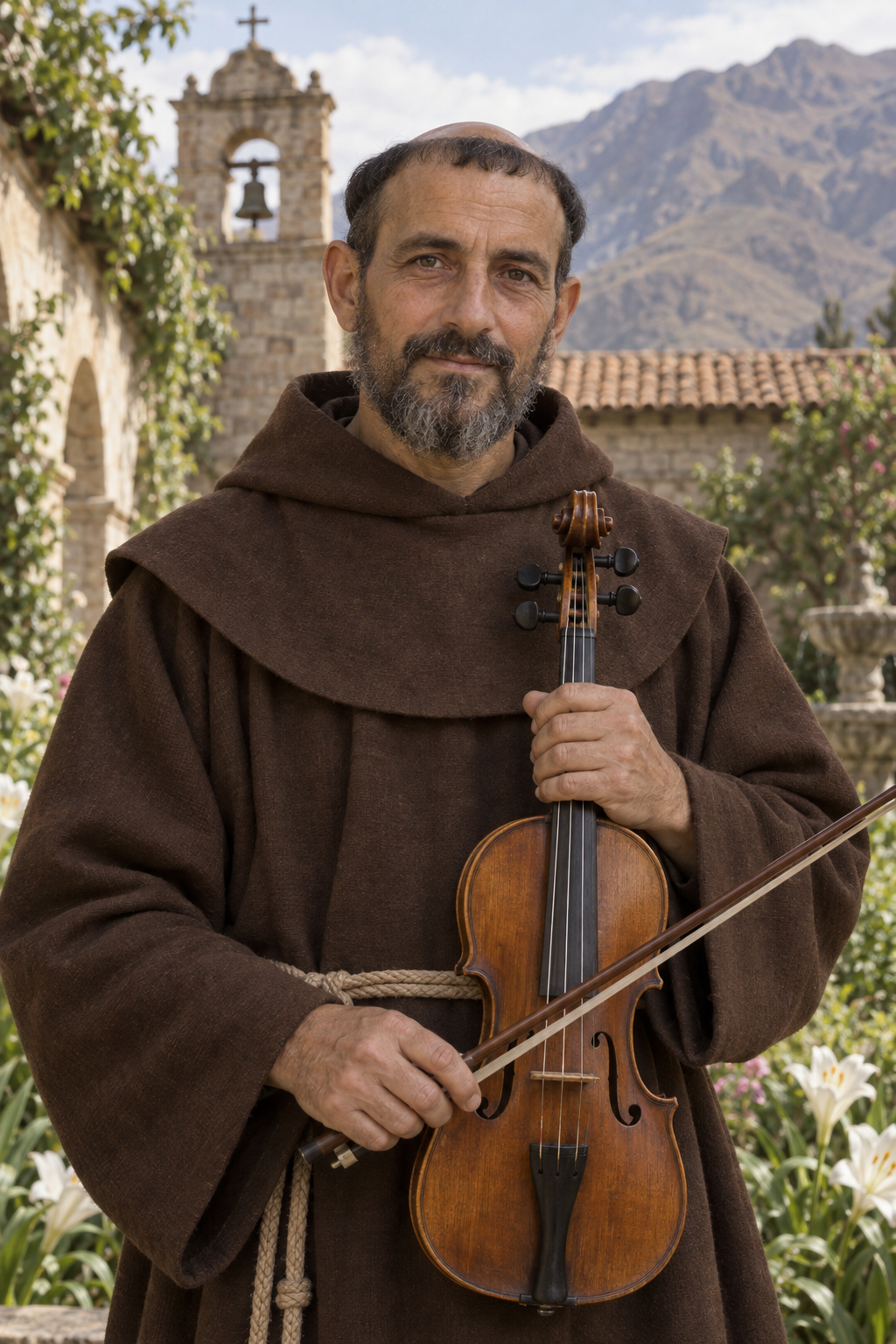
About Francis Solanus
Francis Solanus grew up in Montilla, in southern Spain, before spending much of his adult life far from home. Born in 1549, he studied with the Jesuits and entered the Franciscan community in his hometown. He made his profession in 1570. His early religious life included study, preaching and responsibility for younger friars. These years were not simply a prelude to overseas travel: they gave him experience as a teacher and superior before he became a missionary in South America.
The Franciscans' account describes him continuing his studies near Seville and celebrating his first Mass in 1576. Later assignments took him to other communities in Andalusia. At La Zubia, near Granada, his preaching was accompanied by care for sick people and prisoners. When an epidemic struck Montoro, he volunteered to help those affected. His work moved between the regular life of a friary and people whose illness or confinement placed them outside it. This service continued even when helping the sick exposed the friars themselves to danger.
Vargas Ugarte recalls that Brother Buenaventura accompanied him in caring for the sick at Montoro and died during the epidemic. Solanus continued the work in a church being used as a hospital.
In 1589 he left Spain for the American missions. The journey crossed Panama and continued to Lima. His assignment lay in Tucumán, beyond the Andes. Heras describes travel through the highlands and down toward the northern Argentine plains. His responsibilities included establishing houses and missions throughout Tucumán, so evangelization involved building a lasting network of communities as well as his own preaching.
Learning to communicate was part of that work. Rubén Vargas Ugarte cites testimony that Andrés García de Valdés taught him Tonocoté. Another language took months to learn. He also questions later claims of thousands being baptized immediately at La Rioja.
Solanus worked within the unequal conditions of Spanish colonial society. His reputation for defending Indigenous people does not make every account of his conduct comfortable. Diego de Córdoba's chronicle, as quoted in the cultural history dictionary, describes strict restrictions on women approaching his dwelling and punishments for crossing the boundary. The reported conduct belongs beside, not outside, the story of his ministry. His religious rigor could involve coercion as well as the care emphasized in devotional accounts.
Music offered a different way of reaching people. The New Catholic Encyclopedia describes a trained singer and instrumentalist who composed devotional songs and dances. He could accompany his movements with finger snaps recalling the music of Andalusia. His musical life was not confined to public preaching. It also belonged to his devotion to Christ and Mary. The same account remembers a lifelong reader who carried works of Bonaventure with him. Learning, prayer and music remained connected in a life often remembered chiefly for its journeys.
His later work included Lima and Trujillo, where he held responsibility within Franciscan communities. In Lima he called Spanish colonists to live according to the faith they professed. Franciscan Media particularly remembers his defense of Indigenous people against oppression and his use of music when visiting the sick. The demands he placed on Christians were therefore not limited to religious observance. They included the way colonists treated other people, a concern central to this account of his preaching.
In December 1604 his preaching in Lima stirred such alarm that he was warned against going out in that manner again. Heras records both the effect of the sermon and the admonition that followed it.
A contemporary biography excerpt preserved by the Australian Capuchins describes his final illness as painful and prolonged. It remembers him asking others to help him praise God even when his strength was failing. Fellow friars cared for him.
He died in Lima on 14 July 1610 and was later canonized in 1726. His memory remained attached both to the Franciscan communities he served and to his missionary work. The Catholic Encyclopedia records his responsibilities as a regional superior and later as guardian in Lima. Those offices are a reminder that his work involved sustaining communities as well as meeting people on the road. The remembered musician was also a priest entrusted with teaching, leadership and the difficult practical business of religious life.
His Spanish hometown of Montilla also kept his memory alive after his death. The municipal tourism account identifies the church dedicated to him with the site of his birthplace. It records his recognition as the town's patron in 1647, before his canonization. Inside the later church, an image attributed to José de Mora stands within an elaborate Baroque altarpiece. The dedication joins Solanus with the Virgin of the Aurora as patrons of Montilla. This is a later setting for devotion, not the building in which he grew up. It gives his hometown a lasting place in a remembrance otherwise strongly associated with South America.
Wondering how to weigh the stories and sources? Learn how to read a saint biography.
Explore similar vocations
Prayers for Francis Solanus
Francis Solanus — love petition
By his merits and prayers join our hearts to you in love