Biography
Francisco Aranha
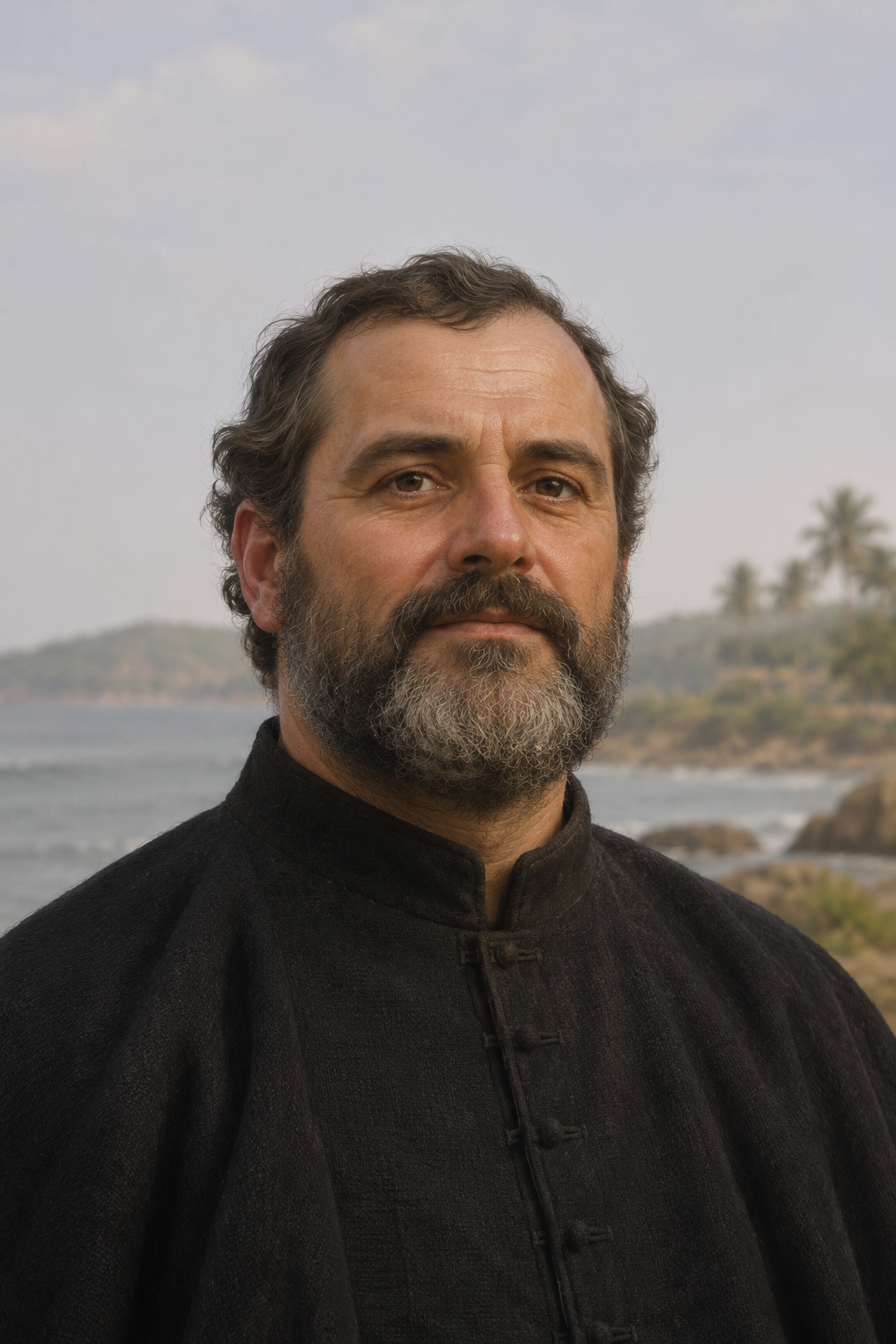
About Francisco Aranha
Francisco Aranha was a Portuguese Jesuit brother, born near Braga according to the Society’s accounts. He entered the Society of Jesus in 1571. A family link connected him to the first archbishop of Goa, and he served the Jesuit colleges at Cochin and Goa before going to Salsette. Unlike the priests in the Cuncolim group, Aranha worked as a lay brother. The distinction matters because his service included the practical work of building mission spaces.
Assigned to Salsette in 1577, Aranha worked as a carpenter and designer of mission buildings. Tavares, following an earlier Catholic account, identifies him with the church at Cortalim, said to have been built within a year. That is a more particular achievement than a generic reference to chapels, although the older account does not preserve architectural plans or a dated construction record. His skills mattered to a mission that sought permanent churches and residences in village territory.
The Salsette mission operated under Portuguese colonial rule. Tavares describes Cuncolim as a prosperous village with irrigated fields, metalwork, a market, and temples bound up with its public life. Portuguese campaigns against shrines and attempts to extend Christianity had generated resistance. Aranha’s individual role in earlier temple destruction is not established by the evidence used here; his role in building church infrastructure is. The proposed new church at Cuncolim thus had a significance for villagers that a missionary account of construction alone does not convey.
On 25 July 1583 Aranha accompanied four Jesuit priests and Indian Christian guides toward Cuncolim, where they intended to place a cross and choose a church site. Villagers attacked and killed the five Jesuits, including Aranha. The Holy See names his companions as Alphonsus Pacheco, Antonio Francisco, Pedro Berno, and Rodolfo Acquaviva. Tavares counts twelve Indian Christians killed in the same attack, while Cañeque gives fourteen. Their deaths are part of the event even though the later beatification recognized the five Jesuits as a defined group.
Jesuit retellings describe Aranha’s end in vivid detail, but the early narratives were written to honor martyrs and have to be read with that purpose in mind. The strongest personal evidence places him in a sequence of college service, chapel building, and final travel to Cuncolim. Pope Leo XIII beatified the five Jesuits on 30 April 1893. The Holy See’s notice assigns their feast to 4 February. Aranha’s remembrance preserves the contribution of a brother whose mission was made visible in work as well as in his death.
Wondering how to weigh the stories and sources? Learn how to read a saint biography.