Biography
Franco of Assergi
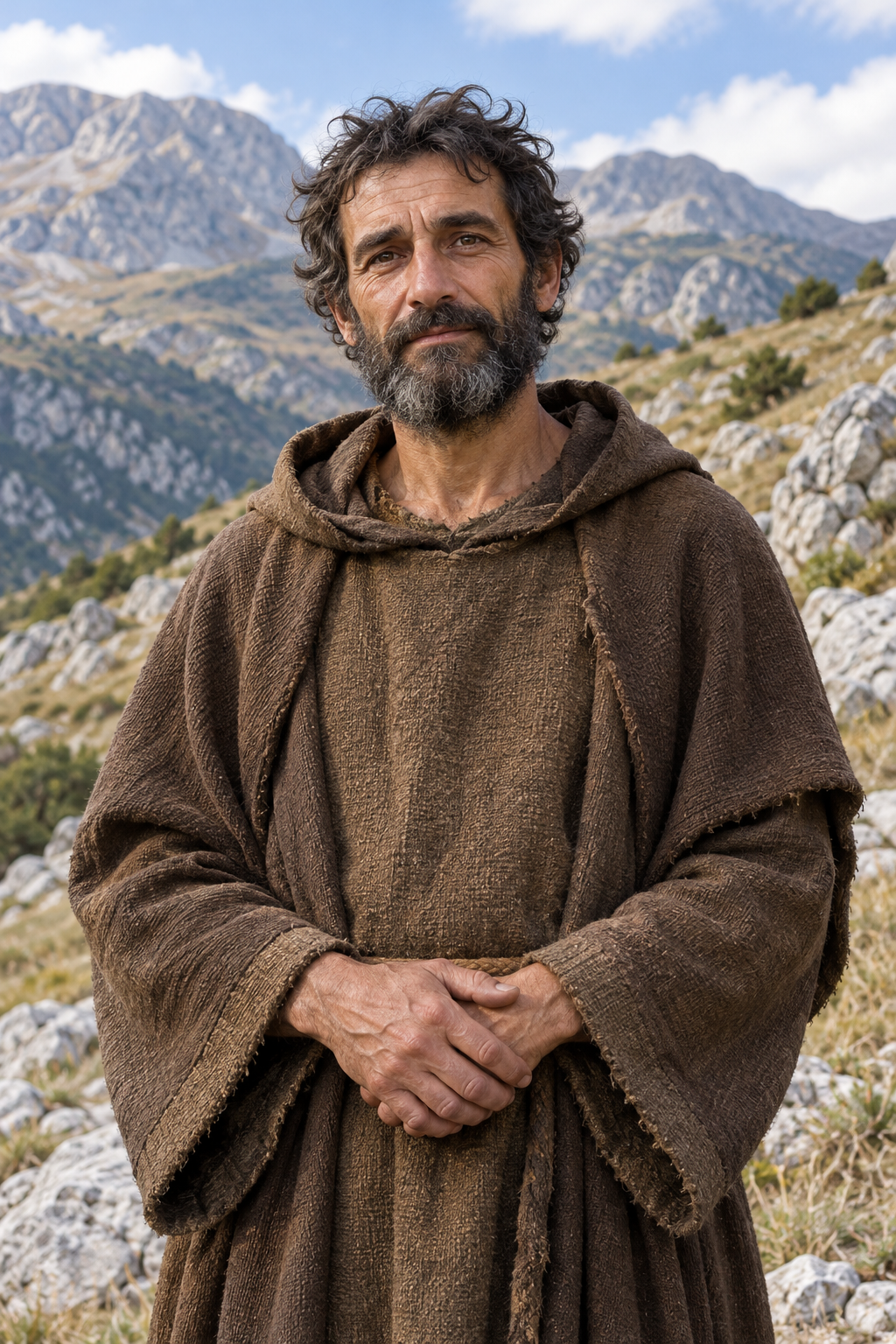
About Franco of Assergi
Franco’s remembered life led from Roio in the Abruzzo mountains into a Benedictine monastery and then toward the solitude of the Gran Sasso. The Catholic account published by Uniti nel dono places his birth at Roio Piano between 1154 and 1159. His vocation combined monastic formation with a later life as a hermit.
His Life describes a family with substantial means, education under the priest Palmerio, and an unwelcome assignment to tend the family flock. He entered San Giovanni di Collimento and distributed family gifts to people in need. The narrative says that he refused election as abbot.
After years in the monastery, Franco left with a few provisions to seek a secluded dwelling. The Life tells of bears guiding him to caves and of a wolf returning a child unharmed at his intervention. These are miracle stories within the saint’s tradition, not independently verified encounters with animals.
The surviving account has a complicated history. In his 1995 study, Stéphane Di Domenico explains that the older manuscript described by the priest Nicola Tomei was lost from view after 1791. Di Domenico translated the Life from Tomei’s transcription. Its stories therefore reach readers through later copies, not through an autograph written by Franco.
Di Domenico also emphasizes that solitude did not cut Franco off from surrounding society. His interpretation follows the encounters between the hermit and villagers, pilgrims and people working in the mountains. The stories repeatedly place him between the village and the dangers of the surrounding landscape. Later healing narratives helped shape his remembrance as Assergi’s patron.
The Life places his last dwelling above Assergi and says that he visited the village for the sacraments. At his death, monks and villagers carried his body down to their monastery. Its supernatural signs surrounding the death remain part of the hagiographical narrative.
The date is less certain than a modern anniversary might suggest. Assergi’s commemorative project marked eight hundred years in 2020, but its historical note expressly acknowledges that the death year is not securely documented. It gives a range from 1220 to 1230. This uncertainty is preserved here rather than converted into an exact year.
Franco is invoked as patron of Assergi and Forca di Valle, and against skin diseases. Uniti nel dono also records devotion among pilgrims, farmers and mountain communities. These are traditional patronages, not claims that water associated with him provides medical treatment.
The connection with the mountain remains visible in modern observance. In August 2025, the local Italian Alpine Club announced a Mass near the Acqua di San Franco and a parallel service in Assergi for people unable to make the pilgrimage. The notice explicitly calls him Assergi’s patron, linking his remembrance with both the mountain site and village worship.
Wondering how to weigh the stories and sources? Learn how to read a saint biography.