Biography
Giovanni Didonè
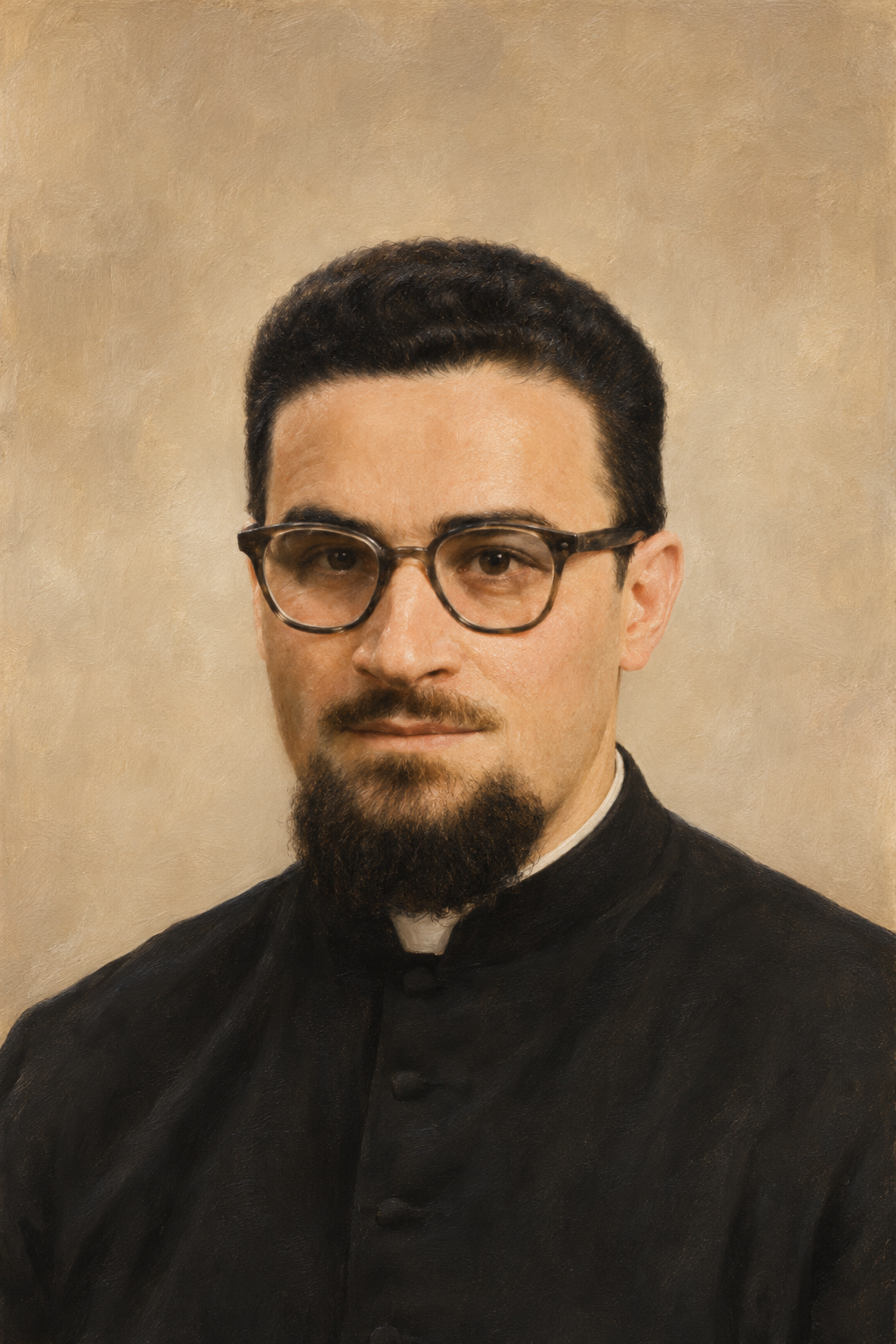
About Giovanni Didonè
Giovanni Didonè became a Xaverian missionary after an early period of study for the diocesan priesthood. Born at Cusinati di Rosà on 18 March 1930, he told his family that he wanted to become a missionary priest. His father initially preferred that he remain a diocesan priest, and Giovanni entered the seminary at Padua. Permission to join the Xaverians came when he was twenty. He made his first religious profession in 1951 and continued his studies at Desio and Piacenza. He was ordained on 9 November 1958 and left for Congo in December 1959. His assignments brought him to Baraka, Kiliba and Fizi.
Giuseppe Dovigo’s portrait emphasizes his attraction to places where a mission was only beginning. He preferred a wide and demanding field of work, despite the distance from family and familiar surroundings. His duties included preparing catechumens, visiting sick people, organizing activities for young people and traveling to outlying communities. Building chapels and schools went alongside these pastoral responsibilities. Dovigo also preserves his humor about the vehicles on which that work depended. Didonè described the breakdown of a well-used pickup in affectionate, almost personal terms, recalling the building materials and supplies it had carried. The mixture of enthusiasm, humor and physical effort gives a distinctive character to his missionary writings.
A long letter to his brother Severino, preserved in Guglielmo Camera’s biography, follows a journey through the region in 1962. Didonè described flooded roads, exhausting walks and the help of local people in getting him and his equipment to the communities he wanted to visit. One catechist gave up his family’s hut so that the visitor could rest. The letter also records disagreement: when Didonè linked access to confession with payment of overdue church contributions, people protested that they had been left without a priest for two years. He described negotiating a reduced immediate payment. This episode belongs to the historical record alongside his accounts of welcome and cooperation.
The same letter shows his interest in children’s play. Football brought children to the mission, and he hoped to supply balls to other communities as well. His sister sent sports clothing. He saw these shared activities as a way to build relationships with families, although the letter also reveals the unequal assumptions of missionary life in that period.
At Fizi, work on a church became one of his responsibilities. The Xaverian biography dates its consecration to February 1963. His work took place amid distrust and political conflict, with the challenge of overcoming hostility between groups as well as suspicion of Europeans.
He could also be impatient. Dovigo cites a diary admission that he shouted at his parishioners. The same account presents his recognition that constructing a building was easier than nurturing a Christian community. These remarks qualify any picture of effortless success: his enthusiasm coexisted with frustration and an awareness of his limitations.
In a letter dated 9 November 1964, Didonè encouraged the catechist Raphael to persevere. He thanked him for his work and spoke hopefully about the possibility of experienced catechists becoming deacons. The letter, later reproduced in the Xaverian beatification novena, promised that the priests would remain with the mission rather than abandon it. He also explained that his inability to visit did not mean indifference: circumstances prevented the journey. The message combined concern for the immediate crisis with thought about the community’s future leadership. It is a personal expression of his intentions in the final weeks of his life. He described candidates whose conduct showed honesty, faithfulness and zeal, and envisaged them baptizing and distributing Communion. He urged Raphael not to believe rumors that the priests would return to their own countries. His reassurance rested on the conviction that God remained present despite their separation.
Didonè was killed at Fizi on 28 November 1964, together with the Congolese priest Albert Joubert.
His memory remained within the Xaverian communities that had helped form him. Writing in 2002, Lino Maggioni recalled photographs of Didonè and other missionaries displayed in the corridor of the house at Piacenza. He remembered their years of theological study, parish service and bicycle outings as ordinary parts of a shared life. Maggioni also recalled Didonè’s willingness to share the limited resources of an isolated mission. His reflection approached the later martyrs through those familiar habits, rather than treating their earlier lives as entirely unlike those of other young religious.
Didonè and his three companions were beatified on 18 August 2024.
At a later Xaverian gathering in Salerno, the postulator Faustino Turco presented the four as martyrs of fraternity. Ferdinandus Supandri’s report explains that their mission was understood as life shared with Congolese people, rooted in their faith in Jesus. This interpretation joins remembrance of their deaths to the relationships and service that preceded them.
The Xaverian calendar commemorates Blessed Giovanni Didonè and his companions on 28 November.
Wondering how to weigh the stories and sources? Learn how to read a saint biography.