Biography
Gobain of Voas
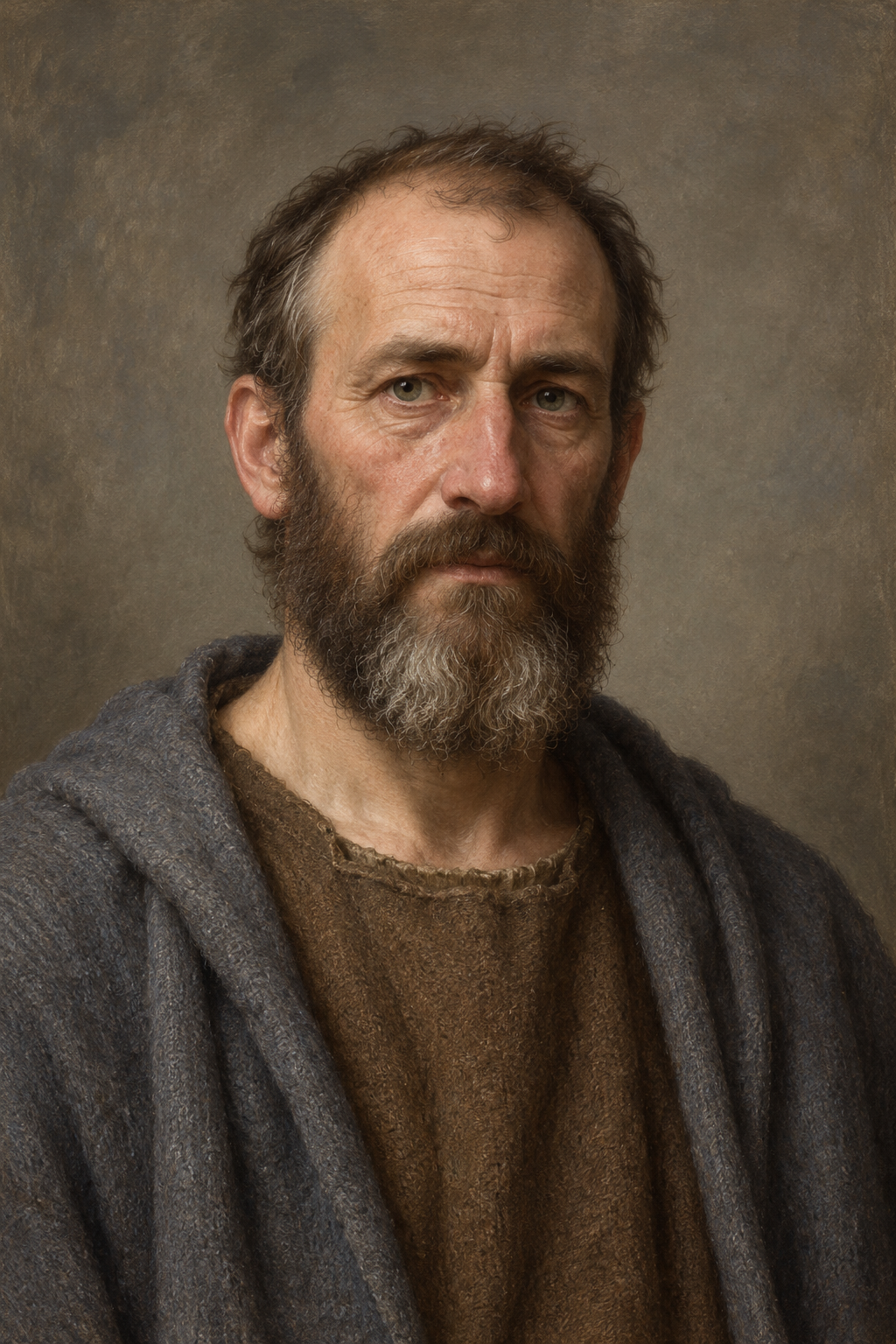
About Gobain of Voas
Gobain is remembered as an Irish priest and hermit associated with the wooded country near Laon. The proper missal of Soissons describes him as a disciple of Fursey who combined solitary prayer with evangelization. It places his death at the hands of robbers around 670, at the site that became Saint-Gobain.
An earlier reference is brief. Bede names a priest called Gobban among those entrusted with Fursey’s monastery in East Anglia when Fursey withdrew from its daily care. He names Foillan and another priest, Dicull, alongside him. The passage goes on to describe Fursey’s journey to Gaul; it does not recount a French journey or martyrdom for Gobban.
Archivist Georges Dumas distinguishes this early notice from a life written centuries later. That later narrative supplies Gobain’s adventures in France, including a storm calmed during Mass and a spring appearing when he lifted his staff. Such episodes belong to the saint’s devotional legend. Dumas also questions the proposed stay at Saint-Vincent of Laon, suggesting that later monks may have promoted the connection.
Local tradition places Gobain’s retreat on Mont Erème in the forest of Voas and associates it with a chapel dedicated to Peter. The town’s history records firmer institutional evidence much later: in 1068, Bishop Elinand gave the altar of Saint-Gobain to the abbey of Saint-Vincent, with duties to establish monks, offer prayers, and make an annual payment.
The modern hagiographer Abel Della Costa likewise warns against treating the surviving life as a detailed historical record. He notes that the church associated with Gobain’s burial eventually took the hermit’s own name. Gobain’s continuing remembrance rests in this local devotion, even though many particulars of his life remain beyond verification.
His local Catholic feast is June 20.
Wondering how to weigh the stories and sources? Learn how to read a saint biography.