Biography
Harriet Bedell
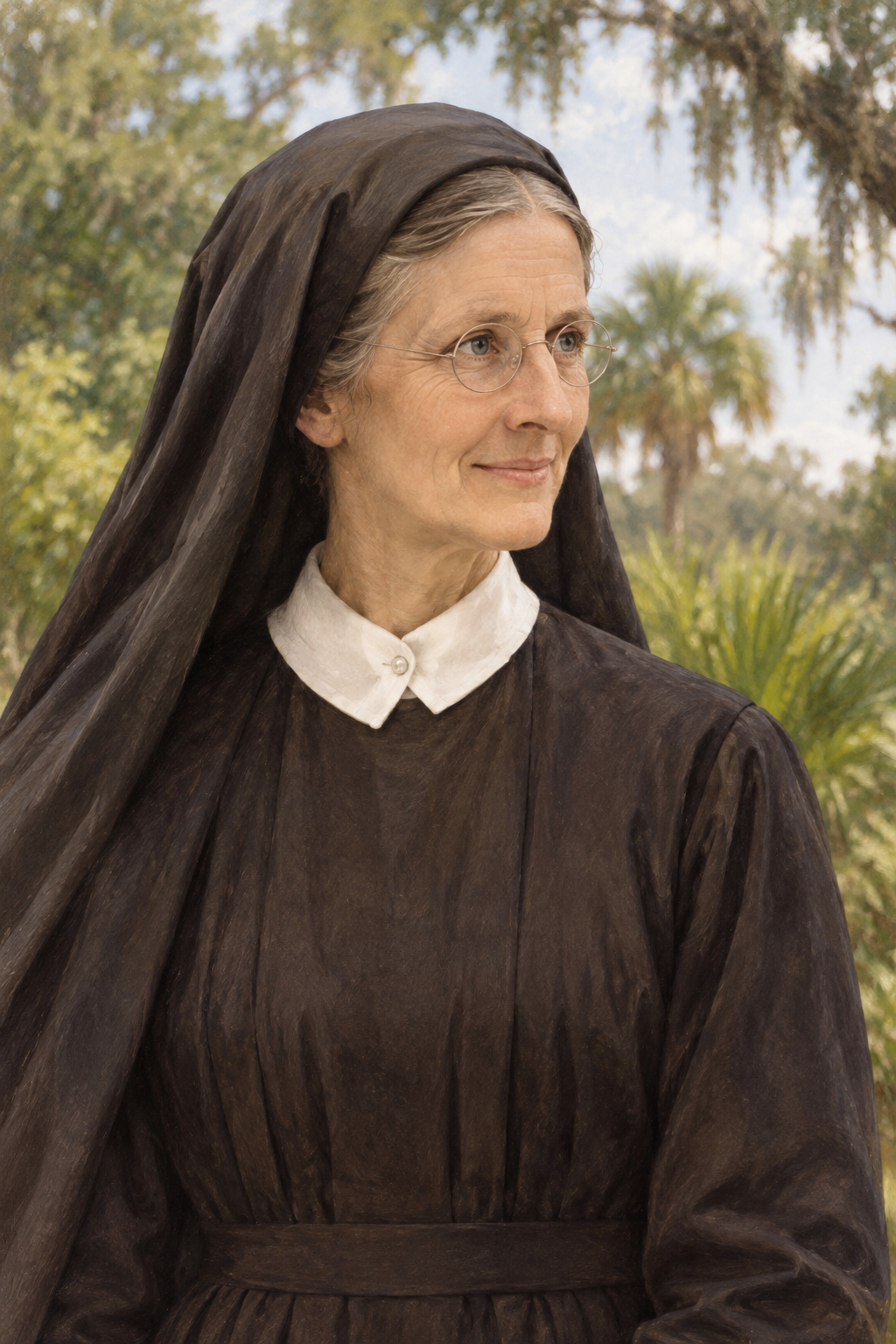
About Harriet Bedell
Harriet Bedell was an Episcopal deaconess whose ministry brought her into Indigenous communities in Oklahoma, Alaska, and Florida. The Episcopal Church commemorates her on January 8.
Born in Buffalo, New York, on March 19, 1875, Harriet Mary Bedell trained as a teacher before entering the New York City Training School for Deaconesses in 1906. She also received practical instruction in nursing. At Whirlwind Mission in Oklahoma, she worked alongside the Cheyenne deacon Oakerhater. Tuberculosis interrupted her work, and she recuperated in Denver. Her next assignment took her to Stevens Village in Alaska.
At Stevens Village, she entered a mission that local residents had helped bring into being. Hudson Stuck, the archdeacon of the Yukon, described its beginnings in his 1920 history. A local catechist had served the village before a resident missionary arrived. After the government school burned, residents repeatedly asked the bishop for a mission. They built the log church themselves, and Effie Jackson taught and conducted services there before Bedell succeeded her. The story gives local initiative and earlier workers their place in the mission’s history.
Stuck also described the practical isolation of Bedell’s post. Steamboats avoided the crossing unless they had freight to deliver, and the nearest post office was eighty miles away. Winter brought a further barrier: there was no longer a mail route down the Yukon. A village on the main river could still be difficult for outsiders to reach. He praised her absorption in the work and portrayed her influence as extensive. That judgment belongs to a church supervisor writing about his own mission network; it is not a record of every resident’s opinion.
In 1922 she traveled to Portland, Oregon, for formal admission as a deaconess.
Her ministry also depended on relationships with supporters outside Alaska. In May 1923, Gordon Reese reported that Bedell spoke to young church members and received assistance. His column does not specify how much she received; its nearby monetary figures describe other fundraising examples.
A September 1923 notice in The Witness describes her return after a year’s furlough. She spent several days in Seattle, where a church reception welcomed her and Theresa Sands. Bedell spoke about the work at Stevens Village before sailing on August 8. The notice places her within a wider network of women serving the Alaska missions, while identifying Sands’s destination separately as the hospital at Fort Yukon. It does not place Bedell at that hospital.
She also established a boarding school at Tanana; financial difficulties following the 1929 crash eventually closed it. A fundraising trip to Buffalo in 1931 did not secure her return to Alaska.
Bedell’s own published words offer a brief view of how she understood this work. In a letter printed in The Witness in February 1937, she praised the newspaper’s advocacy for people needing justice and Christian fellowship. She credited Bishop Johnson with encouraging more devoted service. Her letter expresses that commitment without documenting how every community experienced her ministry.
In Florida, Bedell’s work centered on the Glade Cross Mission and the surrounding communities. She helped artisans find buyers for their work, with proceeds supporting families and medical care. Her ministry also included teaching, health education, and Sunday school. She continued working long after her official retirement. Hurricane Donna destroyed her home and mission buildings in 1960. During her final years at Bishop Gray Inn in Davenport, she taught, cared for sick residents, and addressed church and civic groups. She died on January 8, 1969.
The craft cooperative remains a significant and contested part of her legacy. Writing for Florida Seminole Tourism, Deanna Butler describes Bedell’s efforts to oppose the exploitation of Indigenous people in tourist attractions and to sell their crafts through wider markets. The same account examines the limits of her approach. Bedell selected the patchwork designs she would accept at the mission and gave those designs names. She discouraged borrowing from other Indigenous artistic traditions. Her insistence on what she considered authentic could restrict the creativity of the people whose work she promoted. Butler notes that ric-rac, a decorative trim Bedell opposed, became an established feature of Seminole patchwork. This history preserves both the practical value of her advocacy and the agency of artists who developed their craft beyond her preferences.
Photographs she made and collected also preserve a record of her travels. The Smithsonian collection includes mission-school groups in Oklahoma, community and landscape scenes in Alaska, and families, dwellings and crafts in Florida. In 1940 she sent negatives to the Museum of the American Indian through William Stiles for printing, followed by additional gifts. The collection includes studio portraits she probably collected rather than photographed herself.
In 2009, the Episcopal Church’s General Convention gave final approval to her calendar commemoration after an earlier period of trial use. The decision placed her name in the Church Year calendar and in future revisions of its collection of commemorations.
Wondering how to weigh the stories and sources? Learn how to read a saint biography.