Biography
Hilary of Poitiers
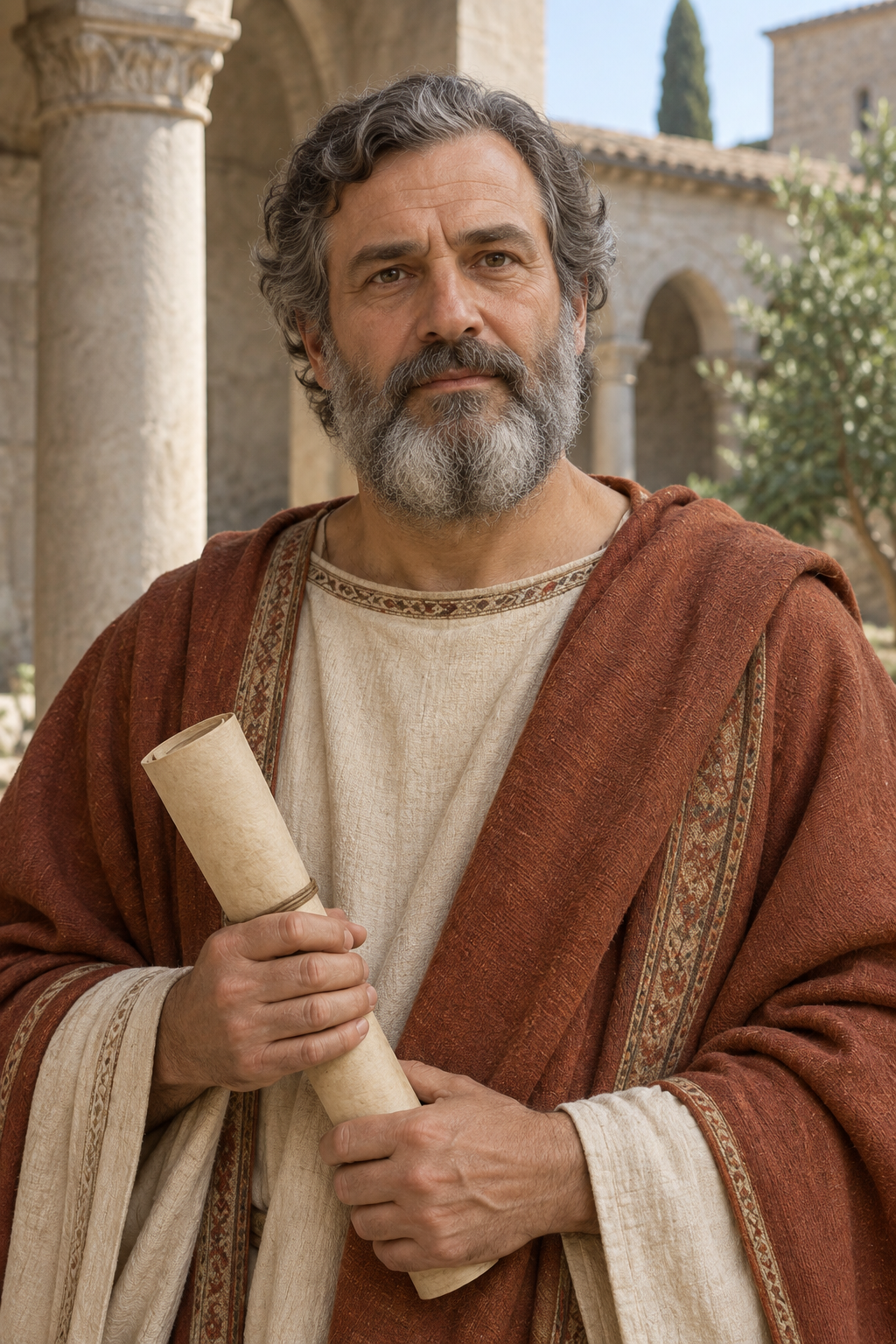
About Hilary of Poitiers
Hilary was born at Poitiers around 310 and became its bishop in the middle of the fourth century. His early circumstances remain uncertain: the familiar account of wealthy, non-Christian parents is probable rather than firmly documented. He entered Christian life as an adult, bringing an education that would serve him in both preaching and controversy.
In the opening of On the Trinity, Hilary described a search for something more lasting than comfort, possessions, or public success. He considered accounts of God and found them inadequate. Reading Scripture changed the direction of his inquiry, especially its account of the eternal Word becoming human. As a bishop, he wanted to share what he had learned rather than keep it as a private discovery. He guided readers through demanding questions of faith.
His responsibilities included encouraging people whose religious lives took a different form from his own. Sulpicius Severus describes Martin coming to stay with him at Poitiers after leaving military service. Hilary wanted to make him a deacon, but Martin resisted because he considered himself unworthy. The bishop instead appointed him to the lesser office of exorcist. When Martin left to visit his parents, Hilary asked him to return.
Public controversy interrupted this local ministry. At the council of Béziers in 356, Hilary resisted bishops opposed to the Nicene understanding of Christ. The emperor Constantius sent him into exile in Phrygia. Separation from his congregation did not silence him: he continued studying and writing among Eastern Christians.
Communication itself was difficult. Hilary explained that uncertainty about his whereabouts had delayed correspondence with Western bishops. He rejoiced when their letters finally arrived. In On the Councils he translated Eastern statements of belief and asked readers to finish his explanation before judging them. He warned that a literal transfer from Greek into Latin could obscure what a statement meant. His purpose was to distinguish disagreement in faith from language needing interpretation.
In 359 he attended the council at Seleucia. According to Sulpicius, an imperial order brought him there during his exile. When Eastern bishops suspected Western Christians of confusing Father and Son, Hilary explained their belief and was received into communion. He subsequently followed the delegates to Constantinople and sought an opportunity to debate before the emperor. That effort did not obtain the hearing he wanted. His opponents instead secured his return to Gaul, apparently finding him more troublesome at hand than at a distance. Sulpicius says that the formal sentence of exile had not been cancelled.
After his return, Hilary supported receiving back bishops who repudiated their earlier concessions. This approach differed from the refusal to reconcile favoured by Lucifer of Cagliari. Yet willingness to restore communion did not mean that Hilary accepted every settlement.
Back at Poitiers, Hilary joyfully welcomed Martin, who established a monastery near the town.
At Milan in the mid-360s, he and Eusebius of Vercelli challenged the bishop Auxentius. The dispute reached a commission involving imperial officials and bishops. Hilary wanted an examination of faith, while Auxentius defended the authority under which he held office and appealed to an earlier council's settlement. Hilary failed to remove him and was ordered to leave Milan. He then addressed his objections to the wider Church in writing. This episode shows a limit to his success and a harder edge to his conduct: the conciliator could also become a fierce public opponent, dissatisfied with an official declaration of agreement.
His teaching was not confined to these conflicts. Commenting on a psalm about humility, he argued that a humble heart need not mean a cramped or dispirited mind. He urged readers to direct their minds toward God without becoming proud. Prosperity, in his reading, should not lead people to look down on others. Hope was to continue through changing circumstances, rather than be reserved for a particular time of day or period of life. He used the image of a child passing from milk to solid food to describe growth in faith. He encouraged his readers to keep learning, seeking a fuller understanding rather than remaining at the beginning.
Jerome's account of Hilary's writings shows the breadth of this labour. Besides his major doctrinal books, Hilary explained Matthew and the Psalms for readers of Latin. Jerome notes his use of Origen in the psalm commentaries, alongside work of his own. He also records a translation of Origen's treatment of Job. Hilary thus helped carry Greek Christian learning into another language while continuing to argue and interpret for himself. His surviving reputation rests on this sustained work of teaching as well as on his resistance to imperial pressure.
Hilary died at Poitiers, probably in 367 or 368; the exact day is uncertain. The Church remembers him on 13 January, a feast date that should not be mistaken for a securely established death date. Pius IX declared him a Doctor of the Church in 1851.
Wondering how to weigh the stories and sources? Learn how to read a saint biography.
Explore similar vocations
Prayers for Hilary of Poitiers
Hilary of Poitiers: sourced prayer excerpt
Keep, I pray You, this my pious faith undefiled