Biography
Ignatius of Loyola
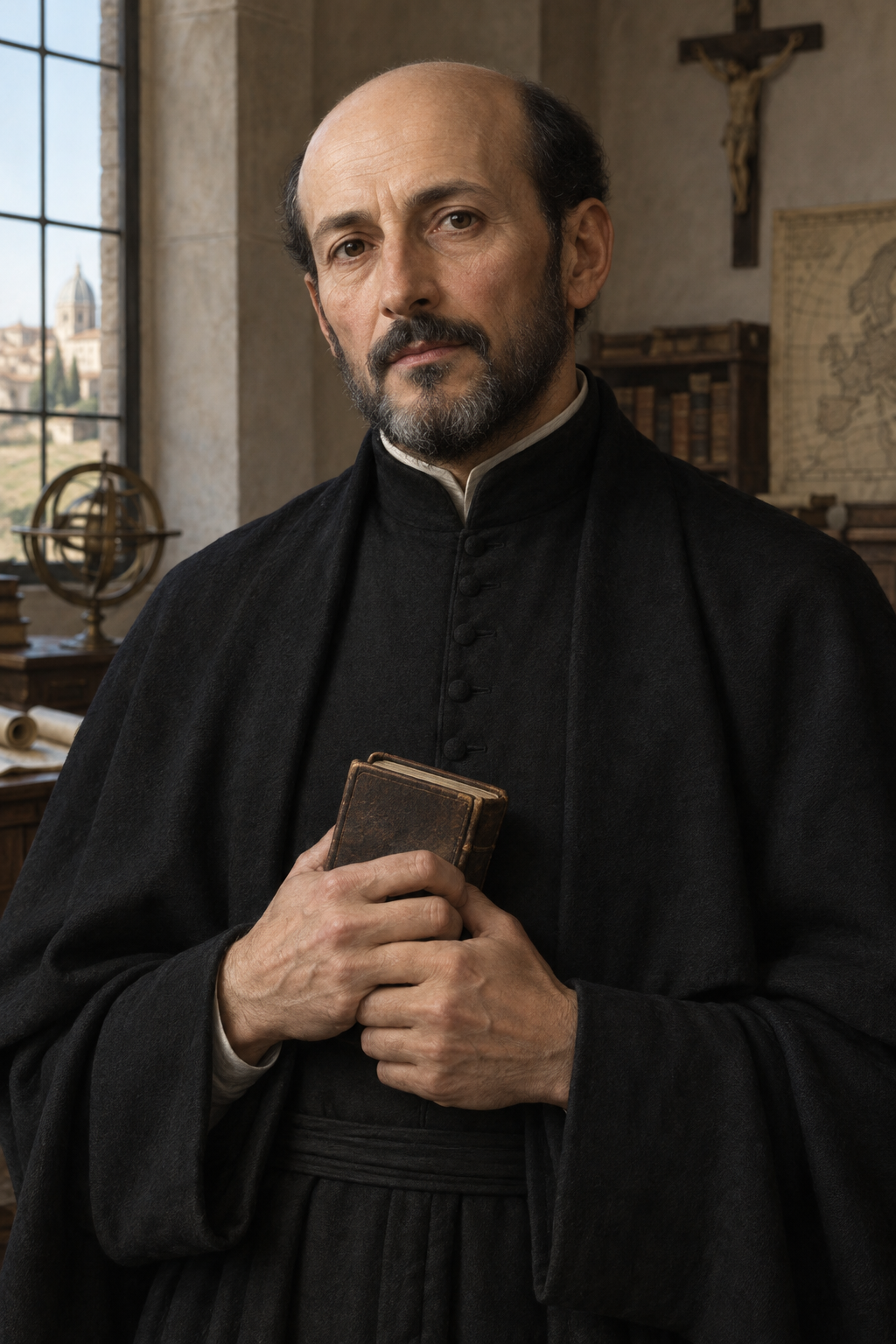
About Ignatius of Loyola
Ignatius of Loyola began life among the minor nobility of the Basque country, far from the religious order he would eventually lead. Born at Loyola in 1491, he grew up with expectations of service at court. As a young man he learned the manners and ambitions of that world. His experience of military service brought a decisive interruption when he was wounded defending Pamplona in 1521.
During his recovery at home, he asked for the romances he enjoyed reading. According to the account he later gave of his life, the available books instead concerned Christ and the saints. At first he read them for lack of another choice. Gradually he noticed a difference between imagining worldly success and imagining a life modeled on the saints: the second left a more lasting contentment. This attention to what remained after an experience became part of his way of discerning a direction for his life. He did not emerge from convalescence with the plan of a finished institution; he began by reconsidering his own desires.
After leaving home, he spent a night in prayer at Montserrat and continued to Manresa. There he lived simply and devoted long periods to prayer. His recollections describe both illumination and painful doubts about whether he had confessed his sins adequately. He sought advice as he struggled to find a steadier way of praying. Learning to attend to these changes was a demanding part of his religious formation.
In 1523 he reached Jerusalem, hoping to remain there, but had to return to Europe. He then pursued the education that would help him serve others. His studies took him through Spanish cities and eventually to Paris in 1528. Meanwhile, his conversations about religion brought questioning by church authorities before he had completed his theological education. In Paris a group of companions gathered around a shared purpose. In 1534 they vowed poverty and chastity and planned to go to the Holy Land; the later Society of Jesus grew from this fellowship.
Beginning again as a student meant accepting elementary lessons as an adult. In Barcelona he learned Latin alongside children before undertaking university study. At Paris, Peter Faber and Francis Xavier became his roommates and friends. Study and spiritual conversation thus took place within ordinary companionship, not only in solitary prayer. The men who eventually joined him brought their own abilities to a common undertaking.
The Spiritual Exercises grew into a practical guide for accompanying someone in prayer. Its opening instructions ask the guide to offer material briefly, leaving room for the person praying to consider it personally. The sequence moves through reflection on sin and through the life, suffering, and resurrection of Christ. Its four main divisions need not each occupy exactly seven days. Attention to the individual matters more than making every person follow an identical timetable.
Papal approval in 1540 gave the companions' work an institutional form. The founding Formula set out preaching, spiritual exercises, works of charity, and instruction in Christian belief as their purposes. It gave particular attention to teaching children and people without formal learning. The rule joined obedience to an elected superior with consultation on important decisions. It also bound the professed members to accept missions entrusted to them by the pope. This was a community organized for service in different places, with a shared discipline sustaining work beyond a single house.
As the order developed, Ignatius also shaped how its members should treat people. Instructions sent to Jesuits attending the Council of Trent in 1546 urge them to listen carefully before replying and to avoid turning discussion into a contest of personal opinions. He wanted them to teach children and visit poor people in hospitals as well as carry out their work at the council. They were to review the day together and accept correction from one another. He also told them to adapt conversations to the other person's circumstances, rather than their own convenience, and to explain basic religious teaching in ways their listeners could understand. The instructions connect public responsibilities with small habits of attention, companionship, and care.
He had celebrated his first Mass in Rome at Christmas in 1538. His companions elected him their superior in 1541, despite his reluctance to accept the responsibility. Education became an increasingly important part of the new order's work. After schools for its own members, the Jesuits opened a school at Messina in 1548 at the request of the city's authorities. Its success encouraged similar foundations. Ignatius spent his final years directing the growing Society from Rome. Leadership now required him to remain available to the needs of an expanding order while companions carried its work to distant places. He died there on 31 July 1556. The former courtier left communities, schools, correspondence, and a guide to prayer that others could continue using.
Wondering how to weigh the stories and sources? Learn how to read a saint biography.
Explore similar vocations
Prayers for Ignatius of Loyola
Ignatius of Loyola: sourced prayer excerpt
Give me Thy love and grace, for this is enough for me.