Biography
Jacques Chastan
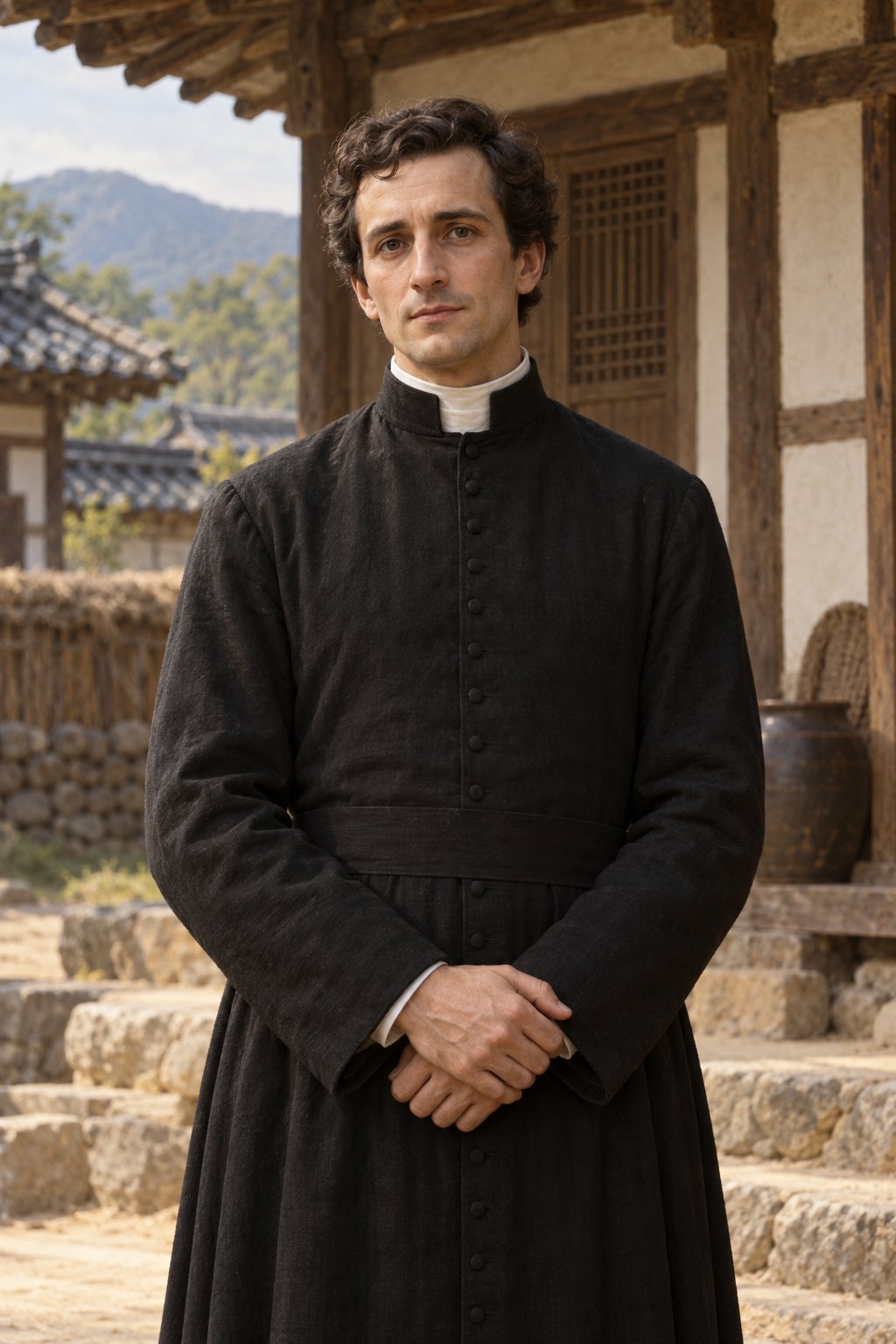
About Jacques Chastan
Jacques Chastan studied at Le Brusquet, Embrun and Digne before his ordination as a priest in December 1826. He entered the Paris Foreign Missions seminary the following month and left for Macao in April. He asked to serve in Korea, but his first assignment was to teach at the college in Penang. He also ministered in the parish of Pulo Tikus. When Bishop Barthélemy Bruguière set out for Korea, Chastan offered to join him. He returned to Macao in 1833 and traveled across China toward the Korean frontier. That first attempt failed because he could not find anyone to guide him into the country. He withdrew to Beijing, then accepted responsibility for a district in Shandong while awaiting another opportunity. At the end of 1836 he returned to the frontier to meet Korean Catholics who would help him cross. His route from Macao took him through Fujian and Manchuria before he reached the frontier. The work he accepted afterward in Shandong kept him there for two years.
The bishops’ conference biography describes Chastan returning home after his priestly ordination to say farewell to his parents. Although they knew of his wish to work abroad, they were distressed by the prospect of his early departure. The account says they tried to persuade him to stay and that his mother refused the blessing he requested. He left despite their opposition. This family farewell belongs to the received church biography; its reconstructed dialogue is not reproduced as a verbatim record here.
In a letter to his family the following September, Chastan described how the second attempt succeeded. His guides led him through a gap in a palisade after midnight. Farther along the route, they sent the horses ahead and crossed the frozen Yalu River in darkness to avoid a customs station. A house had been prepared beyond the town, where he arrived exhausted but relieved. For the journey to the capital, he wore mourning clothes: a coarse robe, a hood and a large hat. He held a cloth screen before his face to conceal features that could reveal him as a foreigner. After reaching Seoul, he was reunited with Peter Maubant, who had entered Korea the previous year. Chastan admitted to his family that reports of imprisoned Catholics being tortured had frightened him when he arrived. He asked after his parents, grandfather, brothers and sisters, and warned that difficulties sending letters could cause long silences without meaning that he had died.
A letter to the mission’s directors and procurators, signed by both priests, describes Chastan’s first months of work. He stayed in a small room offered by his catechist and spent two months learning the beginnings of Korean. He then heard confessions in Seoul before joining Maubant for Easter. The priests separated afterward to visit communities farther away. Chastan described difficult roads, crowded requests for sacraments and the fear that neighbors would report the gatherings to officials. Some Catholics were making their first confession in decades, and many were unfamiliar with preparing for it. He also described families in mountain settlements facing hunger. The priests distributed money both to households in need and to Catholics held in several prisons. They kept part of their remaining funds for the arrival of another missionary. The letter reports Korean-language religious books being read on Sundays and feast days and children learning the catechism.
When Maubant became seriously ill, he summoned Chastan to the capital. Chastan administered the sacraments before Maubant gradually recovered.
By September 1839, the circumstances had changed sharply. In a farewell letter to his parents, Chastan said that he had completed a journey through his district and expected to rest when the persecution intervened. He described executions, crowded prisons and believers facing pressure to abandon their faith. He also acknowledged that some had renounced it. Catholics and people still preparing for baptism had offered the missionaries places to hide. Chastan said that he and his colleague had used such shelters for four months. After Bishop Laurence Imbert was arrested, the bishop instructed them to surrender, believing that this would protect the Catholic communities. Chastan planned to meet Maubant and go together to the officer waiting for them. He contrasted his fear on first entering Korea with the courage he now drew from believers he had known and served. The letter ends with affectionate farewells to his parents, siblings, relatives and friends and a request that they continue to love God and one another.
Chastan and Maubant gave themselves up and were taken to Seoul. They were imprisoned with Imbert, interrogated and subjected to torture. The three missionaries refused to renounce their religion and were condemned to death. They were executed at Saenamteo on September 21, 1839. His letters preserve the practical difficulties of serving those communities alongside his concern for his family in France.
Wondering how to weigh the stories and sources? Learn how to read a saint biography.