Biography
James (son of Zebedee)
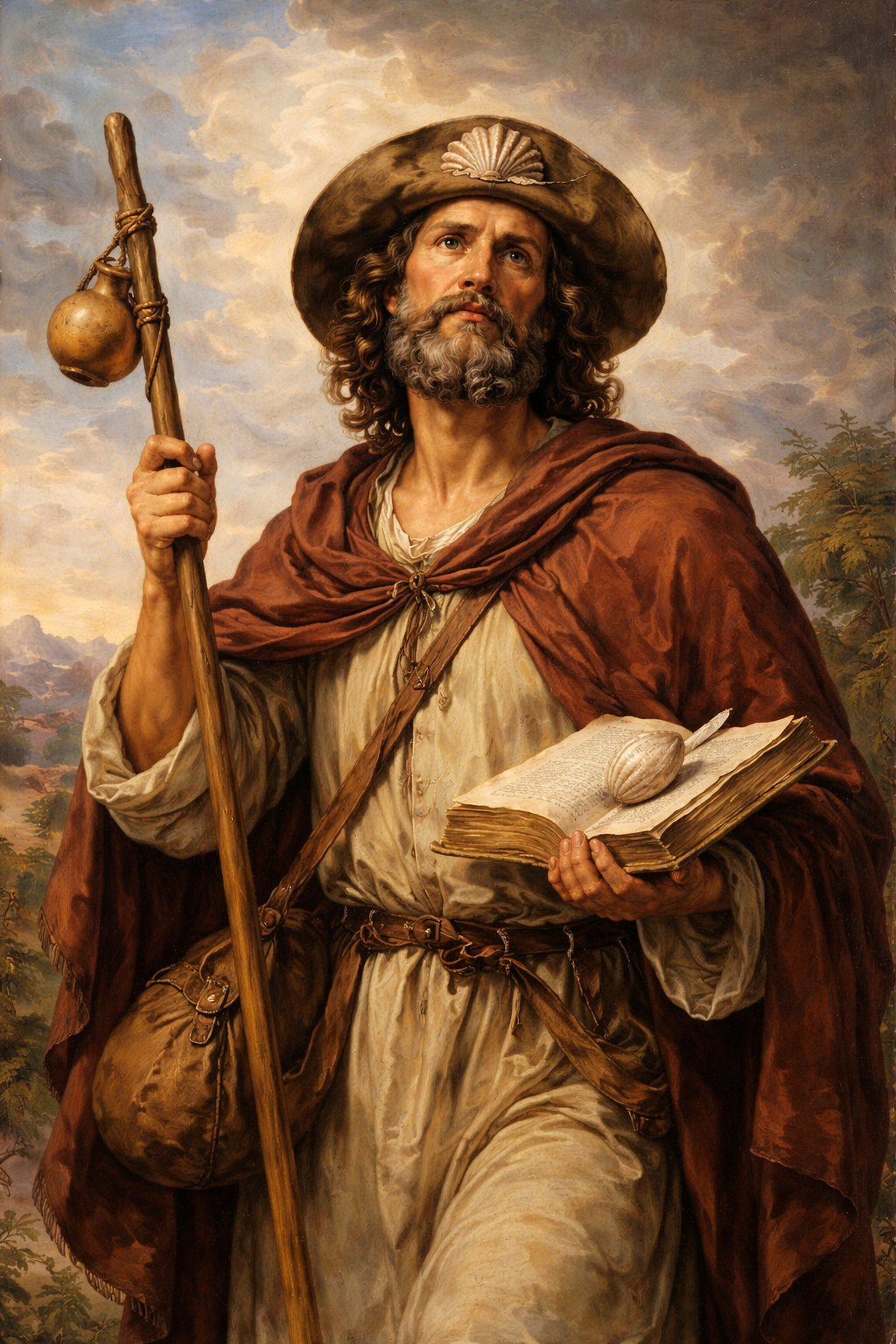
About James (son of Zebedee)
James son of Zebedee is one of the Twelve named in the New Testament. The Gospels identify him through his father Zebedee and his brother John, which distinguishes him from James son of Alphaeus and from the James who later leads the Jerusalem community. Scripture supplies no birth date, age, or birthplace. His death, however, is unusually anchored: Acts places his execution under Herod Agrippa I, and the USCCB note dates it about AD 44. Later titles and pilgrimage traditions must not be projected backward as contemporary biography.
Matthew narrates Jesus calling James and John beside the Sea of Galilee while they are in a boat with Zebedee mending nets. They leave the boat and their father and follow. Mark adds that hired workers remain with Zebedee, while Luke’s related fishing-call account names James and John as Simon’s partners. The sources differ in arrangement and detail, so a map can safely associate the call with the Sea of Galilee region but not with a specific shoreline coordinate. The action that emerges clearly in the tradition is a costly change of livelihood and allegiance.
When Jesus appoints the Twelve, Mark names James and John and says he gives them the name Boanerges, interpreted as Sons of Thunder. The text does not explain the nickname. Luke later recounts that a Samaritan village refuses Jesus hospitality because he is traveling toward Jerusalem; James and John ask whether they should call down fire. Jesus rebukes them, and the group goes elsewhere. This episode should not be softened into charming enthusiasm. It shows punitive religious zeal being refused and redirected rather than celebrated.
James belongs with Peter and John in several scenes witnessed by a smaller group. Mark says Jesus permits these three to accompany him when Jairus’s daughter is restored to life. The story includes grieving relatives, professional commotion, and astonishment; it does not make James the healer. At the Transfiguration, Jesus takes Peter, James, and John up a high mountain. They see Jesus transfigured with Moses and Elijah and hear the command to listen to him. Matthew and Mark leave the mountain unnamed, so later identification should not become a precise event coordinate.
Mark also places the brothers inside a dispute over status. James and John ask Jesus to grant them places at his right and left in glory. Matthew assigns the request to their mother while the sons answer Jesus directly. Jesus asks whether they can drink his cup; they say they can. He predicts that they will share it but refuses to allocate places of honor. When the others become indignant, Jesus contrasts domination by rulers with greatness expressed through service. The conflicting presentation of who initiated the request should be preserved rather than harmonized away.
Near the end of Jesus’s ministry, Mark names James among four disciples who privately ask about the temple and coming distress. In Gethsemane, Jesus takes Peter, James, and John farther into the garden, tells them of his profound sorrow, and asks them to keep watch. They repeatedly fall asleep. James therefore witnesses both disclosed glory and exposed anguish, but the Gospel does not portray him as consistently perceptive or steadfast. His failure to remain awake belongs to the record and prevents an idealized portrait of effortless discipleship.
Acts lists James among the apostles gathered after the ascension, but gives no individual account of his preaching. In chapter 12, Herod begins attacking members of the church and has James, John’s brother, killed with the sword. The narrative then turns immediately to Peter’s imprisonment. The USCCB note identifies the ruler as Herod Agrippa I, who ruled Judea from AD 41 to 44, and dates James’s beheading about 44. Acts does not record a trial speech, a converted guard, the location within Jerusalem, or James’s last words.
James is consequently remembered as an apostle and martyr. Calling him the first of the Twelve whose martyrdom Scripture records is accurate; calling him the first Christian martyr is not, because Acts has already narrated Stephen’s death. The title James the Greater developed to distinguish him from other figures named James, not as a judgment of holiness. Vatican News’s official saint page observes his feast on July 25 and repeats Gospel episodes from his call, the Transfiguration, and Gethsemane. That source documents present Roman Catholic observance, not first-century practice.
A powerful later tradition links James to Spain and Santiago de Compostela, where devotion to his reputed tomb shaped medieval and modern pilgrimage. The New Testament does not say that he preached in Spain or that his remains were transported to Galicia. Those claims therefore belong to later tradition and should not be described as documented apostolic travel. The same caution applies to the story that a guard converted through James’s testimony and died beside him: it is later ecclesiastical remembrance, absent from Acts. This packet records relationships and map events only where the biblical sources provide support.
James’s witness is best approached through actions and correction. He leaves his fishing work, joins the Twelve, accompanies Jesus into moments of revelation and suffering, receives rebuke when zeal becomes destructive, and hears ambition answered with service. His martyrdom is stated with striking brevity, without invented speeches or sentimental detail. The tradition does not give readers a flawless temperament; it shows a disciple formed through proximity, misunderstanding, failure, and costly fidelity. A practical imitation of James begins not with thunderous certainty but with relinquishing status, rejecting coercion, keeping watch with suffering people, and serving without claiming the highest place.
Wondering how to weigh the stories and sources? Learn how to read a saint biography.