Biography
John Chrysostom
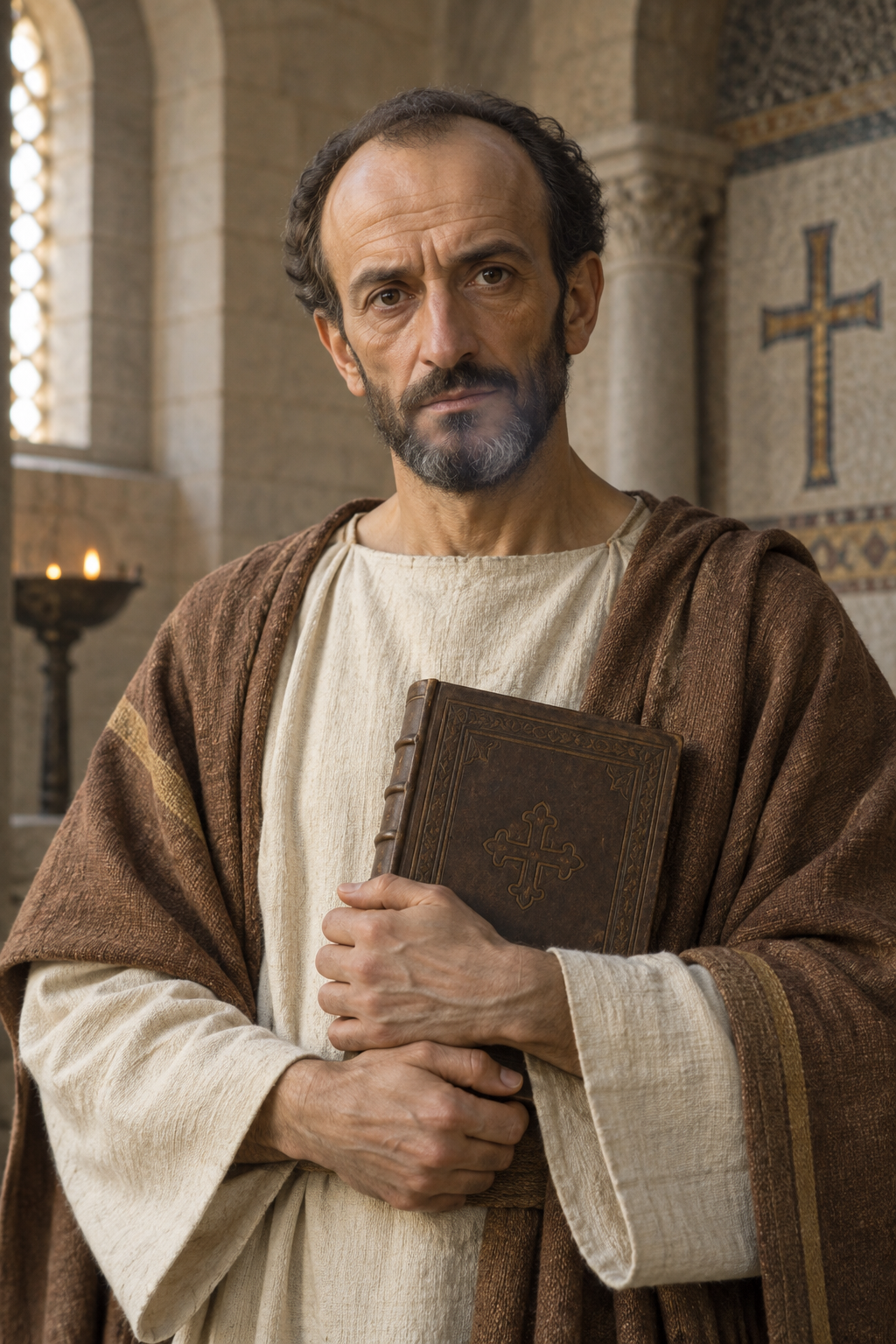
About John Chrysostom
John Chrysostom learned to preach in Antioch before becoming bishop of the imperial capital, Constantinople. His early life joined an education in rhetoric to demanding religious discipline. His widowed mother, Anthusa, raised him, and he studied with the rhetorician Libanius before pursuing Christian scriptural formation. For several years he lived apart from the city as an ascetic; illness eventually brought him back. Ordained deacon in 381 and priest in 386, he became a preacher whose surviving sermons range from close biblical explanation to the practical responsibilities of households. During Antioch's crisis of 387, when protesters damaged imperial statues and feared punishment, he preached to an anxious city.
His teaching made the needs of poor people impossible to separate from worship. In Homily 50 on Matthew, he asks his hearers to consider the contradiction between costly church furnishings and a hungry or cold neighbor. A congregation could supply beautiful vessels while leaving someone without food, clothing, or shelter. He did not prohibit gifts for the church. He insisted that generosity toward people in distress should come first, and that offerings should not be financed by injustice. The person neglected outside the sanctuary belonged within the congregation's understanding of Christ's presence. This was a demand about spending and attention, not simply an invitation to admire poverty.
On the Priesthood shows how closely he connected public ministry with ordinary pressures. A teacher, he argues, must keep returning to the same lessons because both prosperity and exhausting poverty can crowd out spiritual attention. People raising children or holding public responsibilities need a pastor who understands their circumstances. One approach will not suit everyone, any more than one medical treatment will suit every patient. John also warns that honors can make a minister flatter patrons while looking down on others. The work required judgment and freedom from ambition, alongside prayer for peace and relief from the troubles afflicting the wider world.
His preaching could also turn brutally against his neighbors. In the sermons conventionally called Against the Jews, John sought to stop Christians attending Jewish festivals and synagogues. His first homily did not confine itself to Christian obligations: it vilified Jewish worship, associated synagogues with demons, and treated Jewish people as collectively guilty for Christ's death. These are hostile claims made by John, not descriptions of Judaism. He urged listeners to break religious contact and press other Christians to do the same. His effort to enforce a Christian boundary depended on degrading the people and worship on the other side of it.
The historian of preaching Ian Birch examines the damage such speech could do. Addressing Christians rather than a Jewish audience did not make the rhetoric harmless to Jews: it trained listeners to regard actual neighbors with contempt and suspicion. Birch places these sermons within the history of Christian anti-Jewish hostility and warns against treating eloquence as a guarantee of moral wisdom. That history belongs in John's legacy alongside his teaching on generosity. His concern for the poor does not erase the injury carried by language that demonized another religious community.
As bishop, John tried to bring his household into line with his preaching. Expenses were reduced and resources directed toward care for the poor. His interventions also reached beyond Constantinople: removing bishops accused of buying office provoked disputes about authority. He received Egyptian monks whom Theophilus of Alexandria had expelled, becoming entangled in a conflict between church leaders. His criticism of luxury offended influential people around Empress Eudoxia. In 403 the assembly known as the Synod of the Oak deposed him. His first exile ended in a rapid recall, but the return did not settle the struggle over his position.
He had been consecrated bishop in 398. In 404 he was sent into exile again, this time without returning to his see. The journey eventually led him to Cucusus. A later order required removal farther away, toward Pityus; he died on the journey at Comana in Pontus on 14 September 407. His last years were thus spent away from the congregation he had governed, dependent on others for transport, lodging, and news.
His letters to Olympias preserve the work of maintaining friendship across that separation. He described fever and a difficult journey, including trouble traveling by litter and help from a priest along the road. He reported improved conditions when shelter and care became available. The correspondence also carried practical business: he asked Olympias to contact Bishop Maruthas about affairs in Persia and to arrange reliable delivery of letters. Exile had not ended his involvement in church affairs. Messages, trusted couriers, and the judgment of friends kept him connected to people he could no longer meet in person.
His remains were brought back to Constantinople in 438. Orthodox commemoration preserves his memory on several days of the church year, including November 13, apart from the September anniversary of his death.
Wondering how to weigh the stories and sources? Learn how to read a saint biography.
Explore similar vocations
Prayers for John Chrysostom
John Chrysostom: Troparion intercession
intercede with the Word, Christ God