Biography
John Gabriel Perboyre
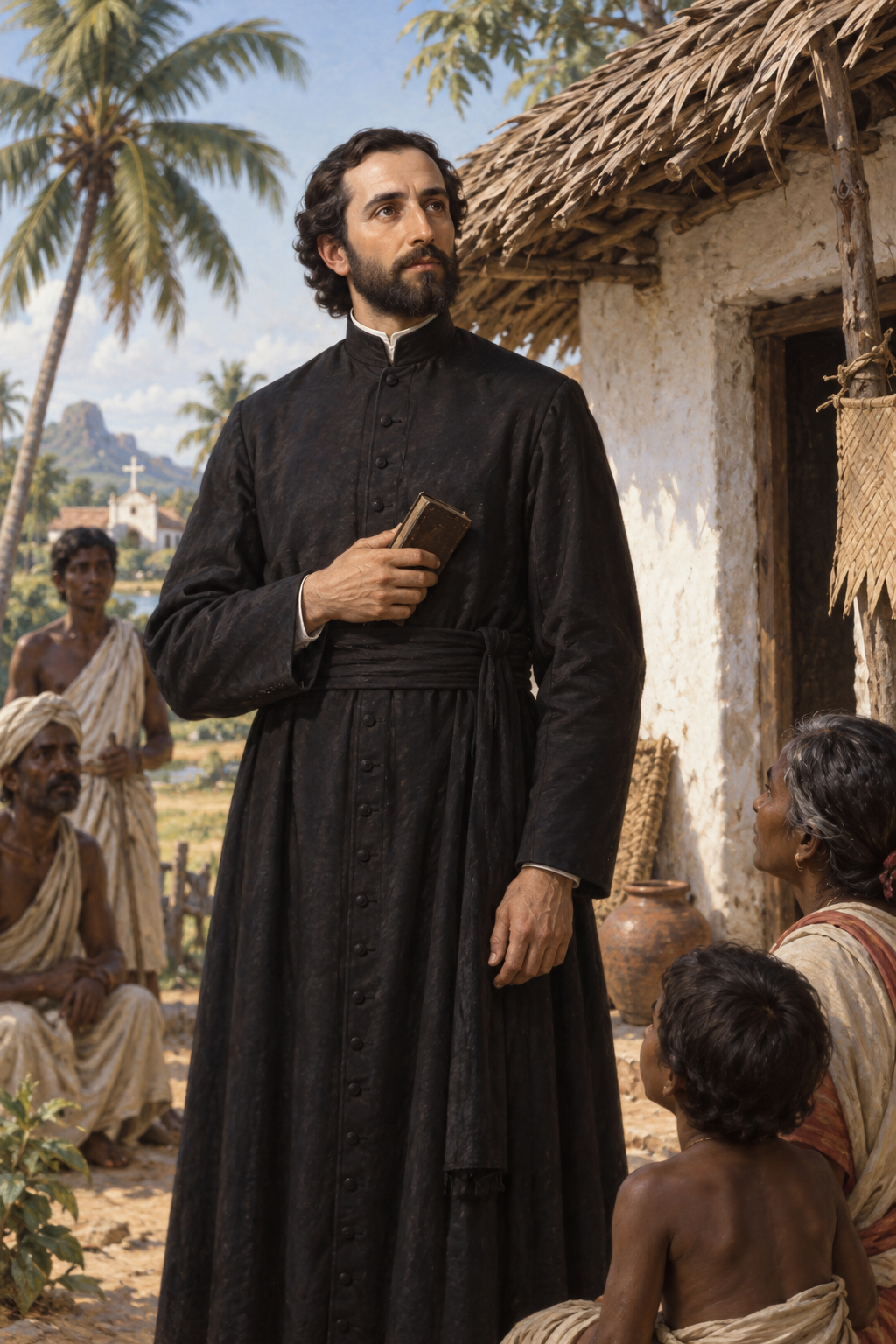
About John Gabriel Perboyre
John Gabriel Perboyre was born in 1802 at Puech in southern France. He was one of eight children, and his family’s Vincentian connections were substantial: three of the sons became Vincentian priests and two daughters joined the Daughters of Charity. His uncle Jacques Perboyre founded a minor seminary, where John Gabriel and his brother Louis studied. The family evidence helps explain how he encountered Vincentian education early, without reducing his later vocation to a single influence. At the seminary, Perboyre showed academic ability and interest in mission work. He entered the Congregation of the Mission, made vows in 1820, and was ordained in 1825. He then taught theology and held leadership roles in seminaries. The Congregation later assigned him to formation work in Paris. Perboyre continued to request an overseas assignment. He left France for China in 1835, arriving first at Macao, where he studied the language before travelling inland. His early mission was in Henan; in 1838 he moved to Hubei. The sources describe difficult travel and work among Christian communities in districts with few clergy. He depended on Chinese Christians and clergy who already sustained local congregations. The record also preserves his correspondence. Thomas Davitt’s study of Perboyre compares letters to his family with other accounts, and describes how the letters reveal his relationships and ideas about the mission. This documentary angle tempers later devotional retellings: a letter is evidence of what he wrote to a particular reader, while a later biography may interpret his experience through a different purpose. In September 1839, persecution intensified in Hubei and Perboyre was arrested. He was questioned by several authorities and moved between places of detention. Church sources recount torture, but a concise biography can acknowledge the coercive process without repeating graphic details. An imperial sentence was confirmed before his execution at Wuchang on 11 September 1840. Christian community members arranged for his burial. Later recognition belongs to a separate timeline: he was declared venerable in 1843, beatified in 1889, and canonized in 1996. These dates document the history of his Catholic cult; they should not be conflated with the evidence for his nineteenth-century mission. His memorial is kept on 11 September.
Wondering how to weigh the stories and sources? Learn how to read a saint biography.