Biography
John of Ávila
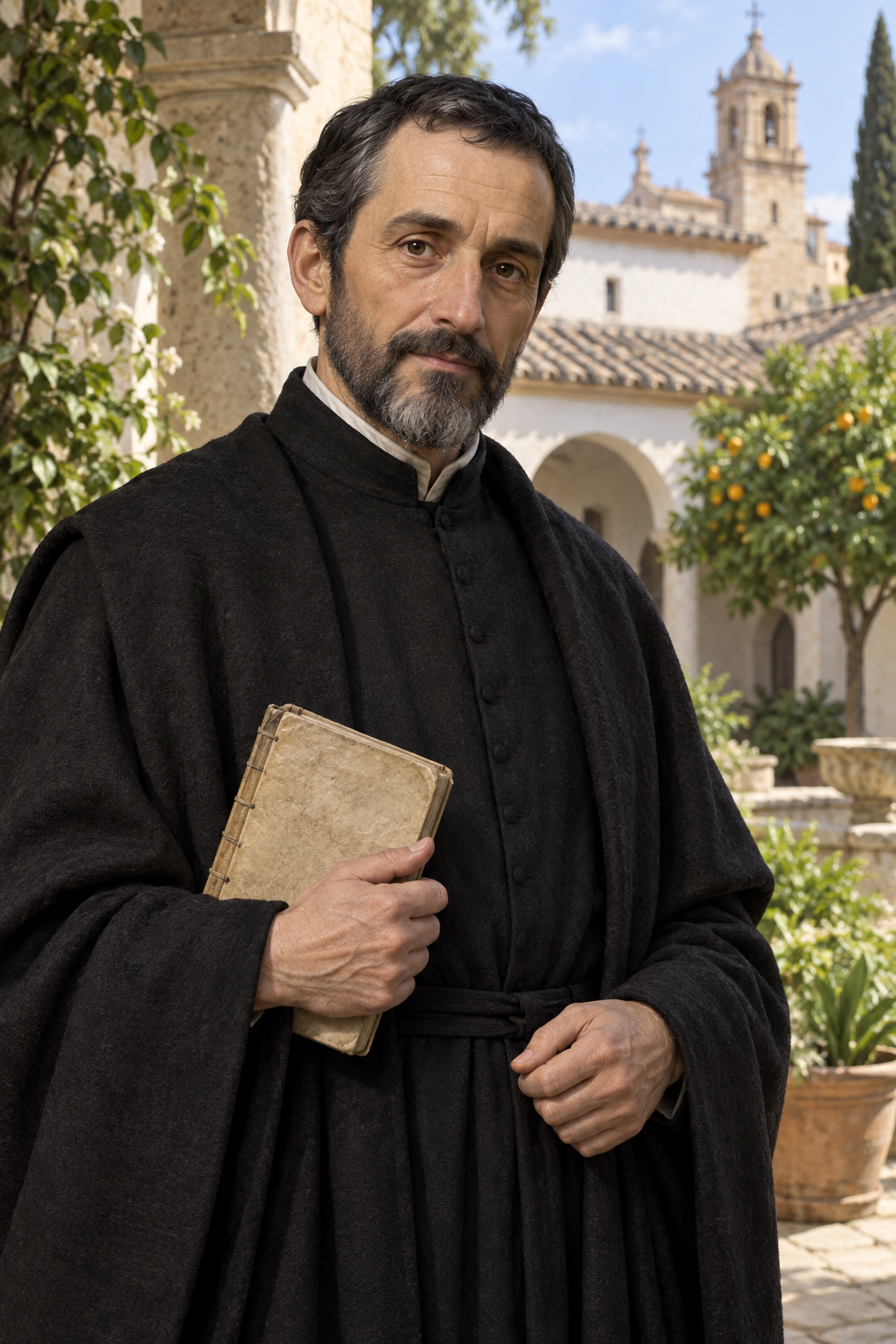
About John of Ávila
John of Ávila was born in Almodóvar del Campo in central Spain around 1500. His parents were prosperous, and at fourteen he went to Salamanca to study law. He left that course after several terms and returned home for a period of prayer. In 1520 he entered the University of Alcalá to study theology and the humanities. The path from law to priesthood took place amid religious and intellectual change in sixteenth-century Spain. He was ordained in 1526. These early decisions matter because the learning he acquired in Alcalá later shaped both his sermons and his plans for educating clergy. Sources disagree whether his birth year was 1499 or 1500, so an exact year is not claimed.
John initially hoped to travel as a missionary to New Spain. He distributed his inheritance to the poor and went to Seville while waiting for passage. There his preaching attracted notice, and the archbishop urged him to remain in Andalusia. He stayed and worked with Fernando de Contreras, a priest known for catechetical teaching. That change of destination gave his ministry its lasting setting: towns and dioceses in southern Spain rather than the Americas. He preached, directed people seeking spiritual counsel, and continued his own theological study. His choice to give away wealth was part of a sustained commitment to poverty rather than a preface to one dramatic journey.
The years after his arrival in Seville were not without conflict. A denunciation led to an Inquisition investigation, and John was imprisoned between 1531 and 1533. The Church's later account says that he began drafting *Audi, filia*, his principal work on spiritual life, while in custody. He was acquitted in 1533. The experience did not end his public ministry; he continued preaching and eventually moved to Córdoba. The episode should neither be erased from an admiring biography nor turned into proof of accusations that were not sustained. His subsequent writings place unusually strong emphasis on God's love and grace, themes the Vatican biography associates with reflection during those years.
John became known as a preacher and teacher throughout Andalusia. He lived for a time in Granada, and listeners and correspondents came to call him “Master.” His work joined instruction with personal guidance: he spoke to ordinary congregations, advised clergy, and wrote letters to people facing different circumstances. His reputation for counsel brought him into contact with figures who later became saints, including John of God and Francis Borgia. Such relationships are part of the record, but they do not make John the sole cause of another person's vocation. The title “Master” expressed the influence of his teaching without making him a holder of a university chair.
Education was a practical concern throughout his ministry. John founded colleges for children and young people and worked to improve the preparation of future priests. He also founded the University of Baeza, whose work combined study for clergy and lay students. His proposals for priestly formation anticipated parts of the reform later given institutional shape by the Council of Trent. He argued that a priest's learning and conduct mattered to the people under that priest's care. The colleges were therefore not just monuments to scholarship. They were attempts to connect theological study, preaching, and the daily responsibilities of ministry. His plans for reform reached beyond his own schools through written advice.
His surviving writings show why he remained influential after his travels ended. *Audi, filia* is a sustained account of spiritual life; he also wrote a catechism, sermons, letters, and works on priesthood and reform. His approach drew repeatedly on Scripture and presented Christian practice as a response to divine love, rather than merely a set of external duties. He addressed readers with different kinds of responsibility, including priests and lay people. His concern for the poor and for effective preaching belongs beside his theological arguments. The writings gave later generations access to a teacher who had often worked face to face with people rather than from a fixed academic post.
Ill health led John to settle in Montilla in 1554. He continued his ministry through correspondence and by preparing texts, even though he could no longer travel as before. He drafted memorials on Church reform connected with the Council of Trent while unable to attend it himself. The later years show a change in the form of his work, not a withdrawal from it. John died in Montilla on May 10, 1569. The place and date are stated in both the liturgical booklet and Benedict XVI's later letter. His life had ranged from the intention of overseas mission to decades of preaching and education in Spain, and it ended with a body of writing still in use.
The Church beatified John in 1894 and canonized him in 1970. At the canonization, Paul VI emphasized his preaching, spiritual direction, and concern for reform. Spain had already named him patron of its diocesan clergy. Benedict XVI declared him a Doctor of the Universal Church in 2012, recognizing the lasting importance of his teaching. The Spanish bishops later reported his observance in the general Roman calendar on May 10, the date of his death. These later honors do not replace the concrete work of his lifetime: teaching, writing, counseling, and building places of study. They identify why a sixteenth-century Spanish priest continued to matter well beyond the communities where he first preached.
Wondering how to weigh the stories and sources? Learn how to read a saint biography.