Biography
John of the Cross
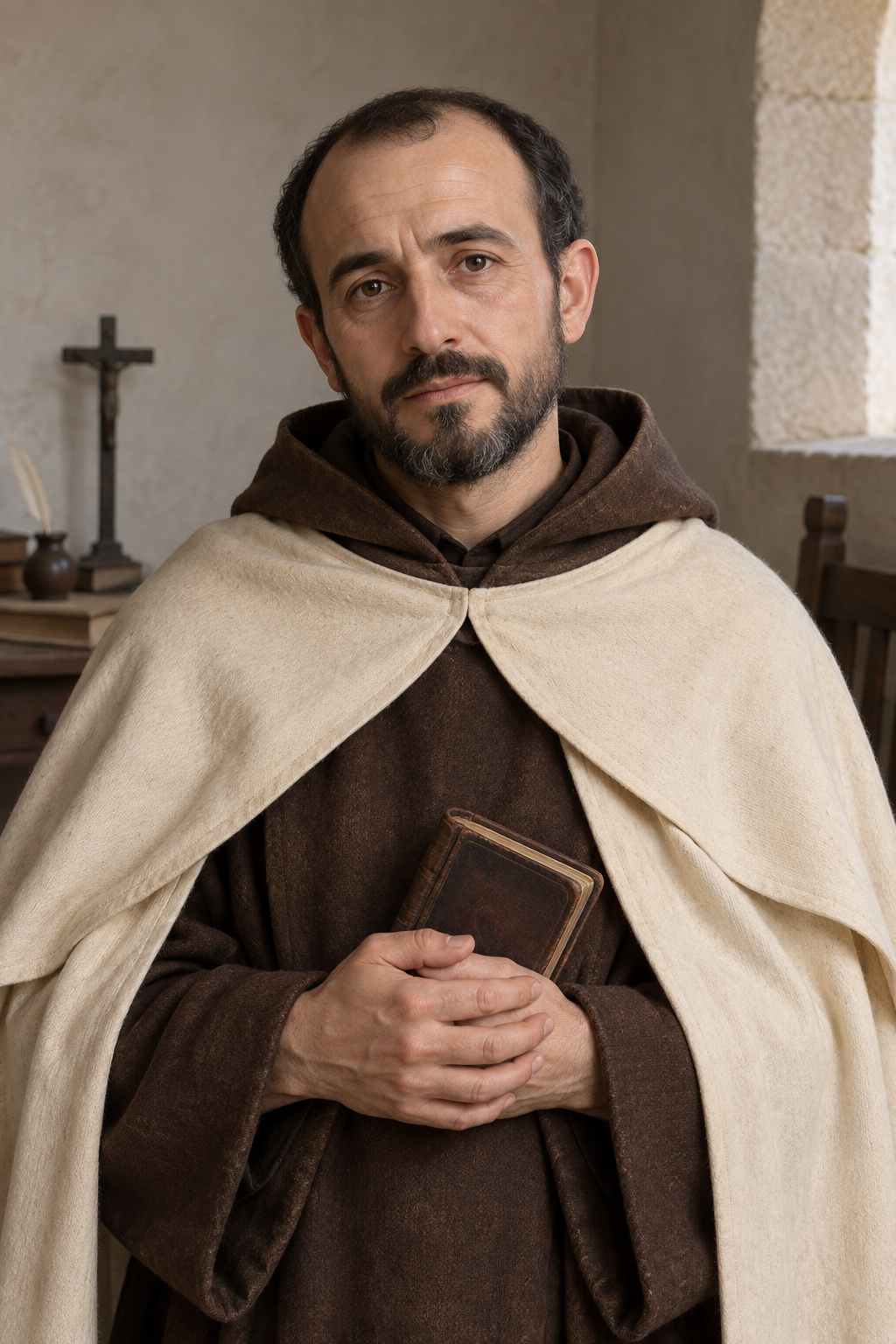
About John of the Cross
John of the Cross began life as Juan de Yepes, a child of a poor weaving family in sixteenth-century Spain. Born at Fontiveros in 1542, he later moved with his family to Medina del Campo. Education opened possibilities that poverty might otherwise have closed. He attended a charitable school and then studied with the Jesuits while working at a hospital. His lessons included Latin, literature, and rhetoric: practical training for someone who would become both a teacher and a poet.
In 1563 he entered the Carmelites, taking the religious name Juan de Santo Matía. He continued his studies in Salamanca and was ordained a priest in 1567. His studies there included humanities and philosophy. After ordination, he returned to Medina del Campo to celebrate his first Mass with his family. There he met Teresa of Ávila. She invited him to help renew the Carmelite life instead, joining prayer and poverty with service within their own order.
Preparation for the new community brought John into the daily life of Teresa's sisters at Valladolid. Teresa wanted him to learn their way of living together, including companionship and recreation as well as self-denial. The friars were to learn from the women whose communities had begun the reform. At Duruelo, a small rural house became their first foundation. Teresa saw how its entrance could serve as a church and its loft as a choir. When she returned after the foundation, she found a demanding life of prayer and service to neighboring villages. The modest building mattered because it gave a home to a shared purpose that had previously existed as plans, permissions, and conversations.
The community opened on 28 November 1568, and John became Juan de la Cruz: John of the Cross. His work soon extended beyond this first house. He trained newcomers, helped establish religious colleges, and served as confessor to the nuns of the Incarnation in Ávila. These responsibilities brought him into classrooms and communities, not only into solitude.
The reform met resistance, and disputes over authority within the Carmelites became entangled with tensions between royal and papal policies. In December 1577, opponents within the order seized John and confined him in Toledo. He spent over eight months in confinement. During captivity he composed the first thirty-one stanzas of the Spiritual Canticle, along with other poetry. He eventually escaped and received help from Discalced Carmelite nuns. The writings that grew from this period survived a confinement intended to silence his participation in the reform.
Later appointments took him to Andalusia, where he served at El Calvario, Baeza, and Granada. He also held responsibilities for the wider reform before returning to Segovia.
John's teaching developed through encounters with people who wanted help in prayer. His short counsels and letters answered particular needs; his longer explanations were also written in response to requests. He was first a spoken teacher, working with listeners whose difficulties and questions gave his writing a practical setting. His duties as superior and guide belonged to the same life as his books.
In his prose explanation of the Spiritual Canticle, John describes prayer as an encounter that reaches deeply into a person's inner life. He interprets the poem's mountains as the faculties of memory, understanding, and will. The prayer asks that understanding receive divine light, that the will be filled with love, and that memory share in God's presence. Virtues are not simply personal achievements in this account: John describes them as gifts received from God. His language of bride and bridegroom gives affection a central place in religious life. The commentary invites the reader to look beyond outward impressions toward a relationship that cannot be fully expressed through the senses. John presents this deepening love as something that strengthens the person, while requiring courage and a willing response to God. The gifts he describes include virtues that become part of everyday conduct.
His other major works include the Ascent of Mount Carmel, Dark Night, and Living Flame of Love. Across these writings, purification is directed toward union with God in love. Faith, hope, and charity guide the journey rather than an appetite for unusual experiences. In 1591 John lost his offices amid renewed internal difficulties. He became ill and died at Úbeda on 14 December.
The people who received his teaching included women living both inside and outside monasteries. The Spiritual Canticle's explanation was addressed to Ana de Jesús, while Living Flame of Love was written for Ana de Peñalosa. These dedications keep particular readers visible behind books now studied far from their original setting. Centuries later, John Paul II described how John's writings had shaped his own study of faith. He also urged Carmelites to make that inheritance visible through community life and personal care, not merely through publishing books. His influence joins literary imagination and spiritual guidance.
Wondering how to weigh the stories and sources? Learn how to read a saint biography.
Explore similar vocations
Prayers for John of the Cross
John of the Cross: sourced prayer excerpt
O my Bridegroom, most beloved, hide Yourself in the inmost depths of my soul…