Saint profile
John Southworth
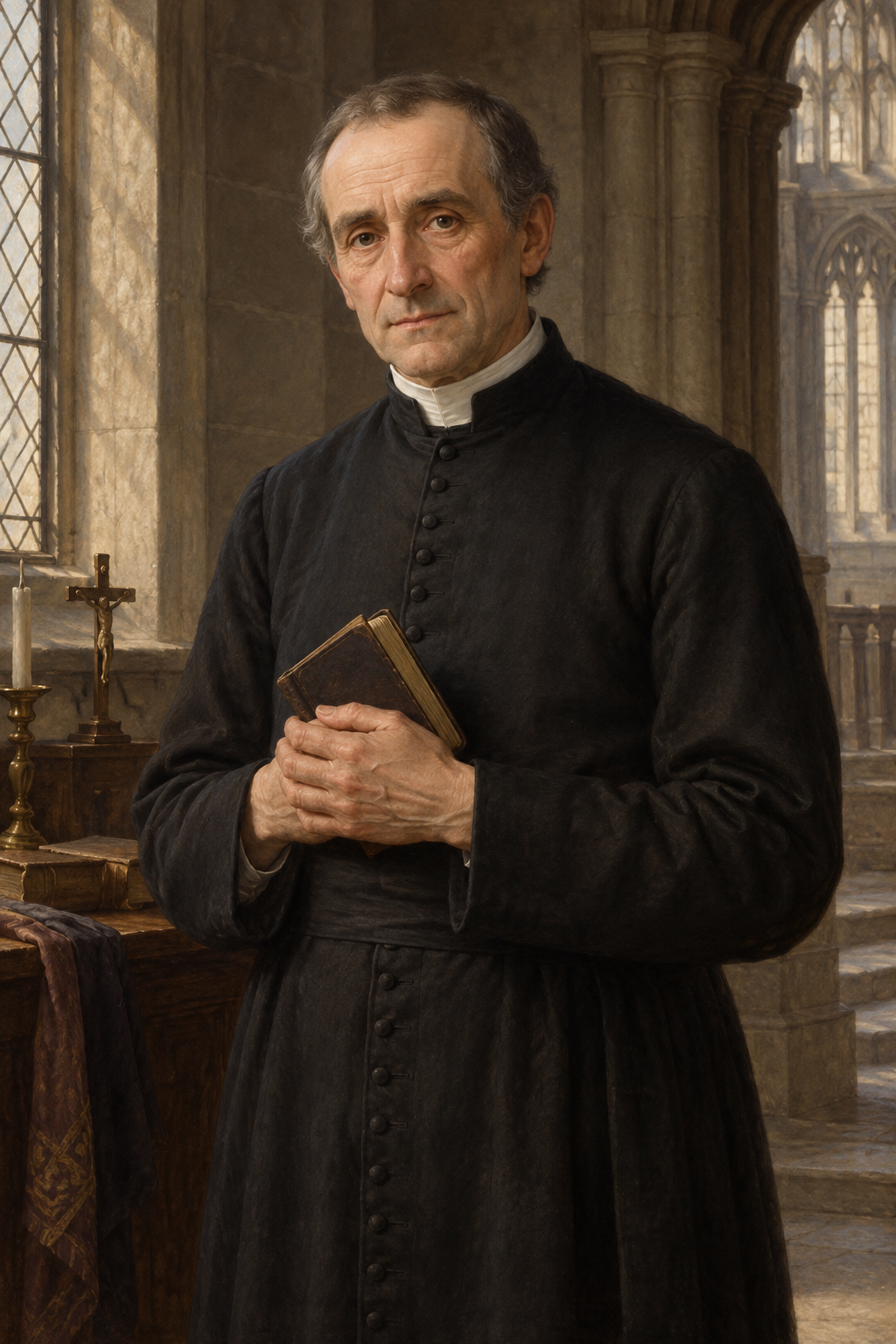
About John Southworth
Southworth was born in 1592 at Samlesbury Hall in Lancashire into a Catholic family that continued practicing its faith under legal restrictions. He trained at the English College in Douai, in what is now northern France, and was ordained there. He returned to England to serve Catholics in Lancashire and London. The Diocese of Westminster dates his ordination to 1618; another diocesan account says 1619, so the precise year is left out of this account.
The New Catholic Encyclopedia records an arrest in Lancashire in 1627 and later imprisonment in London. It cautions that his movements after an order to deport imprisoned priests are uncertain. By the 1630s he was serving in Westminster. During the plague of 1636–37, he and another priest, Henry Morse, helped Catholics who were sick or poor and lacked ordinary parish relief. Imprisonment interrupted this work more than once, and parts of his later movements remain obscure.
In 1654 Southworth was arrested again and tried at the Old Bailey. He acknowledged that he was a priest, although doing so exposed him to a death sentence under the law then used against Catholic clergy. He was executed at Tyburn on 28 June 1654. Westminster remembers his ministry to people on the margins of the city as well as his death; that local memory survives in the cathedral where his remains are kept.
After his execution, his body was taken to the English College in Douai. It was hidden during the French Revolution and rediscovered in 1927. His remains came to Westminster Cathedral in 1930. The Catholic Church canonized him in 1970 with the Forty Martyrs of England and Wales. The Diocese of Westminster keeps his local feast on 27 June and regards him as a patron of its clergy. These later acts of remembrance are distinct from the documented events of his seventeenth-century life.
Wondering how to weigh the stories and sources? Learn how to read a saint biography.