Biography
Junípero Serra
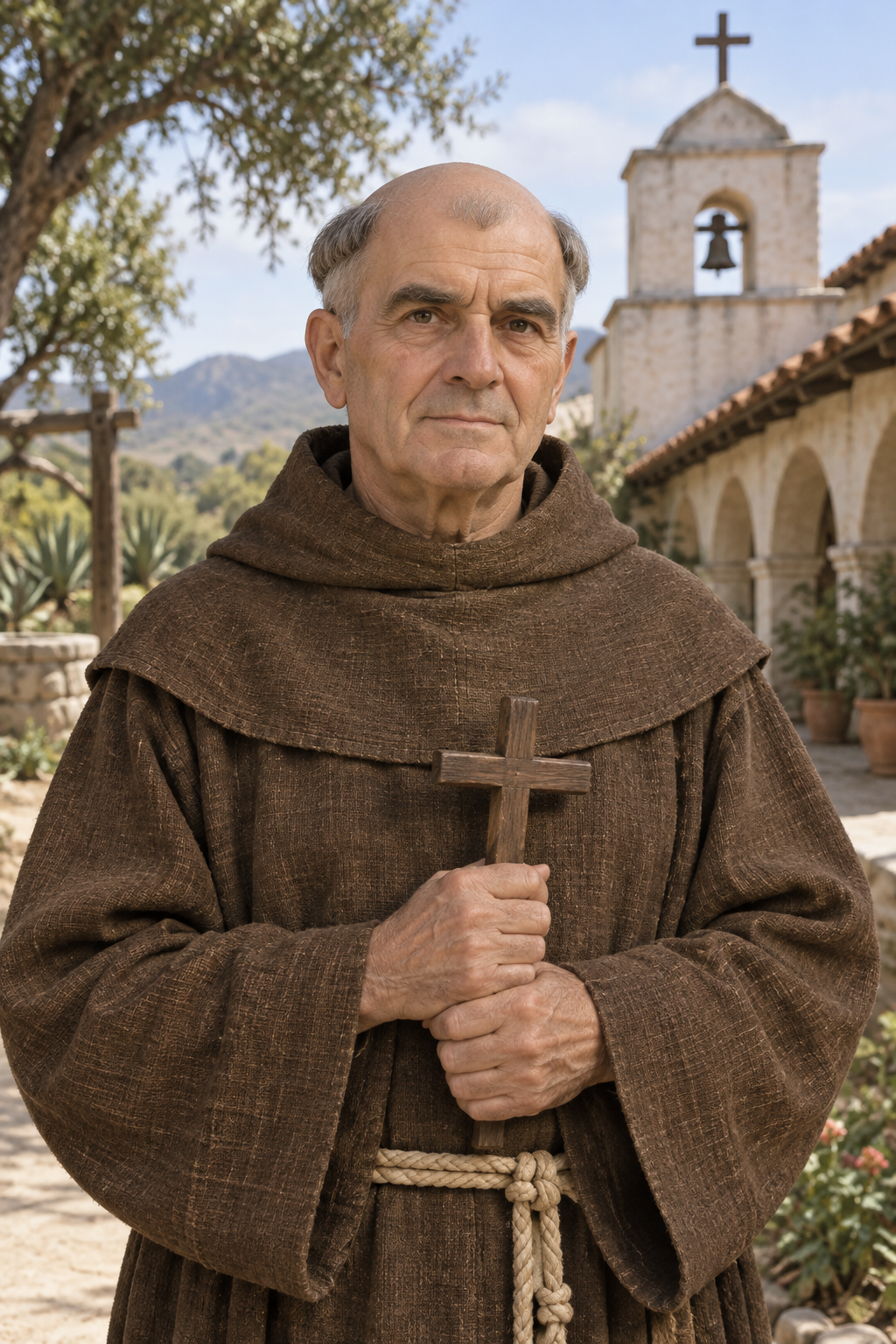
About Junípero Serra
Junípero Serra was born on November 24, 1713, in Petra on the Spanish island of Majorca. His baptismal name was Miguel José, and his parents were farmers. He entered the Franciscans as a young man and took the name Junípero when he made his vows. His early adult life was spent in study and teaching rather than on the road. After earning a doctorate, he taught theology before leaving for the Americas in 1749.
The decision interrupted a settled academic career. In New Spain, Serra worked among the Pame people of the Sierra Gorda. The Catholic Encyclopedia describes him learning their language and translating religious instruction for them. This period required a different kind of teaching from the university lectures he had given in Majorca. He later preached in other parts of Mexico before receiving responsibility for the former Jesuit missions of Baja California. The transfer followed the Spanish government's expulsion of the Jesuits, placing his work within decisions made by royal authority.
Spanish missions were religious institutions, but they also formed part of an imperial system. The National Park Service places them alongside military presidios and civil settlements as instruments of Spanish expansion. Mission churches and fields depended on Indigenous labour, while new crops and irrigation practices altered local economies. This setting is essential to understanding Serra's career: preaching and colonization were not separate worlds. Missionaries sought converts within a system that also claimed territory and reorganized communities. The institutions they built could outlast an individual friar and shape the daily lives of people who had not designed them.
In 1769 Serra travelled north with the expedition associated with Gaspar de Portolá. At San Diego, he and two other Franciscans blessed a cross on Presidio Hill on July 16. California's landmark register identifies this ceremony with the beginning of Mission San Diego de Alcalá. The location matters: the mission later moved away from its original site. Serra's work there should therefore not be pictured simply as life inside the buildings that visitors see today. Those surviving buildings belong to subsequent phases of construction and restoration.
The next year brought the founding of Mission San Carlos Borromeo beside Monterey Bay. Serra moved its community to the Carmel River area in 1771. The new location offered water and farmland and placed more distance between the mission and the presidio's soldiers. The National Park Service links the move in part to soldiers' mistreatment of Indigenous people. Carmel became Serra's headquarters as the mission network grew. He died there on August 28, 1784, before construction of the present stone church began. The familiar church is thus part of his later memorial landscape, not a building in which he served.
Serra sometimes challenged the colonial officials with whom he had to work. In 1773 he travelled to Mexico City to present a set of proposals to the viceroy. The Catholic Encyclopedia describes thirty-two articles concerning the administration of the missions. This was advocacy through the machinery of colonial government, not a withdrawal from it. His disagreements with officials show that the mission system contained competing authorities, even while its institutions continued to depend on one another.
The historical record also includes Serra's own acceptance of coercion. Historians Rose Marie Beebe and Robert Senkewicz describe baptized people being brought back to missions by soldiers and punished after leaving. Serra recommended whipping in one such case and offered shackles. Girls and women could be confined in separate quarters where crowded conditions helped disease spread. These practices cannot be excused by simply describing him as a protector. The same historians also record his plea that those responsible for the 1775 San Diego uprising should not be executed. That intervention did not amount to rejecting punishment altogether.
Ill health accompanied Serra's demanding schedule. The bishops' biographical booklet describes persistent trouble with his leg and difficulty breathing. Travel, administration and pastoral visits continued despite those limitations. Nine Alta California missions were established during his presidency, not the entire chain of twenty-one eventually built there. Other people sustained these communities.
Catholic assessments of Serra emphasize his missionary vocation without supplying a complete historical judgment on every mission practice. At his beatification in 1988, John Paul II presented him as a Franciscan priest devoted to bringing the Gospel to others. Francis returned to that theme in May 2015, linking Serra's mission with prayer and devotion to Mary under the title of Our Lady of Guadalupe. These homilies express the Church's understanding of his religious witness; they are not substitutes for listening to Indigenous accounts of mission life.
When Francis canonized Serra in Washington that September, he recalled the friar's encouragement to keep moving forward. Francis presented him as a missionary who defended the dignity of Indigenous communities and respected their customs. That religious assessment stands beside the historians' account of confinement and punishment. Serra remains significant both in Catholic remembrance and in the history of institutions that transformed Indigenous life in California.
Wondering how to weigh the stories and sources? Learn how to read a saint biography.
Explore similar vocations
Prayers for Junípero Serra
Junípero Serra: sourced prayer excerpt
grant by his intercession that we may so join our hearts to you in love