Biography
Leo the Great
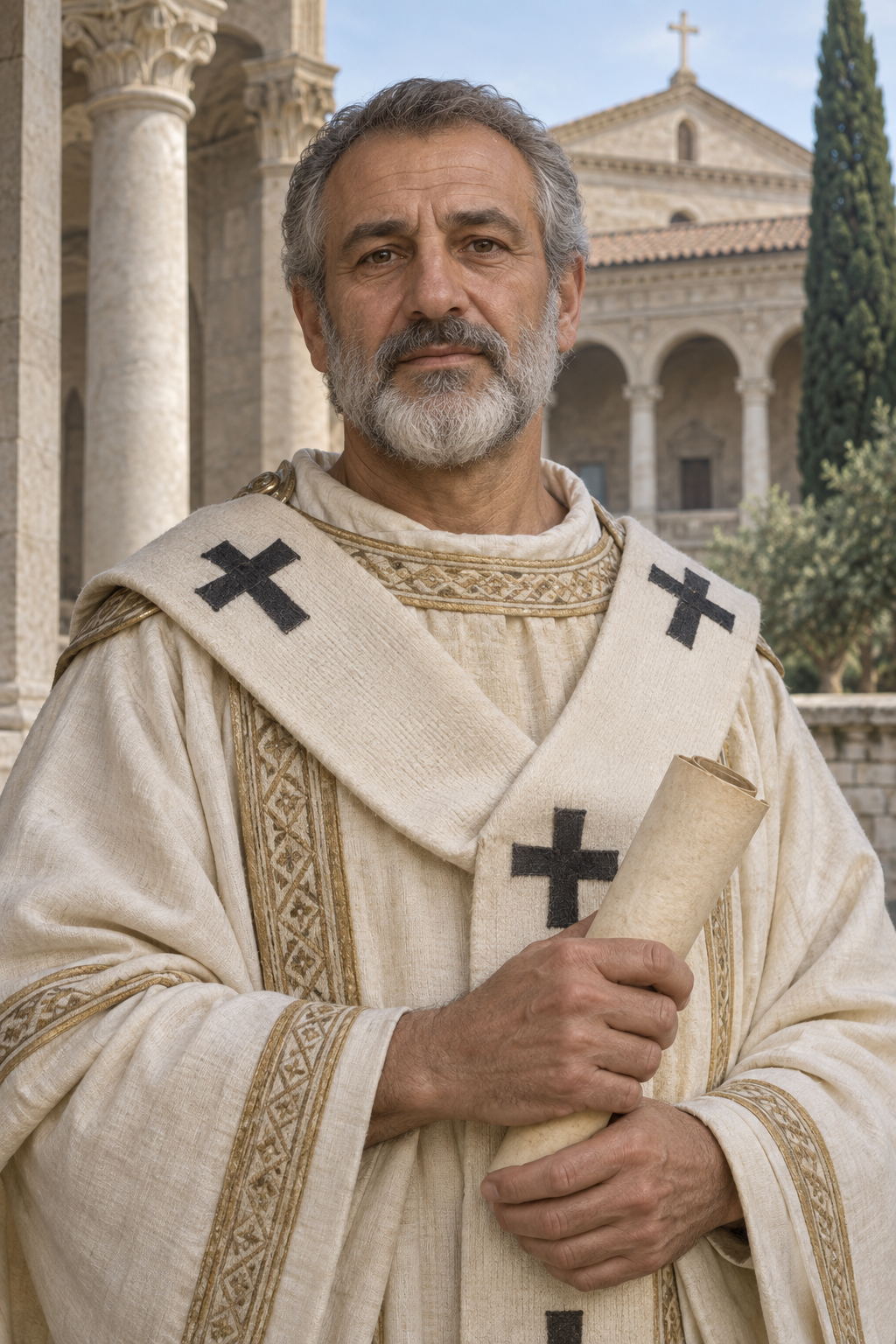
About Leo the Great
Leo the Great became bishop of Rome while he was away negotiating a settlement in Gaul. His election in 440 brought an experienced church administrator into an office that required him to answer disputes far beyond the city. He had already served as a Roman deacon around 430. His mission in Gaul concerned a dispute between Aetius and Albinus. Returning to Rome, he was consecrated on 29 September 440. The new pope would spend the next twenty-one years preaching, corresponding with bishops, and pressing his understanding of the responsibilities of Peter's successor.
His childhood is much less securely known than his public career. An Antiochian account places his birth around 400 and tentatively associates his family with Tuscany and Rome. That approximate year is a useful guide, not a recorded birthday. His surviving correspondence reveals concerns stretching across Spain, Gaul, and Africa: appointments, episcopal authority, and the routes by which contested decisions could be appealed to Rome.
Leo's pursuit of religious unity could also become coercive. In 443 he participated in an investigation of Rome's Manichaean community, assisted by clergy and senators. He encouraged Christians to report its members, and civil authorities banished those who would not abandon their beliefs. These were punishments imposed on religious dissenters, not simply theological arguments. His handling of episcopal disputes likewise asserted Roman authority. When Hilary of Arles deposed Celidonius, the displaced bishop appealed to Rome; Leo restored him and restricted Hilary's jurisdiction. Imperial support strengthened the pope's position, showing how closely church government and civil power could interact in his pontificate. Leo later restored wider powers to Hilary's successor, Ravennius, while reserving some dioceses to Vienne, an adjustment that shows his administration involved negotiated arrangements as well as forceful assertions.
The most influential statement of Leo's theology was his letter to Flavian of Constantinople, usually called the Tome. Its central concern was that Jesus Christ's humanity and divinity should both be confessed without making him two persons. Leo argued that the incarnation neither diminished the divine nature nor made Christ's human body unreal. For him, salvation depended on that union: the same Christ could truly share human weakness and yet possess divine power. He wrote as a bishop correcting what he regarded as serious error, connecting the theological dispute to the creed professed by ordinary believers.
The Council of Chalcedon in 451 received the Tome as a decisive statement of faith. Leo did not attend; his representatives participated on his behalf. Yet agreement over Christ's natures did not settle every question between Rome and the eastern bishops. Leo rejected the council's elevation of Constantinople's standing in canon 28, arguing that its arrangements violated the older rights of other churches. His support for the council's doctrinal teaching therefore coexisted with opposition to one of its institutional decisions. The distinction matters when following a pope who sought unity through both a common confession and a particular understanding of church order.
War brought another kind of responsibility. In 452 Leo joined an embassy to Attila, whose army had entered Italy. Prosper of Aquitaine's near-contemporary account names two other envoys, Avienus and Trygetius, beside the pope. It describes a Roman decision to seek peace and credits Leo's presence with persuading Attila to withdraw. The account presents the encounter through Christian confidence in divine help, but it does not describe armed apostles appearing in the sky. Leo's diplomatic role is clearer than any claim that he single-handedly determined the military outcome.
Three years later the Vandals plundered Rome. Leo could not prevent the sack, although the Antiochian account credits his intervention with limiting killing and destruction. It also remembers his practical response afterward: sending assistance to captives taken to Africa and helping restore damaged churches. These efforts belonged beside his preaching about almsgiving, rather than outside his work as a bishop.
His sermons brought theological convictions into the lives of his congregation. At Christmas he urged Christians to remember the dignity they had received and not return to conduct unworthy of their baptism. The appeal joined a teaching about Christ with a demand for changed habits; it was not an abstract argument left in the meeting rooms of bishops.
Leo died on 10 November 461 and was buried near the tomb of Peter. Benedict XIV declared him a Doctor of the Church in 1754, a later recognition of his teaching rather than an event in his lifetime.
Later art made his encounter with Attila an emblem of papal protection. In Raphael's Vatican fresco, the apostles Peter and Paul appear with swords: the museum identifies this as legend. The painting places the meeting near Rome even though the historical encounter occurred in northern Italy near Mantua. It also gives Leo the features of the sixteenth-century Pope Leo X. The image records how later patrons wished to remember Leo, while his letters and sermons preserve the voice of a working fifth-century bishop.
Wondering how to weigh the stories and sources? Learn how to read a saint biography.
Explore similar vocations
Prayers for Leo the Great
Petition from Leo's troparion
Pray that Christ our God may save our souls!