Biography
Leonard of Port Maurice
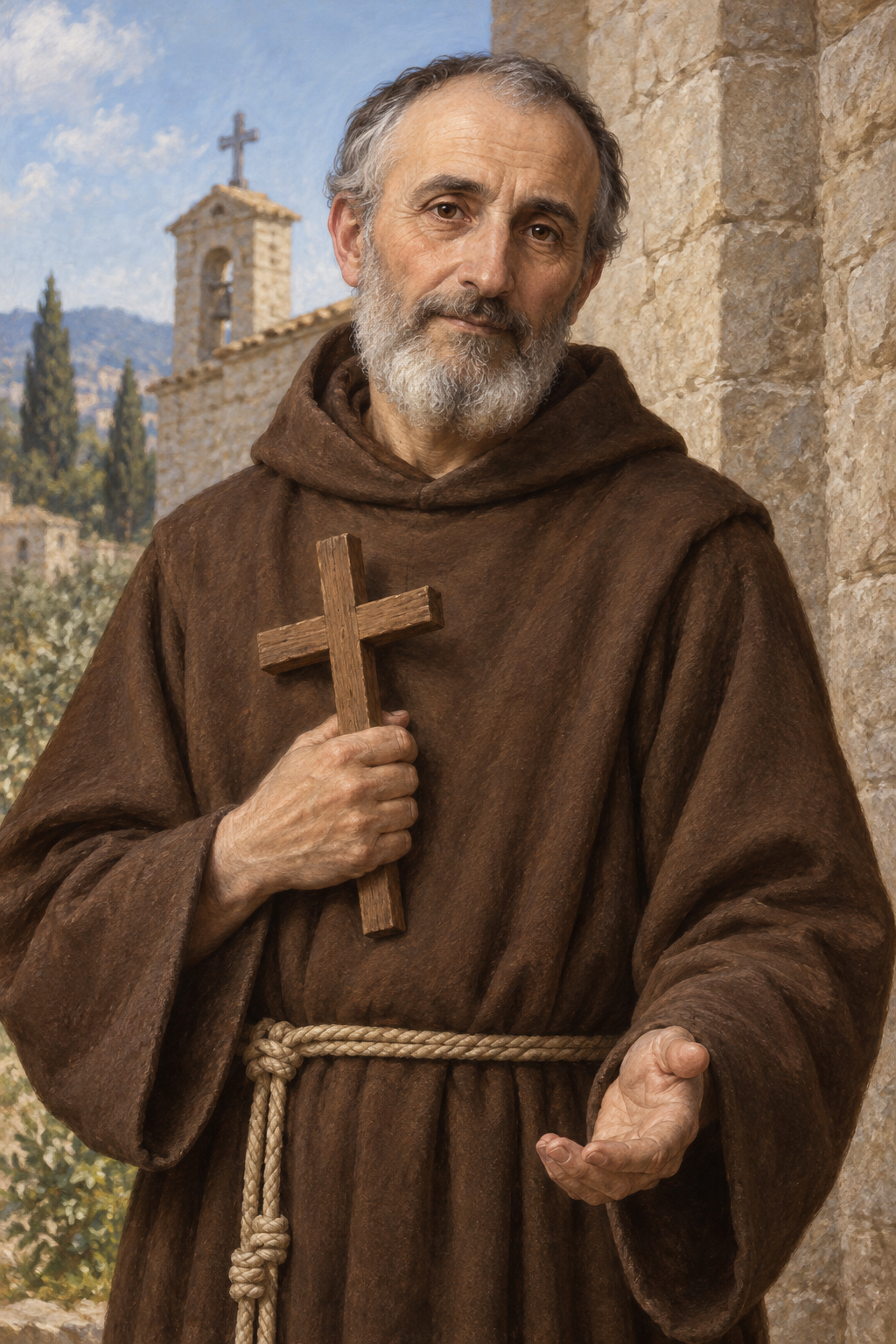
About Leonard of Port Maurice
The Dicastery for the Causes of Saints identifies Leonard as Paolo Girolamo Casanova and gives his birthplace as Porto Maurizio, now Imperia, on December 20, 1676. Treccani records that he was sent to Rome as a boy to study at the Jesuit Collegio Romano. There he encountered Franciscan life at the Riformella house of San Bonaventura al Palatino. These sources agree on his birth date and birthplace; this account does not add a family narrative beyond details needed to distinguish his birth name from his religious name.
Casanova entered the novitiate at Ponticelli on October 2, 1697, and took the religious name Leonardo. Treccani says he made solemn vows the following year and was ordained a priest in September 1702. He hoped to join a mission to China, but his superiors kept him in Italy after he became ill. In 1704 they sent him to the Franciscan convent at Porto Maurizio. After recovering, he began preaching in the area in 1708. The sources disagree about the precise illness, so this biography does not name a diagnosis or repeat accounts of miraculous healing.
In 1709 Leonard was assigned to the Franciscan retreat at Monte alle Croci near Florence. Treccani describes this as a center for his itinerant missions, alongside retreats at Prato and near Florence. In 1730 Pope Clement XII called him to Rome; afterward, Leonard preached missions in the Papal States, Tuscany, the Republic of Genoa, and the Kingdom of Naples. Treccani, drawing on a mission diary kept by his secretary Diego da Firenze, counts 343 missions over 44 years. The Dicastery of the Causes of Saints gives a rounded total of more than 300 missions. Since both accounts support sustained travel and preaching but give different totals, this profile does not state an exact aggregate.
Treccani describes Leonard’s missions as carefully organized periods of preaching, prayer, and confession. He considered hearing confessions a central part of this ministry. The Dicastery and Vatican News also emphasize the devotional books he published and his work spreading the Via Crucis. That practice was already established before Leonard’s career: Franciscan scholar Pietro Messa notes that Salvatore da Cagliari erected a Via Crucis at Monte alle Croci in 1628. Leonard’s contribution was to preach the devotion and introduce meditations at its stations, not to invent it.
During Lent 1710, Leonard preached the Via Crucis at Monte alle Croci and added meditations for each station. Messa traces his later efforts to extend the devotion beyond Franciscan churches. In 1731 Pope Clement XII authorized erection of the Via Crucis in all churches. Leonard erected many sets during his missions; sources differ in totals, so no number is assigned here. These details show the devotional practice developing over time rather than originating with one person.
For the Holy Year of 1750, Pope Benedict XIV entrusted Leonard with preaching and preparation for pilgrims. The Dicastery’s biography says he erected fourteen Stations of the Cross and a large cross at the Colosseum. Vatican News gives the same episode. Messa places the Colosseum work within the longer history of the devotion and reports that the Colosseum Via Crucis was blessed on December 27, 1750. The Colosseum work is included as one distinct event; the account does not claim that Leonard alone created the modern global form of the devotion.
Leonard returned to the retreat of San Bonaventura al Palatino in Rome, where he died in 1751. The Dicastery, Vatican News, and the older Catholic Encyclopedia give November 26; Treccani says late on November 25, and the Franciscan Order’s page says the night of November 25. The discrepancy may reflect how the time of death was assigned to a calendar day, but the sources reviewed do not resolve it. The structured death date therefore retains only the documented year, +1751; Rome and the convent are recorded independently as the death place.
The Dicastery for the Causes of Saints gives November 26 as Leonard’s liturgical memorial, which the Roman Catholic record retains as a feast rather than a death date. The Dicastery page’s metadata panel lists his canonization as June 29, 1869, while that page’s own biography, Vatican News, the Order of Friars Minor, Treccani, and Messa give June 29, 1867. This draft uses the consistently corroborated 1867 date and records the official-page conflict in the editorial research note. No canonization narrative or miracle account is added.
Wondering how to weigh the stories and sources? Learn how to read a saint biography.