Biography
Louis Beaulieu
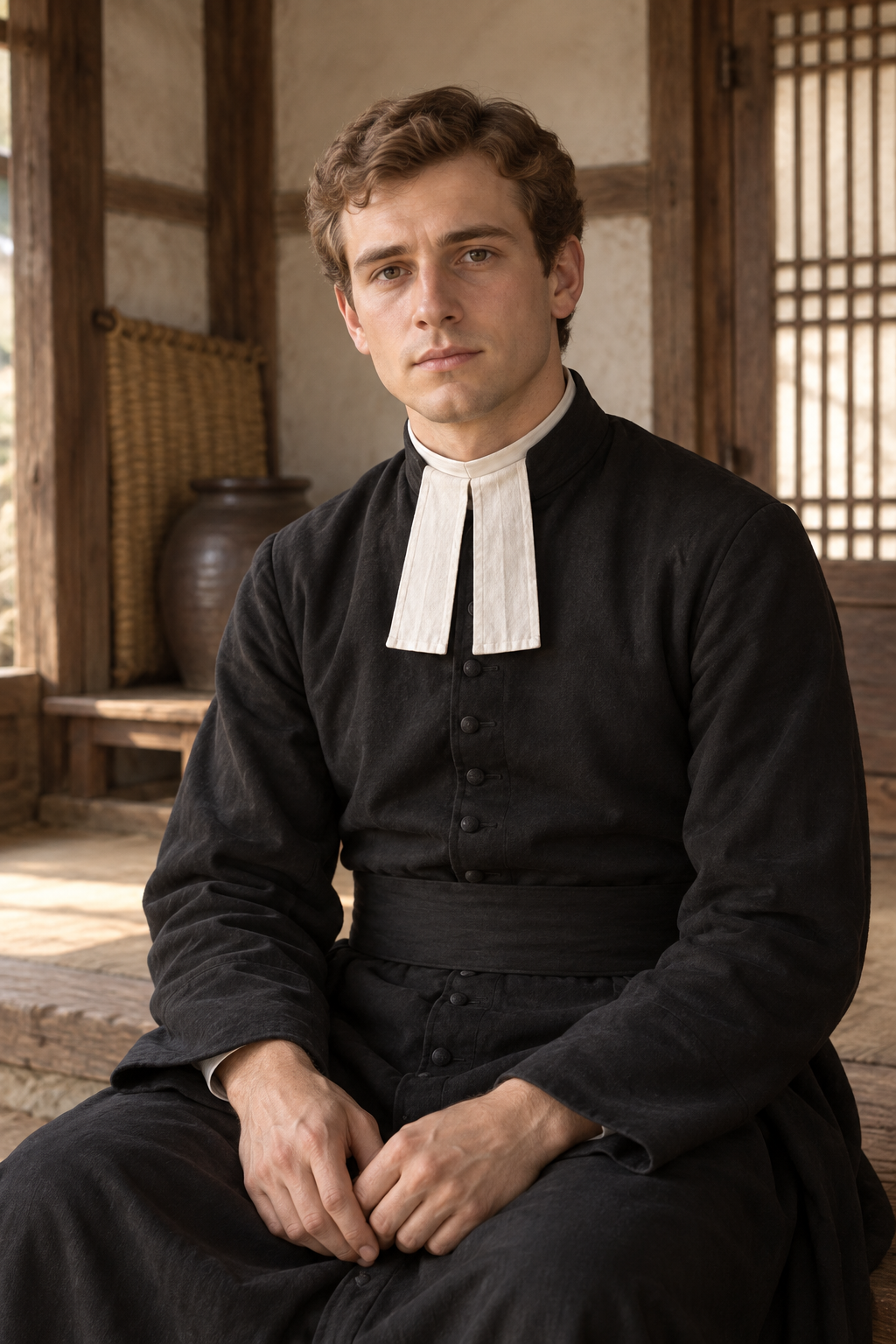
About Louis Beaulieu
Bernard-Louis Beaulieu grew up in Langon, France, and studied at the minor and major seminaries in Bordeaux. A visiting missionary’s account of work in China helped awaken his interest in serving abroad. His mother died during his seminary years, and he continued preparing for priesthood while seeking permission to join the foreign missions.
While he waited, Beaulieu taught younger pupils at the minor seminary. Pierre-Gabriel Deydou’s biography describes him giving religious instruction and helping older students learn plainchant. Before feast days, he rehearsed the office they would sing together. This work occupied the period before he entered the missionary society and gave him responsibilities in a community close to home.
At the Paris mission seminary, Beaulieu worked under Father Rousseille on La Salle des Martyrs, contributing its notices on earlier martyrs. The archive notice identifies this work as part of his preparation before departure. It records his arrival at the mission seminary as a deacon and his ordination to priesthood in May 1864.
Illness interrupted those duties in 1863. In an August letter to a friend, Beaulieu described an operation to remove a growth on his neck. When his strength returned too slowly, he arranged for someone else to take his teaching post. He then contracted measles, followed by bleeding that weakened him further, and finally a serious chest illness. He spent June in bed and July recovering. Looking back, he wrote with gratitude for his recovery but also remembered how difficult even familiar religious practices had become when he was severely ill. His account presents this period as an ordeal he had survived, with continuing concern about how he had responded to it.
Permission to enter the Paris Foreign Missions Society arrived while he was still regaining his strength. On August 4, he wrote to Father Rousseille that he had received the archbishop’s authorization. He was so surprised and pleased that he found it hard to describe his feelings. He hoped to reach Paris soon, although he could not yet travel immediately. The letter joined his excitement about the new assignment with an acknowledgment that recovery from his illness was not complete. He asked Rousseille to help him give thanks.
Once in Paris, Beaulieu wrote to his family about the pain of leaving them. He hoped that knowing he was happy would ease their sadness. He thanked them particularly for the care they had given him during his long illness and said that he remembered their kindness in his daily prayers. He did not know how long their separation would last. For him, prayer and the faithful fulfillment of their duties were ways of remaining united across that distance. The letter ends by reassuring them of his affection, despite the departure that had troubled them.
At the mission seminary, Beaulieu helped Father Rousseille prepare a book about the society’s martyrs by writing biographical notices. He was ordained a priest in May 1864 and assigned to Korea.
Writing after his first Mass, he described his astonishment at having become a priest. He told his family that he had remembered them among the living and prayed for relatives who had died. He sent them his blessing and hoped to answer their earlier kindness through his ministry. The letter connects his new priestly responsibilities with the people who had supported him before ordination.
Before leaving France, Beaulieu also made arrangements for his possessions. In a testament dated July 11, 1864, he directed that everything belonging to him should go to the Korean mission if he died before reaching it. If he died after entering Korea, what he had there was to remain for its service, and funds held elsewhere were to be sent to it. The instruction applied even if he died in another country. This written provision committed his resources to the mission independently of whether he lived long enough to work there.
His farewell letter asked for the blessing of the uncle and aunt who had cared for him as parents. He invited them to write their blessing and send it to Marseille. When it arrived, he intended to kneel, read it and pray before continuing his journey. This request preserved their place in his life at the moment he was leaving it behind geographically.
Beaulieu entered Korea in May 1865 with Dorie, de Bretenières and Huin. His September letter describes the mission’s boat arriving at midnight, just before the rendezvous was to be abandoned. He and Dorie studied Korean in separate villages. Berneux allowed him to wear ordinary Korean clothing for short journeys instead of mourning dress.
By early 1866, Beaulieu had learned enough Korean for Bishop Berneux to plan a new assignment for him. He was arrested before he could leave. After imprisonment and torture in Seoul, he was executed at Saenamteo that March with the bishop and two fellow missionaries.
Wondering how to weigh the stories and sources? Learn how to read a saint biography.