Biography
Lucas of Saint Joseph (José Tristany Pujol)
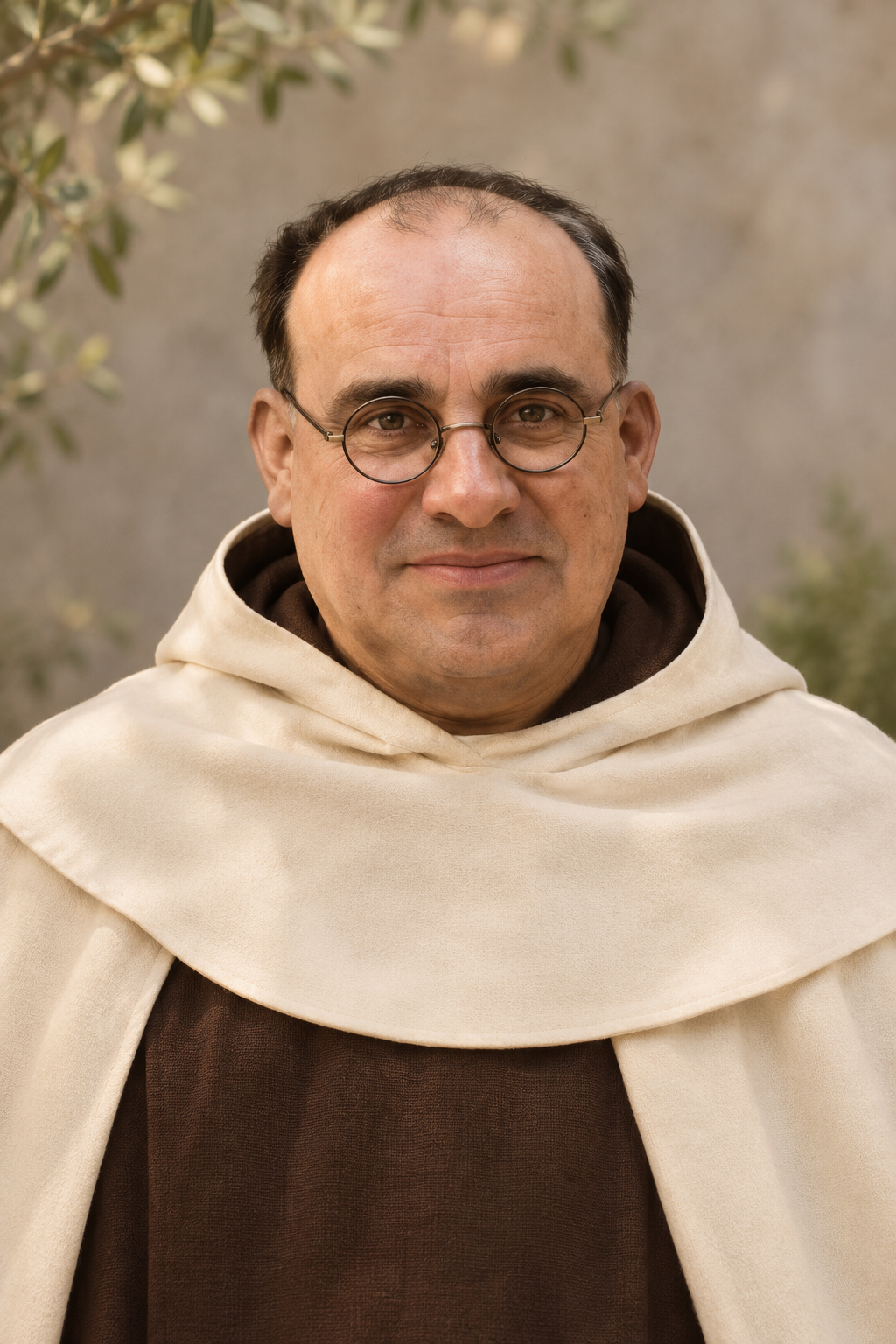
About Lucas of Saint Joseph (José Tristany Pujol)
José Tristany Pujol was born on December 14, 1872, at Espinagosa, his family’s farmhouse near Su in the province of Lleida. The youngest of six, he lost his father early and spent part of his childhood with relatives in Tarragona. By the time he went to live with his uncle and aunt, his older brother Melitón had already become a Discalced Carmelite. In religion Melitón was known as Ludovico of the Sacred Hearts. Years later José would write about the brother who had entered Carmel before him.
At eighteen José entered the Desert of Las Palmas, a Carmelite community near Castellón. He professed his first vows on August 20, 1891, as Lucas of Saint Joseph. His brother received his solemn vows three years later. Lucas studied philosophy in Ávila and theology in Valencia, where he was ordained in 1899. Teaching occupied his first years as a priest. He taught young Carmelites at Burriana and gave a series of public talks on religion and philosophy during Lent. From Burriana he moved to Tarragona to teach theology.
In 1905 Lucas set out for North America. His route took him by way of San Francisco to Durango in Mexico, where he became superior of the community. Early in 1907 he moved to Mazatlán. His stay was interrupted by a call back to Spain in 1908. The Catalan Carmelites were rebuilding their province, and Lucas had been named its vicar. Its houses now lay on two continents. A decision made in Tarragona could determine who would staff a church on the Pacific coast of Mexico.
Lucas went back to Mexico in 1911. Political and religious insecurity led the friars to seek another place to work across the border. Their Arizona mission began in Winkelman in 1912 and spread to other mining settlements and to Tucson. In 1916 Lucas also helped establish a house in Washington, D.C., near the Catholic University of America. These foundations served different purposes. The western communities provided priests for parishes and outlying missions. The house in Washington put young Carmelites within reach of higher studies.
The Diocese of Tucson remembers Lucas as the founding pastor of Holy Family Parish. Bishop Gerald Kicanas also identified his service at Holy Cross in Morenci, Assumption in Florence and Santa Cruz in Tucson. One place where his work can be traced is San Pedro Chapel, a mission served from Holy Family. Its historic-register nomination names him among the priests who celebrated Mass there. It describes the wider work of the Carmelites at the chapel, including visits to the sick, instruction, a choir, and help with food and clothing. The different priests shared that work with one another and with the community that sustained the chapel.
Throughout these journeys Lucas wrote for readers far beyond his classrooms. Two books published in Barcelona in 1914 addressed a young reader, one in the form of letters from his cell. In 1918 a Phoenix press printed his work on the encounter between Latin and American ways of life. Later he published a commentary on counsels by John of the Cross. He also wrote a series of works on the crucifix. The surviving bibliography places books printed in Arizona alongside works published in Barcelona, Tarragona and Rome, a record of how widely both the man and his writing traveled.
By the time Lucas returned to Spain in 1924, the territory for which the provincial leadership was responsible included nine Arizona parishes as well as houses in Spain, Mexico and Washington. He was elected provincial and the following year became a member of the order’s general council in Rome. The position took him back to the United States on visits to Carmelite houses and also to Cuba and the Iberian Peninsula. In 1933 he settled in Barcelona as prior. In May 1936 the friars elected him provincial again.
Within two months of that election, fighting broke out around the Barcelona monastery at the beginning of the Spanish Civil War. The American province describes wounded men being brought inside. The friars moved mattresses from their cells to make room for them and later transferred the wounded to the library. As the position became untenable, the community prepared to leave. The accounts recall Lucas speaking to the other friars before their departure. He put on civilian clothes, went out into the city and was shot on July 20.
The Catholic Church beatified Lucas in Rome on October 28, 2007. His name headed one of the causes brought together for that ceremony. In Arizona, the news had a more local meaning. The priest being honored in Rome had once been responsible for Holy Family and for the small communities reached from it. His name survives in the history of a Tucson chapel as well as in the title pages and records of his order.
Wondering how to weigh the stories and sources? Learn how to read a saint biography.