Biography
Ludger
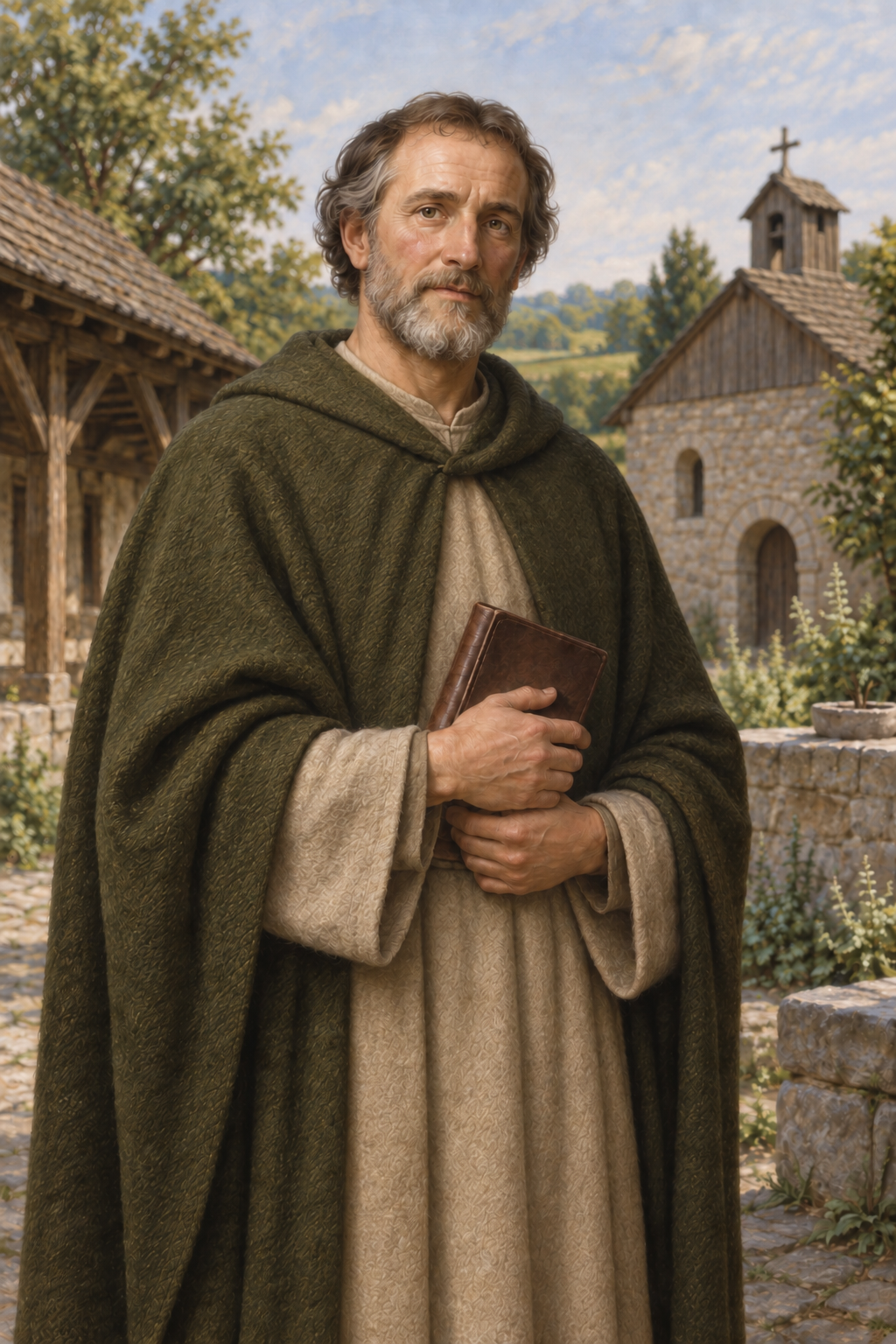
About Ludger
Liudger was born around 742 near Utrecht, in a Frisian region. A later ninth-century life by his nephew Altfrid says his family sent him to study with Gregory of Utrecht. Liudger later wrote a short life of Gregory for students, one of the few writings directly associated with him. The date of his birth is approximate: modern biographical sources place it around 742, while an older entry gives approximately 744. The precise birthplace is also uncertain, so this account uses the region near Utrecht rather than a specific settlement.
In 767 Liudger went to York, where he studied with Alcuin and was ordained a deacon. He returned to Frisia and received priestly ordination after July 777. He then preached in the region around Dokkum and served as a teacher in Utrecht. In 784, amid the Saxon revolt and its spread into Frisia, he withdrew to Utrecht. He traveled to Rome and spent an extended period at Monte Cassino, learning about monastic life; sources distinguish this from taking permanent monastic vows.
In 787 Liudger returned to missionary work among five Frisian districts near the lower Ems. He later worked in West Saxony, part of the expanding Carolingian realm. The surviving biography describes his work within this political and religious setting, where local resistance and Frankish military campaigns shaped the region. The record supports his role as a missionary and organizer, but not claims that he personally converted entire peoples or that the process was peaceful and voluntary throughout.
Around 793 Liudger began building a church and community at Mimigernaford, a settlement that developed into Münster. This monasterium served as a center for the West Saxon mission and later as the seat of the new bishopric. Sources differ in their terminology for the community: it was not necessarily a Benedictine monastery in the strict sense. Liudger also founded Werden, where a monastery was completed around 801. He intended the site to support prayer and provide a retreat for himself and his clergy; later accounts add details that the cathedral history considers uncertain.
Liudger was consecrated bishop of Münster by 805. The cathedral history narrows the likely date to 30 March 805 by comparing documentary references with the weekday of the ceremony; because the earlier lives themselves do not state a consecration date, the structured proposal retains only the year. As bishop, he taught at the cathedral school, visited communities in his diocese, preached, and organized church life. Altfrid’s account, written around 839–849, is the principal early narrative source; it was composed at the request of Werden’s monks and drew on testimony gathered by the author. Its biographical section should be distinguished from its report of grave miracles.
Liudger died at Billerbeck on March 26, 809, after traveling through his diocese. The Münster cathedral account, drawing on Altfrid, says he preached in Coesfeld and Billerbeck on the day before his death. He was buried at Werden, in accordance with his preference. Later vitae expanded the story of his life with miracle episodes, including the healing of a singer and the growth of the goose legend. Those traditions belong to the history of his veneration and are not presented here as independently verified events. His work as a missionary bishop and the early Münster church remain the best-supported reasons for his historical significance.
Wondering how to weigh the stories and sources? Learn how to read a saint biography.