Biography
Luigi Carrara
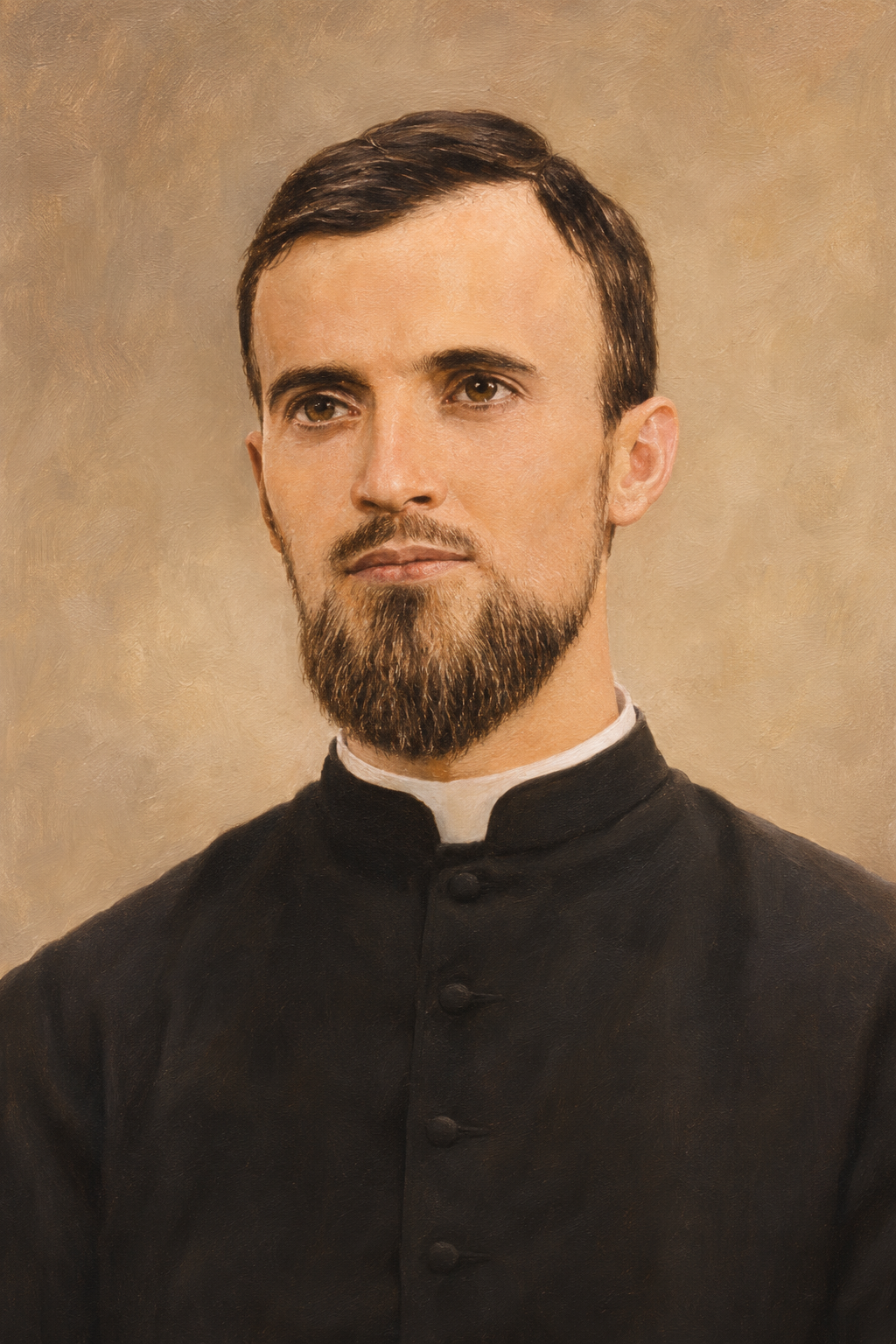
About Luigi Carrara
Luigi Carrara was a Xaverian priest who served in eastern Congo during the last two years of his life. He was born at Cornale di Pradalunga on 3 March 1933. He entered the Xaverian school at Pedrengo in 1947, made his first religious profession in 1954 and his perpetual profession in 1959. He was ordained a priest on 15 October 1961. The following September he left for Congo. These years of formation took him through several houses of the congregation, from initial schooling to theological study at Parma. His letters connect that preparation with his missionary work.
His family remembered a boy who enjoyed ordinary games and helping with work in the fields. Giuseppe Dovigo’s account preserves his mother’s recollection of a gentle child who was liked by his companions. His father remembered their walks into the mountains and the pleasure of working together. The decision to become a missionary nevertheless surprised the family when the parish priest brought them the news. His parents considered whether he might instead enter the diocesan seminary. Carrara persisted in his wish to join the Xaverians. The family’s concern reappeared when his assignment to Congo arrived amid reports of unrest, but he remained committed to going.
The postulator Faustino Turco describes the formation behind that determination. He presents Carrara as a religious appreciated by superiors and fellow students for prayer and readiness to serve. In Turco’s account, theological study became a source of meditation rather than a pursuit detached from daily life. The sacraments shaped how he understood his relationship with people in need. The postulator interprets his later missionary service through that connection: attentiveness to poor and vulnerable people, combined with a reluctance to condemn them. This is the congregation’s account of the habits that preceded his final decision to remain in a dangerous situation.
Arrival required patient learning. The Bergamo diocesan missionary center describes his efforts to learn Kiswahili while responding to the demands of pastoral work. People came to speak with him or seek confession; children wanted to play, and he repaired balls for them. Buildings and communal spaces also needed attention. After the first months he began walking to outlying villages with local guides. The journeys involved mountain paths and river crossings. He encountered both hesitation and welcome, receiving food and lodging while offering the ministry for which he had come. Such visits took him beyond the central mission and into communities whose needs could not be reached simply by remaining at home.
At Fizi he worked alongside Giovanni Didonè. His former spiritual director, Amato Dagnino, visited him in Congo and described both his growing command of the language and his diligence. Dagnino found him studying diligently, teaching catechumens and preaching, and valued the combination of kindness and sustained work.
His last surviving message to his family gives a quieter view of life under threat. He reported that he had settled at Baraka with a religious brother after travel between Fizi and Baraka became difficult. Their activity was severely restricted, largely to the house and church. He asked his family to remember them in prayer and expressed hope that the small message would arrive. The note ended by distinguishing their adequate food from the peace they lacked. The collection dates it to 22 November 1964 on the evidence of the person who carried it across the lake.
On 28 November 1964 armed rebels came to Baraka. Carrara was hearing confessions when Vittorio Faccin was shot outside. He went to his companion and was killed there. The account published by the diocesan missionary center presents his refusal to leave Faccin as the final expression of his solidarity with a fellow missionary.
His death left memories in both Congo and Italy. Writing after the beatification, Fiorenzo Raffaini recalled attending a sorrowful memorial Mass as a young Xaverian student when news of the killings reached home. He also remembered visiting Carrara’s and Faccin’s tomb at Baraka during a missionary placement in 1975. Raffaini contrasted those memories with the crowded thanksgiving celebration at Cornale in November 2024. His account records an earlier sign of local devotion: in 1980, 235 parishioners petitioned the Xaverian superior general and the bishop of Bergamo to open Carrara’s cause. Remembrance had been sustained through prayer, visits and the initiative of people who wanted his life investigated.
Carrara was beatified with Faccin, Giovanni Didonè and Albert Joubert on 18 August 2024.
At a subsequent thanksgiving Mass in Parma, Cardinal Marcello Semeraro placed their memory within the Xaverian missionary vocation. He urged the congregation to receive the recognition as a call to renewed service and joy in sharing the Gospel. His homily treated the martyrs as an inheritance that should shape the lives of those who followed them.
The Diocese of Bergamo commemorates Blessed Luigi Carrara on 28 November as a priest and martyr.
Wondering how to weigh the stories and sources? Learn how to read a saint biography.