Biography
Luke
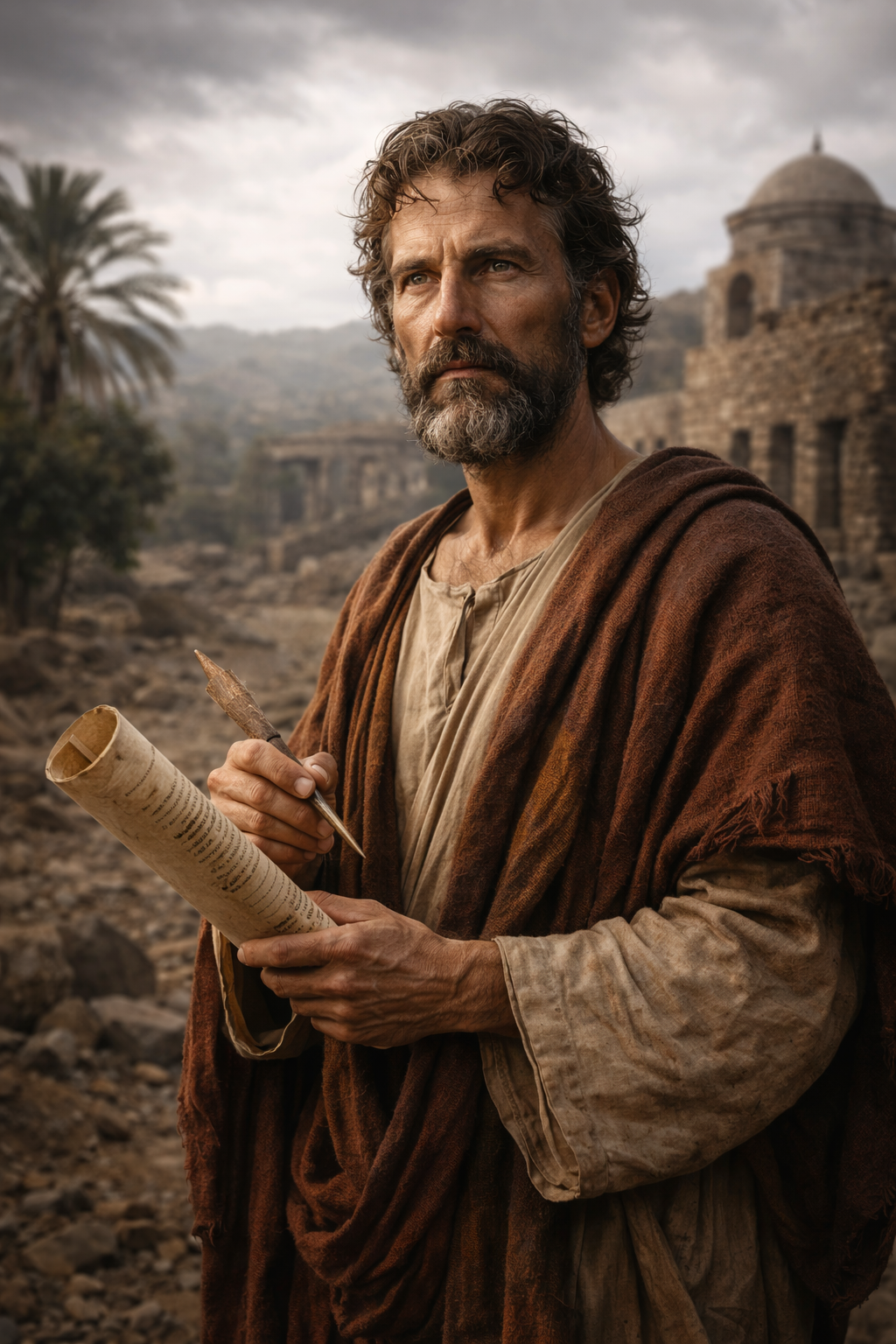
About Luke
Luke enters the New Testament as a name in letters associated with Paul, not as a narrator who supplies a life story. Philemon includes Luke among Paul's coworkers. Colossians calls Luke the beloved physician and places him among companions who send greetings. Second Timothy says that Luke alone remains with the letter's imprisoned speaker. These references support the memory of a Christian worker attached to Pauline circles. They do not disclose Luke's parents, birthplace, conversion, education, age, or death. Because scholars dispute the authorship and dating of Colossians and Second Timothy, even their personal settings must be used with care rather than combined into an effortless modern biography.
The title ‘physician’ comes directly from Colossians, where Luke is described with affection. It is therefore part of the canonical portrait, although it cannot establish the length or character of his medical practice. Older readings sometimes searched the Gospel for technical vocabulary and then treated every healing detail as proof of a doctor's eye. The Gospel itself never says its author practiced medicine, and ordinary Greek medical terms were not exclusive to physicians. The responsible conclusion is narrower: a Luke remembered in Pauline tradition was called a physician; Christian tradition later identified that man with the evangelist.
The Gospel according to Luke and Acts form a deliberate two-volume work. Both are addressed to Theophilus, and Acts opens by referring back to the first book. The Gospel's prologue says that many had already attempted narratives, that traditions came from eyewitnesses and ministers of the word, and that the writer investigated matters before composing an orderly account. That statement shows literary care and dependence on received testimony. It also places the writer after the first eyewitness generation. Neither prologue names Luke. The familiar title and the identification with Paul's coworker belong to the church's reception of an otherwise anonymous author.
The USCCB introduction dates the traditional identification from the late second century and describes the author as highly literate in Greek Scripture and Hellenistic writing. Most scholars date the Gospel after Jerusalem's destruction in 70, often around 80–90, and understand Mark and other traditions as sources. Such conclusions concern the book, not a securely reconstructed career of Saint Luke. They make it especially important not to claim that he interviewed Mary, witnessed Jesus's childhood, or personally observed every event that only his Gospel records. The text honors earlier witnesses while presenting the author's own researched arrangement for Theophilus.
Acts sometimes shifts from third-person narration to ‘we.’ The first such passage begins at Troas, crosses to Samothrace and Neapolis, and reaches Philippi. Later ‘we’ sections accompany other voyages. They may preserve the viewpoint of a travel companion, and they contributed to the traditional association of the author with Paul. Yet the pronoun never says ‘I, Luke,’ and scholars have proposed several explanations for its literary function and source. These passages can support a cautious travel setting for the work's narrator; they cannot establish every stop as Luke's personal itinerary or justify drawing a continuous route under his name.
The literary achievement traditionally associated with Luke is substantial. The Gospel gives sustained attention to prayer, the Holy Spirit, mercy, wealth and poverty, women and men responding to Jesus, and salvation reaching beyond familiar boundaries. Acts continues the story through the Spirit-led expansion of the early Christian movement. These emphases belong first to the books and their authorial voice. Calling them Luke's virtues is appropriate only within the traditional attribution. The prologue itself offers firmer actions: gathering testimony, examining inherited material, and writing for a reader's assurance. Those acts support diligence and care without turning the author into a modern historian or stenographer.
Eastern Christian tradition expands the sparse record. The Orthodox Church in America remembers Luke as a native of Antioch, one of the Seventy, the unnamed companion of Cleopas on the Emmaus road, Paul's enduring coworker, a missionary in several regions, and a martyr at Thebes. It also credits him with painting icons of Mary and of Peter and Paul. These stories have shaped devotion and iconography, but the New Testament does not make those identifications. The icon-painter claim appears in later reception and cannot make any surviving image an authenticated work from Luke's hand. The mission list must not be converted into a mapped route.
Traditions about Luke's death and remains are also layered. A Vatican message describes ancient testimony placing his death in Boeotia and burial at Thebes, a transfer to Constantinople reported by Jerome, and a later presence in Padua that historical research continued to examine. Other communities preserve related relic claims. Veneration is a documented historical practice; identification of bones with the New Testament coworker is not established merely by custody or later scientific examination. This packet therefore leaves Luke's death date and place blank and records Thebes only as a traditional setting, without a precise site or coordinate.
Church calendars preserve a more certain form of reception. Roman Catholic and Eastern Orthodox communities commemorate Luke on October 18; the OCA also lists April 22. These are liturgical observances, not evidence that Luke died on either date. His enduring significance rests in two related but distinct memories: the Pauline coworker called physician, and the evangelist to whom the church has long attributed Luke–Acts. Historical care does not diminish either memory. It shows where the canonical name ends, where literary evidence begins, and where later communities supplied mission, martyrdom, art, and relic traditions that should be honored without being mistaken for eyewitness documentation.
Wondering how to weigh the stories and sources? Learn how to read a saint biography.