Biography
María Antonia de Paz y Figueroa
About María Antonia de Paz y Figueroa
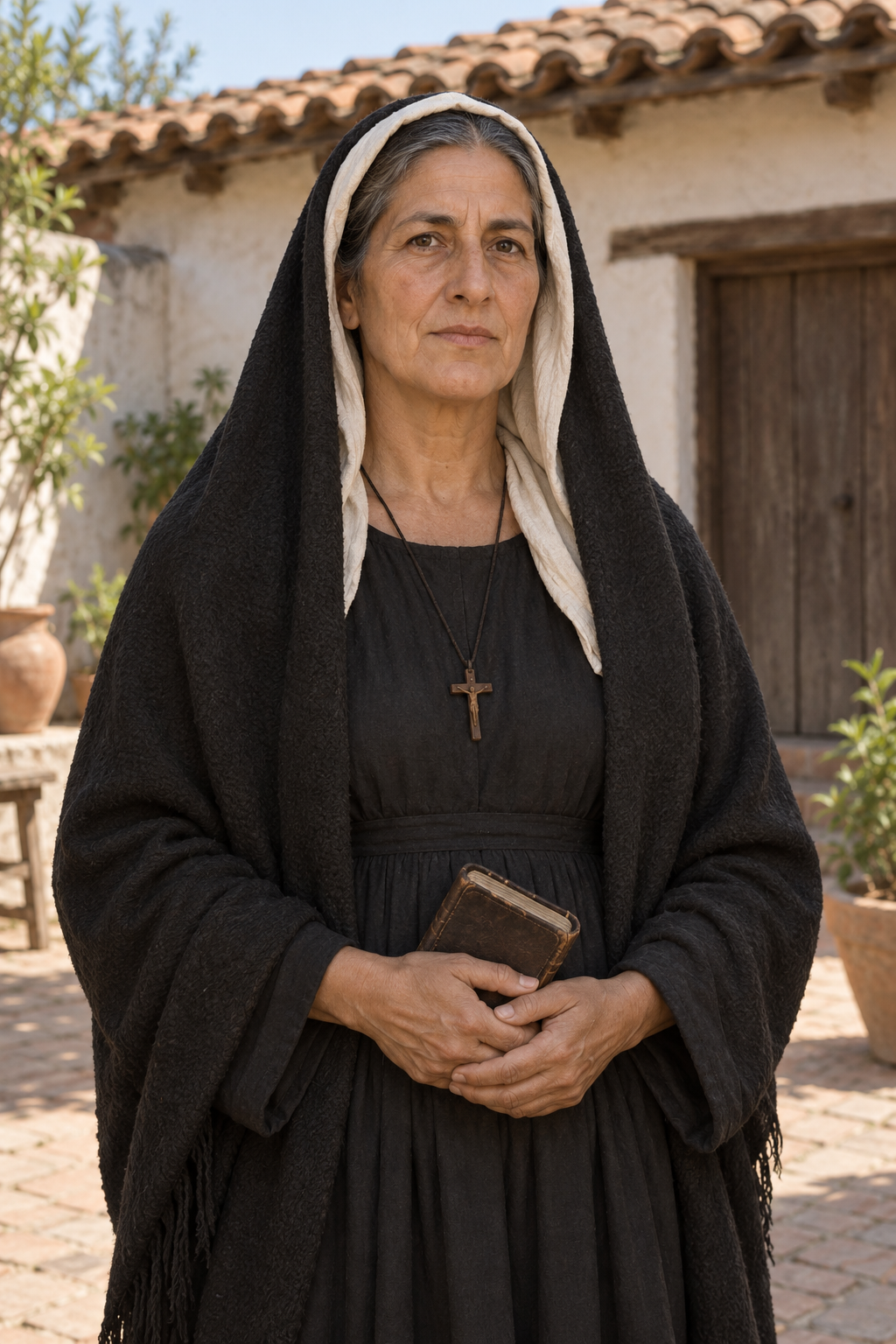
María Antonia de Paz y Figueroa, widely known as Mama Antula, was born in 1730 at Silipica in Santiago del Estero. She became the founder of the House for Spiritual Exercises in Buenos Aires.
Her vocation took shape among women living a committed Christian life outside a convent. In 1745 she adopted the dress of a Jesuit beata, made private vows and joined a community of consecrated women.
Literary scholar Pedro Luis Barcia explains that these beatas shared a house, prayer and apostolic work without the formal organization of monastic life. Their private vow of chastity did not make them nuns. María Antonia’s chosen way of life allowed her to combine spiritual recollection with practical service. When she began organizing retreats, other women joined her. She also sought priests who could preach and hear confessions, particularly the Mercedarian Joaquín Nís. This work depended on cooperation between her initiative, the women’s labor and the priests’ sacramental ministry.
The Jesuits’ expulsion from Spanish territories in 1767 gave her work a new urgency. She resolved to continue the spiritual exercises they had promoted. Arriving in a town, she sought authorization, arranged a suitable house, found a priest and gathered the food needed to welcome participants without charge. The Dicastery’s account describes retreats lasting about ten days and receiving roughly a hundred people. Spiritual renewal required rooms, meals, permissions and sustained organization.
Her companions traveled through the northwestern cities to extend this mission. Barcia describes journeys made largely on foot, including the difficult distances between Jujuy and Salta, Tucumán and Catamarca, and La Rioja and Córdoba. On other stretches they joined caravans, including their journey toward Buenos Aires. She consulted the bishop of Tucumán before extending her work.
Her own letters reveal how much opposition and administration lay behind the mission. Writing to Gaspar Juárez on 7 August 1780, she reported eleven months of delay over permission in Buenos Aires. Superiors were reluctant, neighbors doubted her mission, and some considered her foolish. She nevertheless expressed confidence that the obstacles could be overcome. In a letter of 29 March 1785, she asked for spiritual privileges broad enough to serve people beyond two dioceses. She also reported that the exercises continued throughout the year and that one recent group exceeded 230 participants, requiring two oratories. Crowding sometimes forced her to postpone applicants. The same letter thanks Juárez for an image of the Christ Child and discusses money sent overseas. Her devotion involved both affection and careful attention to transactions.
The correspondence connected her local work with a much wider community. Historian Cynthia Folquer describes a transatlantic network linking María Antonia, the exiled Jesuit Juárez and Ambrosio Funes in Córdoba. Juárez copied, translated and circulated letters among former Jesuits in Europe. Reports of her work encouraged people living through the Order’s suppression. Folquer also emphasizes her ability to secure support from civil and ecclesiastical authorities, obtain alms for food and lodging, and assemble resources for the larger retreat house. This was the work of a woman exercising recognized authority in an environment that restricted women’s choices.
Her reputation spread during her lifetime. Alicia Fraschina traces how Funes’s letters and Juárez’s collection of testimonies reached European readers through translation. An edifying life appeared in French in 1791. The surviving correspondence also shows how María Antonia understood herself: she sought to preserve Ignatian spirituality during the Jesuits’ absence and hoped for their eventual restoration. Her letters became more than messages to a distant friend. They helped sustain the hopes and shared identity of displaced Jesuits. Juárez collected reports from bishops, priests and neighbors, selected material and passed it into a multilingual network.
Her will set out how the work should continue. She required a woman to manage the house’s economic affairs and named Margarita Melgarejo as her successor, responsible for seeking a director and chaplains. She urged that poor people from the countryside receive particular consideration. For her own burial she requested a modest ceremony and a quiet transfer by four workmen. The household also participated in colonial slavery. The will directs that three older enslaved people remain in the house and grants Pascual freedom only on condition that he continue serving during the exercises throughout his life. She also asked that the women already serving in the house be treated with affection and allowed to remain there. Her arrangements connected the continuity of the retreats with the welfare of the community carrying them out.
She died in Buenos Aires on 7 March 1799.
Pope Francis canonized her on 11 February 2024.
Two days before the ceremony, Francis recalled her Eucharistic devotion and the determination with which she continued the exercises despite hostility to the Jesuits. He described some of that work as clandestine. In the canonization homily he emphasized her long journeys, perseverance and trust in Providence, and her role in bringing devotion to Saint Gaetano Thiene to Buenos Aires.
Wondering how to weigh the stories and sources? Learn how to read a saint biography.