Biography
Maximilian Kolbe
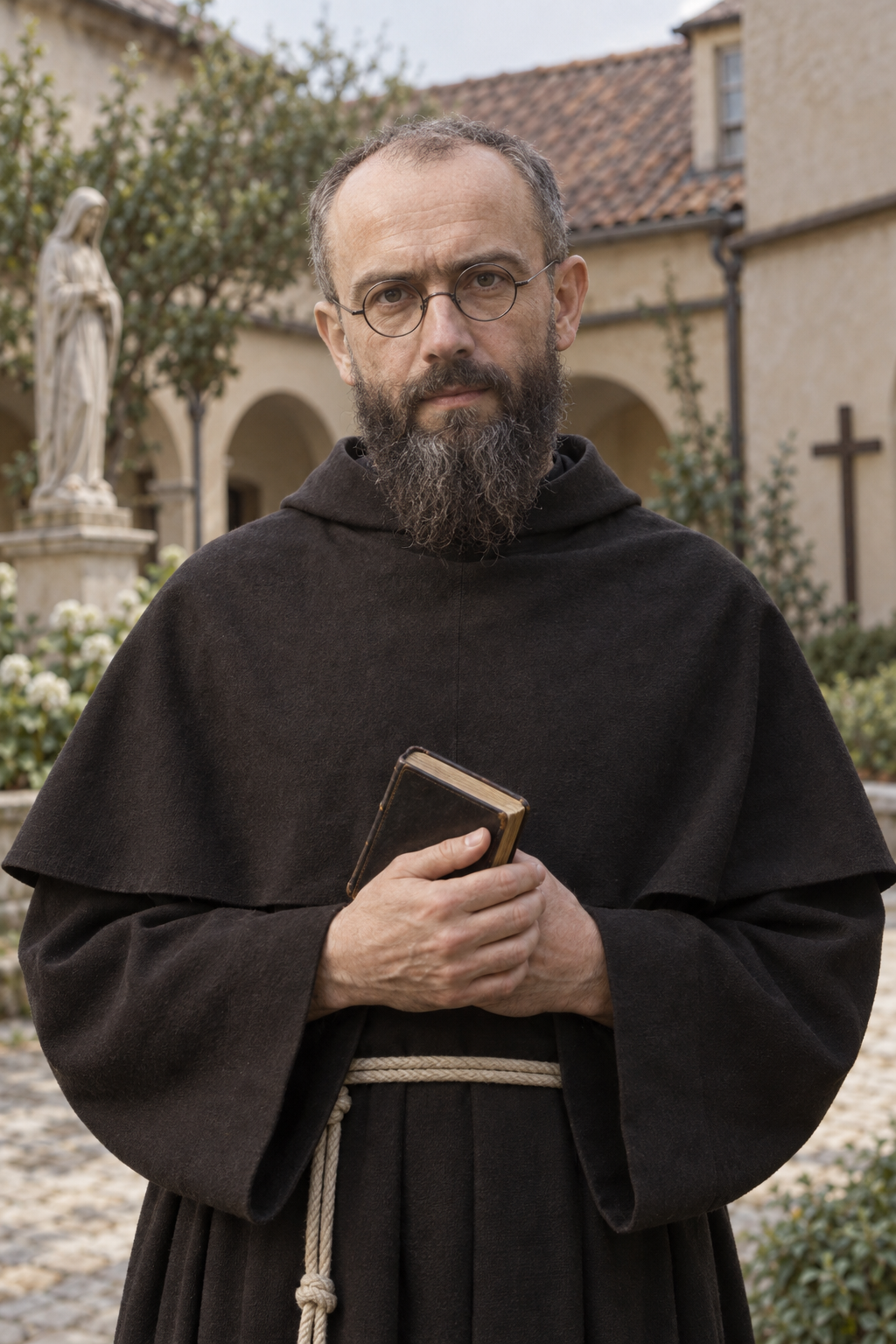
About Maximilian Kolbe
Born Rajmund Kolbe in Zduńska Wola on January 8, 1894, Maximilian entered the Franciscan minor seminary at Lviv in 1907. He received the name Maksymilian when he began his novitiate in 1910 and later added Maria at his perpetual profession. Study took him to Rome, where he earned doctorates in philosophy and theology and was ordained a priest in 1918. After returning to Poland, tuberculosis interrupted his work: during treatment at Zakopane in 1920, he also served as a hospital chaplain.
While still a student, Kolbe helped organize the Militia Immaculatae in Rome on October 16, 1917. The movement's statutes identify six other Franciscan companions as cofounders, placing his initiative within a small international religious community. At first, members prayed privately and distributed religious medals. For its first year, the founders' spiritual adviser, Alexander Basile, restricted admission of new members. The association subsequently received ecclesiastical recognition as a pious union in 1922.
Back in Poland, he made publishing a central part of that work. The first issue of Rycerz Niepokalanej appeared in January 1922, with five thousand copies. The press moved from Kraków to Grodno and then, in 1927, to the new monastery of Niepokalanów near Warsaw. The monastery's publications eventually included a daily newspaper, magazines for younger readers, and a Latin quarterly. Printing gave the movement a means of reaching households beyond the friary, with different publications directed toward different groups of readers.
In 1930 Kolbe and two fellow friars began missionary work in Nagasaki with Bishop Junosuke Hayasaka's permission. For about a year, their base was a rented house at Minamiyamate, before the move to Hongochi. The local Kolbe Museum recounts difficult beginnings, with little food and the obstacles of an unfamiliar language. That temporary house was also a workplace for publishing Seibo no Kishi. Its surviving brick fireplace later became the center of the memorial museum: a material link with the small premises in which this part of his mission began.
He returned to Poland in 1936 and again became guardian of Niepokalanów. The Harmęże chronology records an experimental live broadcast from the monastery's radio station in December 1938, extending the community's work beyond print. Kolbe's organization of religious life was practical as well as devotional. His general regulations for Niepokalanów, dated December 8, 1938, describe the friary as a headquarters of the Marian movement and place responsibility with its superior. They distinguish national and territorial centers and call for every department and resident to share the house's religious purpose. Administration, publishing, and consecration to Mary belonged together in his understanding of the community's work.
The publishing enterprise also has a troubling record. Historian Jerzy Tomaszewski identifies anti-Jewish views in Rycerz Niepokalanej and Mały Dziennik, publications operating under Kolbe's editorship or auspices. His assessment concerns responsibility for the press, not simply isolated words detached from its public influence. Tomaszewski distinguishes respect for Kolbe's conduct under Nazi rule from an honest assessment of those earlier publications. The generosity of his later sacrifice should not obscure the harm of anti-Jewish stereotypes circulated through that publishing work.
War brought arrest and the disruption of the community. Auschwitz researcher Teresa Wontor-Cichy records Kolbe's first arrest in September 1939 and his release that December. The monastery also sheltered displaced Polish and Jewish people, while its workshops provided practical services to local residents. After a second arrest and imprisonment at Pawiak in 1941, Kolbe reached Auschwitz on May 28; registration followed the next day. His first forced labor involved transporting building materials; after a brutal beating on another work assignment, fellow prisoners brought him back to camp. Survivor Władysław Lewkowicz remembered finding spiritual support in a secret confession to Kolbe during a short walk before the evening meal.
At Auschwitz, Kolbe was assigned prisoner number 16670. In late July, camp authorities selected ten men for starvation after a prisoner's escape. When Franciszek Gajowniczek pleaded for his family, Kolbe volunteered to take his place, and the camp official Karl Fritzsch accepted. After approximately two weeks, Kolbe was among the prisoners still alive. He was killed by an injection of phenol on August 14, 1941. His choice spared Gajowniczek from that selection while exposing Kolbe himself to the punishment imposed on the group.
Paul VI beatified Kolbe at Saint Peter's on October 17, 1971. Speaking that day, the pope recalled both his Franciscan vocation and his use of modern industrial methods for religious publishing in Poland and Japan. The public recognition therefore remembered years of work as well as his final sacrifice.
At the canonization on October 10, 1982, Franciszek Gajowniczek was present. John Paul II described Kolbe's intervention as a defense of an innocent person's right to life. The pope also addressed the classification of his death: previously venerated as a confessor after beatification, Kolbe was now to be honored as a martyr as well. This explicit decision made his voluntary acceptance of death for another prisoner central to the Church's liturgical recognition of him. His commemoration holds together a particular man's rescue and the religious meaning the Church found in Kolbe's act.
Wondering how to weigh the stories and sources? Learn how to read a saint biography.
Explore similar vocations
Prayers for Maximilian Kolbe
Allow Me to Praise You: opening petition
Allow me to praise you, O Virgin Most Holy.