Biography
Melangell
About Melangell
Melangell, also known by the Latin name Monacella, is remembered as a woman who sought solitude in a Welsh valley. Her shrine church’s traditional account describes her as an Irish hermit who became abbess of a small religious community.
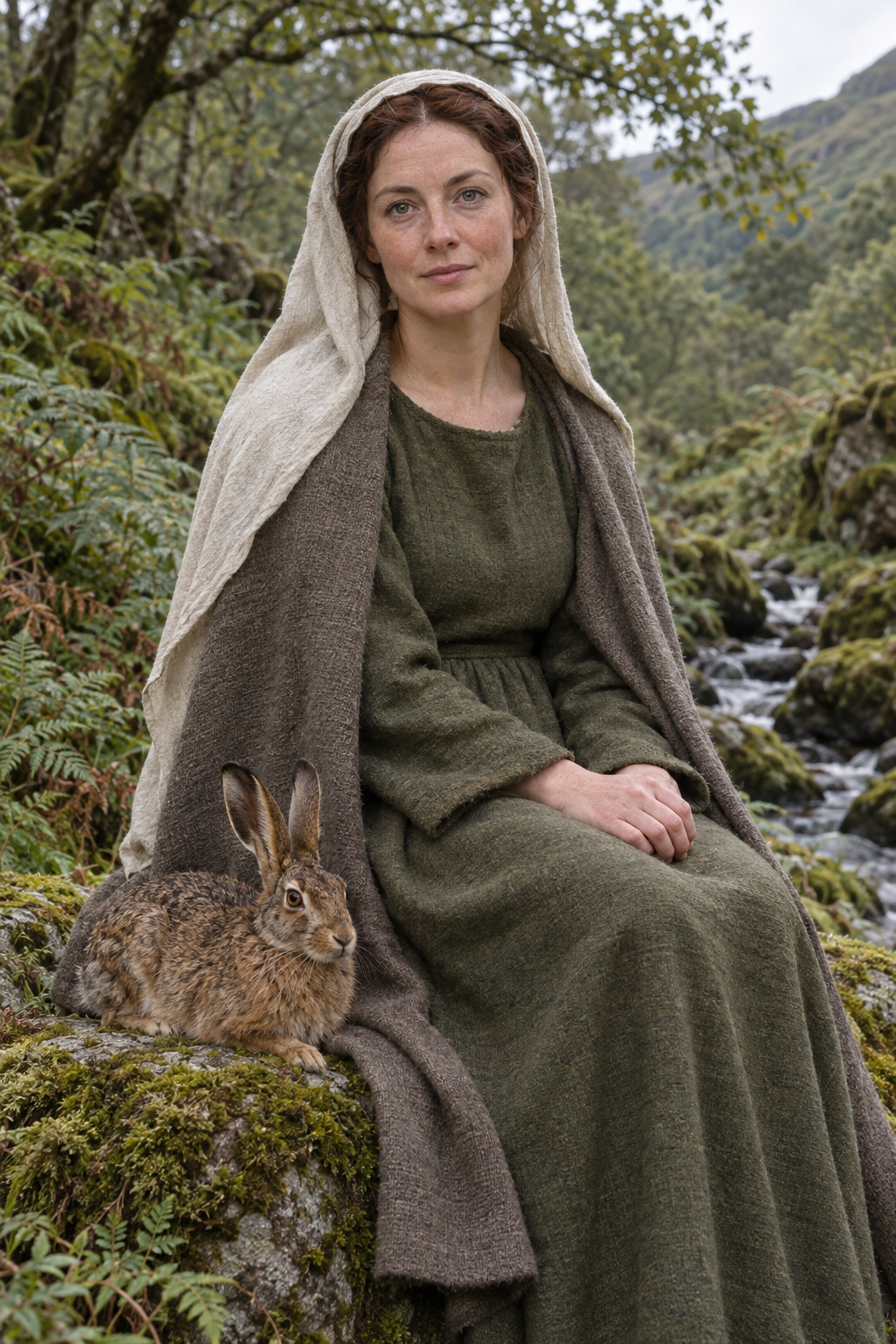
Her story is preserved in the Historia Monacellae. It says that she fled an arranged marriage in Ireland to devote herself to God. When Prince Brochwel’s hunting dogs pursued a hare, the animal took shelter beneath her clothing. The dogs drew back, and the astonished prince granted her land as a sanctuary. The narrative links protection of the hare with refuge for men and women. It also says that she instructed a community of virgins in prayer and holy living.
The sanctuary grant is central to the surviving account. In a scholarly contribution to Cadw’s heritage plan, Jane Cartwright explains that Melangell’s life is concerned with confirming sanctuary rights at Pennant Melangell rather than promoting its Romanesque shrine and relics. The story therefore preserves a claim about the community’s protected space as well as a memory of its saint.
The church and shrine also preserve evidence of later devotion. Church Heritage Cymru records the church in medieval taxation and describes a fifteenth-century screen depicting her story. The shrine was dismantled at the Reformation, and original carved fragments were reused in its later reconstruction. The church remains open for worship.
Her shrine church continues to identify her as patron of hares. The university database of Welsh saints lists her feast on 27 May.
Wondering how to weigh the stories and sources? Learn how to read a saint biography.