Biography
Michel Fleury
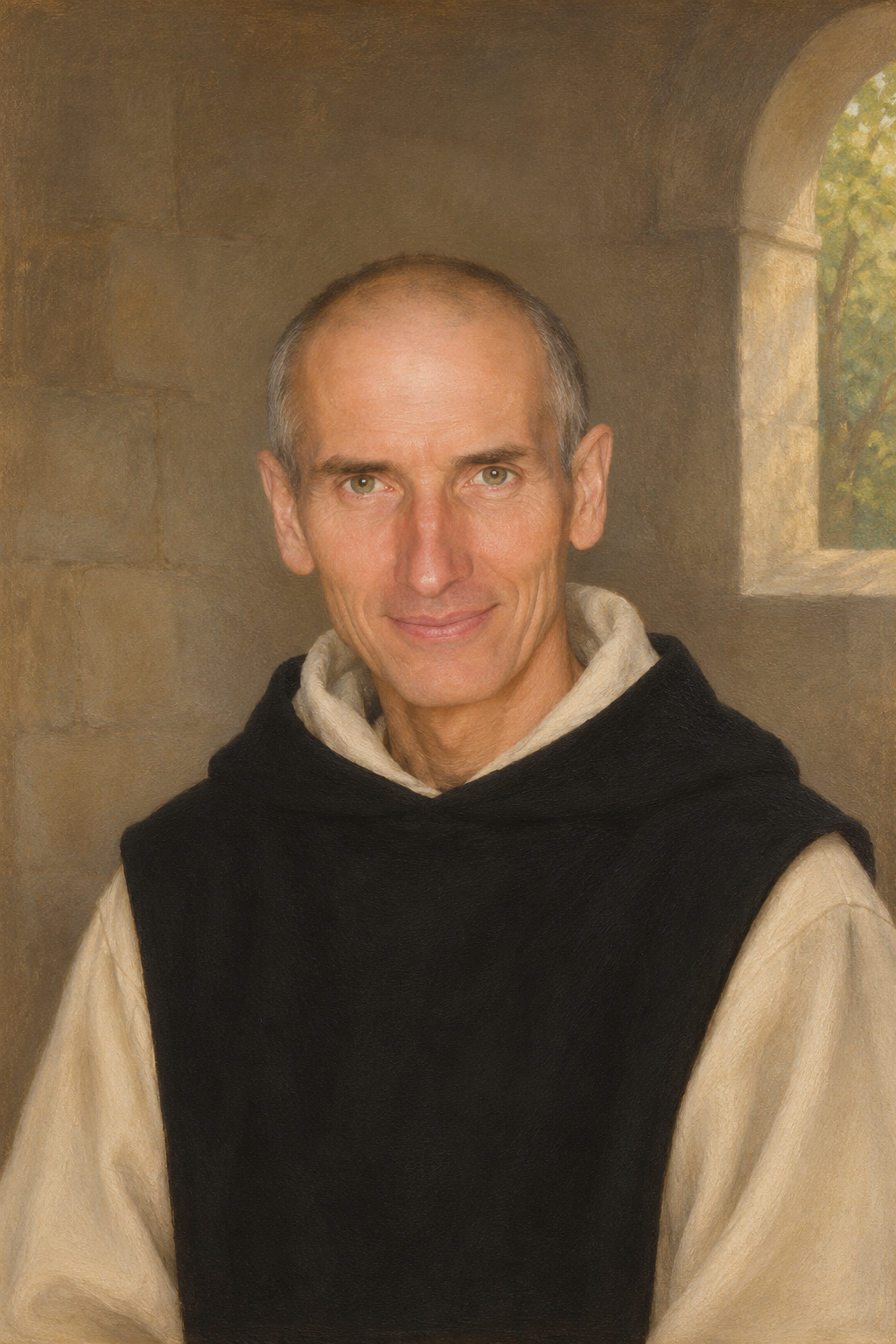
About Michel Fleury
Michel Fleury came to monastic life through farm work, industrial employment and years of religious searching. Born in 1944 at Sainte-Anne-sur-Brivet in western France, he grew up helping on his family’s farm. His first intention was to become a priest. He entered seminary training, but his vocation eventually took a different form. As a brother of the Prado, he lived among workers, trained as a milling-machine operator and worked in Marseille. His contacts there included immigrants from North Africa. In 1984 he moved from Bellefontaine to the monastery of Our Lady of the Atlas at Tibhirine, Algeria. He made his solemn profession there in 1986.
Another letter, dated by its editor tentatively to December 1968, describes the demands of friendship at work. Michel was trying to remember colleagues’ first names and make contact at work. He admitted that interruptions could irritate him and that the job itself still had to be done. At the restaurant, friendship had taken time to develop. When a change of eating place became necessary, he did not want to abandon the two younger workers with whom he had been sharing meals. He also visited sick colleagues. The letter shows attention taking shape through repeated small encounters, with missed opportunities acknowledged.
Michel kept a notebook of conversations and reviewed what he had learned about individual coworkers. He credited the Young Christian Workers movement with helping him notice apparently ordinary events and listen more carefully. When people spoke about family troubles or disappointed lives, he sometimes found that listening was the help he could offer. His account includes an evening spent with a lonely young acquaintance and informal help with writing exercises. Such details preserve the particular relationships that occupied him before his later years at Tibhirine.
In May 1979, Michel wrote to his cousin Joseph Crand after two stays at Lérins. He described reconciliation with God, himself and others, renewed personal prayer and the joy that accompanied this new stage of his search.
His former novice master Étienne Baudry remembered Michel approaching him quietly in April 1984 about an attraction to Tibhirine. Michel also worried about the effect that leaving France would have on his mother.
At Tibhirine, fellow monk Jean-Pierre remembered Michel protecting the time reserved for prayerful scriptural reading. When kitchen work disrupted it, he found another arrangement. Silence mattered to him, but this did not mean he was always easygoing: Jean-Pierre recalled occasions when his firm manner caused friction.
In a letter from 1994, Michel explained his wish to remain in Algeria in solidarity with people who had already lost their lives. He explicitly said that he did not wish harm to come to the monks. His words describe a commitment to neighbors amid danger, without treating death as something to seek.
A prayer attributed to Michel expresses trust through a series of images of danger. Storms, fire, floods and earthquakes are followed by more personal difficulties: illness, hurtful words, loss and persecution. Its repeated answer places confidence in God’s presence. The text is a prayer of reliance, rather than a factual claim that he never experienced fear. It ends by asking that this faith be given. Alongside his letters about work and relationships, the prayer preserves the direct, personal language in which he tried to express his religious commitment.
Michel was abducted with six fellow monks during the night of 26–27 March 1996. A communiqué dated 21 May announced their killing; that date does not securely establish the day each man died. Their recovered remains were buried at Tibhirine. In 2018 the Catholic Church beatified the seven monks together with twelve other religious killed in Algeria. Michel is remembered as a religious brother whose surviving letters connect demanding manual work, personal prayer and attention to particular people.
His memory took a local form in the diocese of Nantes. Around the 2018 beatification, the diocese announced a thanksgiving Mass with his former novice master Étienne Baudry preaching. It also arranged an exhibition about the monks and the other martyrs of Algeria. The program included a commemorative plaque at the baptismal font in Sainte-Anne-sur-Brivet, Michel’s home parish. Bishop Jean-Paul James placed Michel and Célestin Ringeard within the larger suffering of Algeria during the 1990s. These commemorations connected their childhood churches, former monastic community and Algerian vocation rather than presenting their deaths as isolated events.
A further gathering at Orvault in September 2024 brought together relatives, friends and members of several monasteries. Odile Gautier-Mignot’s report describes the occasion as a celebration of Michel’s prayer alongside Célestin’s music. Researcher Marie-Dominique Minassian spoke about Michel’s particular love of the psalms and his interest in Muslim prayer. The report also recalled his ministry as a reader. The gathering accompanied the publication of another volume of the Tibhirine writings. It shows how the preservation and study of those writings continue to make his quiet contribution more accessible, beyond the circumstances of the monks’ final months.
Wondering how to weigh the stories and sources? Learn how to read a saint biography.