Biography
Nazareno Lanciotti
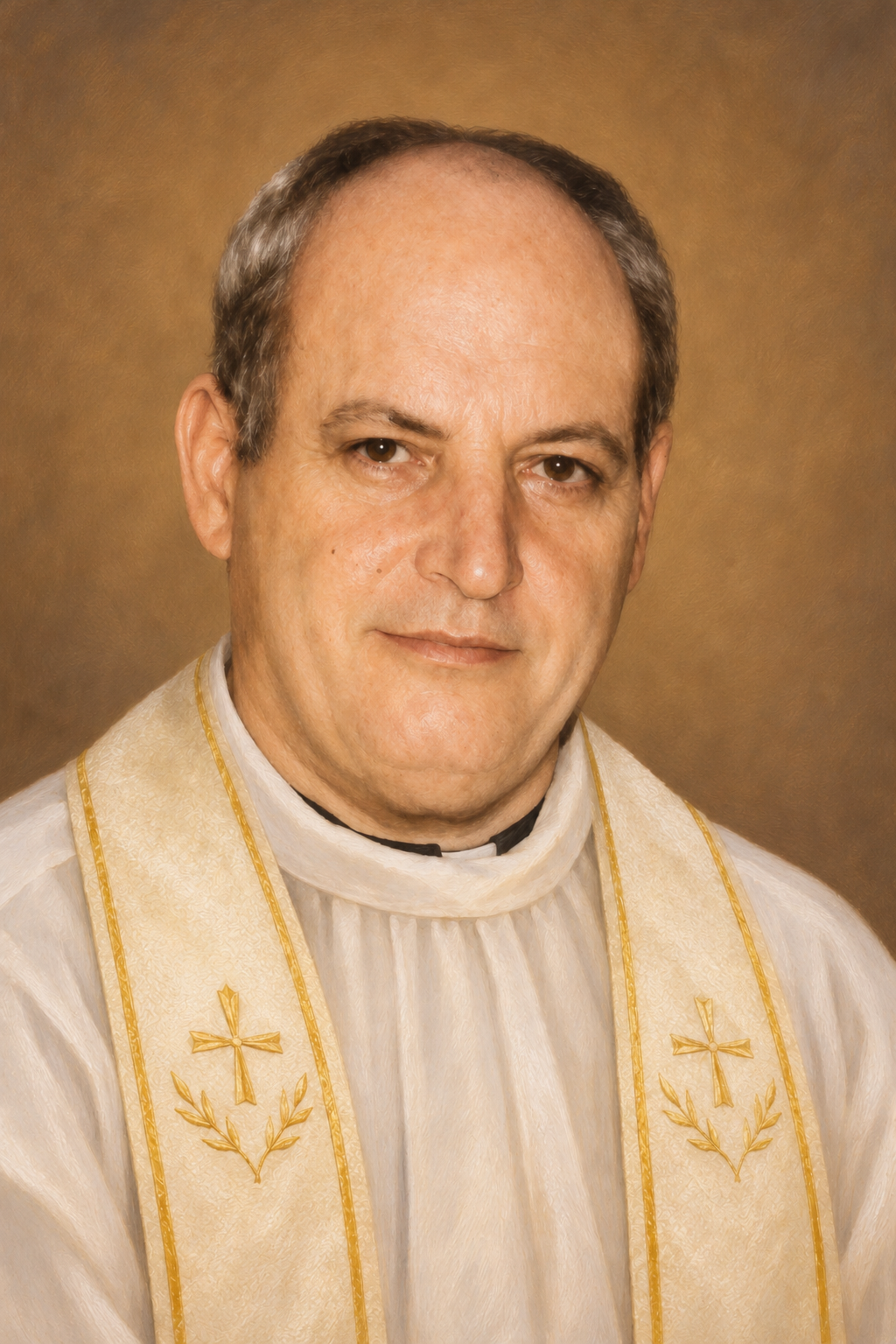
About Nazareno Lanciotti
Nazareno Lanciotti was born in Rome on March 3, 1940, into a family whose roots lay at Subiaco. His father, Giacomo, worked as a stonecutter, and his mother, Antonia, cared for the household. Wartime displacement took the family back to Subiaco. There he entered the abbey seminary of Santa Scolastica in 1952. He was ordained a priest on June 29, 1966, and continued his theological education at the Pontifical Lateran University. These years of formation preceded a ministry that began in Rome and eventually took him to rural Brazil, where he would spend the greater part of his priestly life.
As an assistant priest at San Giovanni Crisostomo, he worked with children and young people. Through that work he encountered Operazione Mato Grosso, which involved young people in missionary service. With his bishop's permission he travelled to Brazil in 1971, then settled at Jauru the following year. Jauru became the setting for almost three decades of pastoral work, combining religious instruction, the building of communities and practical responses to poverty. The parish dedicated to Our Lady of Pilar was formally established in 1976, and his ministry extended into rural communities beyond the town.
The postulator of his cause, Enzo Gabrieli, later described the needs that confronted him. Mothers lacked adequate care in childbirth, children died from illnesses, and the nearest hospital was far away. Lanciotti began a medical dispensary that developed into a hospital. He also responded to the situation of elderly and disabled people who lacked care, establishing a home for them. A primary school served children in the area. Gabrieli's account places these institutions within the same mission as the chapels and parish center: healthcare, education and religious life grew together as responses to the needs of a scattered population.
Travel to the outlying communities was part of that work. Gabrieli recalls journeys by mule and the development of small chapels where people could gather without depending on a priest's constant presence. Prayer, religious instruction and Eucharistic devotion continued there through local participation. Writing twenty years after Lanciotti's death, the postulator described volunteers, catechists and adults who still maintained the projects begun during his life. His account therefore records more than a series of buildings. It describes a network of local people whose continuing involvement kept the mission's care and religious activity alive after its founder was gone.
Lanciotti joined the Marian Movement of Priests in 1987 and became its national leader in Brazil the next year. He travelled to lead prayer gatherings for priests and families. Gabrieli's account for the beatification also describes his efforts to protect young people and workers from drug trafficking and sexual exploitation. As construction work drew people into the region, he organized alternative Saturday activities and warned against those dangers. The postulator connects this opposition to exploitation with the threats directed against the priest. Gabrieli also recalls that he instituted daily Eucharistic adoration in fifty-seven rural communities. Prayer and community organization accompanied the social institutions for which he became known.
On February 11, 2001, masked men attacked Nazareno inside his parish house. A gunshot left him gravely wounded. He was transferred to São Paulo, where he died on February 22, after eleven days of suffering. The regional bishops’ conference describes his death as martyrdom in hatred of the faith. He was buried inside the church at Jauru, beside the tabernacle and the place of Our Lady of Pilar. His parish also became the place where local Catholics preserved his remains and remembered his ministry after his death.
In November 2025, local commemorations combined Masses, press conferences and a meeting with the cause’s postulator. Archbishop Mário Antônio da Silva presided at the opening Mass in Cuiabá. The program included an explanation of the criteria for recognizing martyrdom. At Jauru, a tribunal appointed by Bishop Jacy Diniz supervised the canonical recognition of Nazareno’s remains. A medical expert and civil authorities participated. The procedure included opening the tomb, examining the remains, removing relics and reburial in the same place with seals. These were public preparations for beatification, documented by the cathedral’s communications team and the regional bishops’ conference.
Lanciotti was beatified at Jauru on June 13, 2026, in a ceremony presided over by Cardinal João Braz de Aviz. The celebration took place at the Sanctuary of the Immaculate Heart of Mary and brought together people from the region. Thousands of the Catholic faithful from across the region attended the ceremony, the first beatification celebrated in Mato Grosso. In his homily the cardinal linked the priest's missionary life with service to poor people and resistance to exploitation. The following day, Pope Leo XIV recalled him after the Angelus. The recognition gave public expression to a remembrance already rooted in Jauru's parish, hospital, school and care for older people: a mission sustained through religious community and practical care.
Wondering how to weigh the stories and sources? Learn how to read a saint biography.