Biography
Peter Maubant
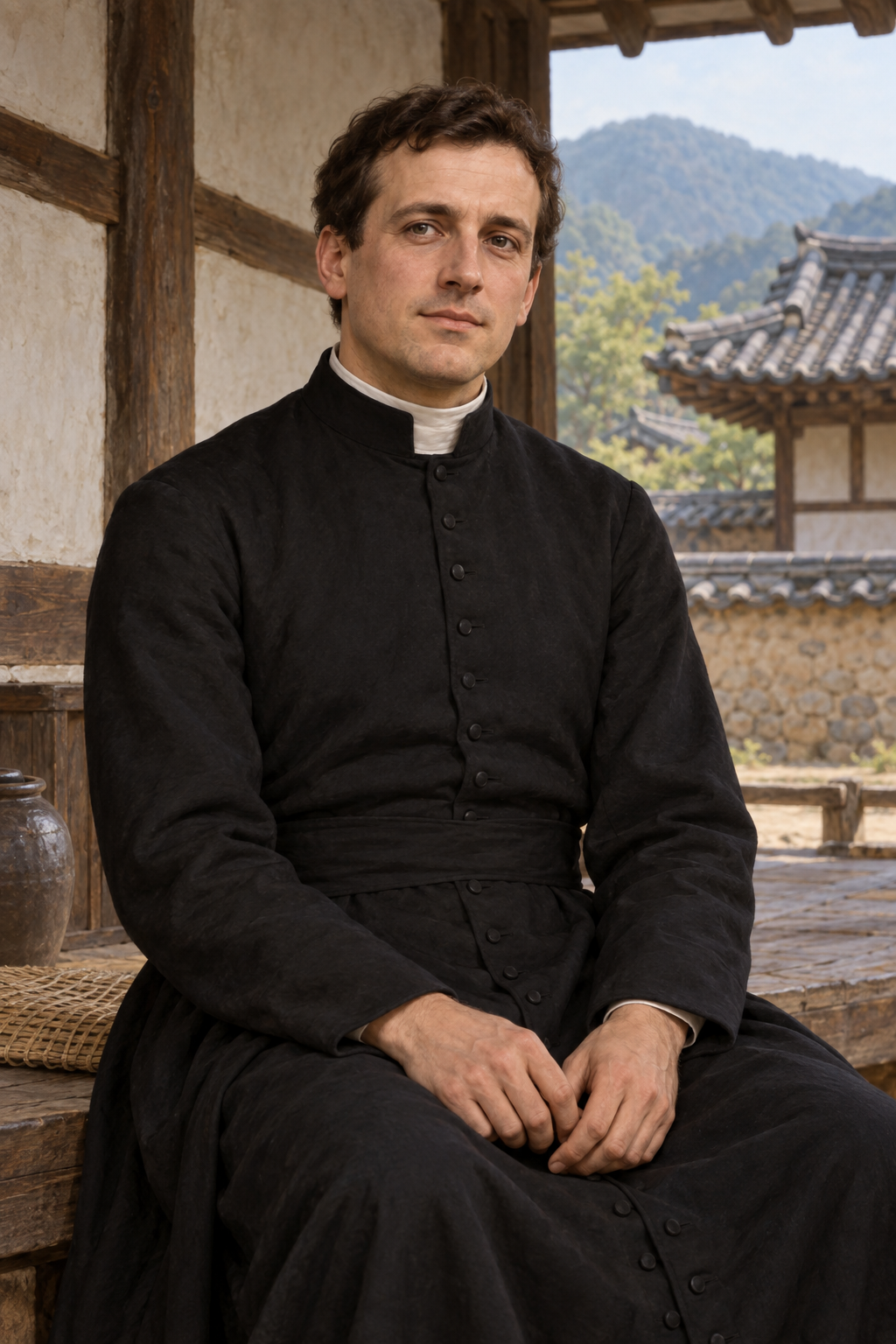
About Peter Maubant
In France, Maubant was born in 1803.
Pierre-Philibert Maubant grew up in Vassy, France, and studied at the college in Vire before becoming a priest. He served as an assistant parish priest at Le Gast, then entered the Paris Foreign Missions seminary with his bishop’s permission. His first assignment was to Sichuan in China, but meeting Bishop Barthélemy Bruguière changed the destination of his missionary work. Maubant offered to accompany the bishop to Korea and spent nearly a year studying Chinese at a Catholic settlement on the route. Bruguière died before reaching Korea, leaving Maubant to continue the journey with Korean guides.
In April 1836, Maubant described the crossing in a letter. Five Korean companions helped him approach the border, where the frozen river offered a route unavailable during warmer months. Exhausted after a long walk, he was carried across part of the crossing by a guide whom he named Pierre Som-Pey. The travelers avoided the customs inspection by passing through a water channel beside the city gate. A barking dog alarmed them, but they reached shelter where other Catholics had prepared a small hut for the bishop they had expected. After a brief meal and little sleep, they resumed their journey before daylight.
Other Catholics met the party with horses, and guides divided the travelers into smaller groups before entering the capital. Maubant found accommodation already purchased by Korean Catholics with money supplied by Bruguière. The Chinese priest Pacificus and a small group of believers welcomed him there. His letter described communities repeatedly displaced when neighbors discovered their religion. He also recorded requests for confession before he could speak Korean: some believers wrote in Chinese, while others asked to use an interpreter.
In a separate letter to Legrégeois on the same day, Maubant asked for teachers and a place to educate two or three Korean boys abroad. He said that local instruction was impracticable and hoped to send the students later that year. He also sought a safer means of sending correspondence and bringing supplies into Korea. His proposed sea route depended on finding trustworthy boat crews and arranging recognizable signals between vessels. He stressed secrecy because discovery could expose everyone involved to punishment. These were plans rather than reports of a completed maritime connection, and the letter does not establish that the proposed system succeeded.
By December, the educational plan had become more definite. Maubant wrote that he was sending three students, naming Thomas Choe, Francis Choe and Andrew Kim in the order they had joined him. He described their families as committed Catholics and explained that Francis’s family had recently lost its resources through persecution. He asked that the boys receive suitable instruction and that their future superior write to the Korean mission at least annually. He could provide travel money only as far as the border, leaving further arrangements to colleagues abroad. Shortly before departure, news of a search for a political rebel frightened the travelers. Maubant reported spending more than an hour reassuring them before they agreed to go.
After Jacques Chastan reached Korea, Maubant finally found time for more sustained language study. He explained that urgent requests for sacraments and the students’ departure had previously left him scarcely any free days. He withdrew to Yanggeun, studied for four weeks and then ministered to the local Catholic community. Chastan joined him there after preparing a Korean examination of conscience for hearing confessions. They celebrated Easter together before continuing their work in different parts of the country.
In July, fatigue and heat interrupted his journeys. Maubant described a severe fever that worsened when he tried to continue visiting villages. He returned to the capital and summoned Chastan, who administered the sacraments when those around him feared he was dying. The letter records a gradual recovery, with recurring fever preventing ministry and language study for about three months. When he wrote, he had resumed work, while Chastan had already set out again.
Writing to the mission’s procurators in Macao in December 1838, Maubant reported welcoming Bishop Laurence Imbert in Seoul at the end of the previous year. He described the bishop revising religious books and arranging a course of daily and Sunday prayers. Imbert also assumed responsibility for a share of the Catholic communities. Maubant’s letter recorded several local persecutions during 1838 and acknowledged that some arrested believers had abandoned their religion. His report thus preserves both the mission’s expanding organization and the insecurity of the communities it served.
The following year brought a wider persecution. After his arrest, Imbert urged Maubant and Chastan to surrender in the hope of limiting further harm to the Catholics. They complied and were taken to Seoul, where they were interrogated and tortured. The three missionaries were executed at Saenamteo on September 21, 1839. Korean Catholics later recovered and buried their bodies.
Wondering how to weigh the stories and sources? Learn how to read a saint biography.