Saint profile
Robert Southwell
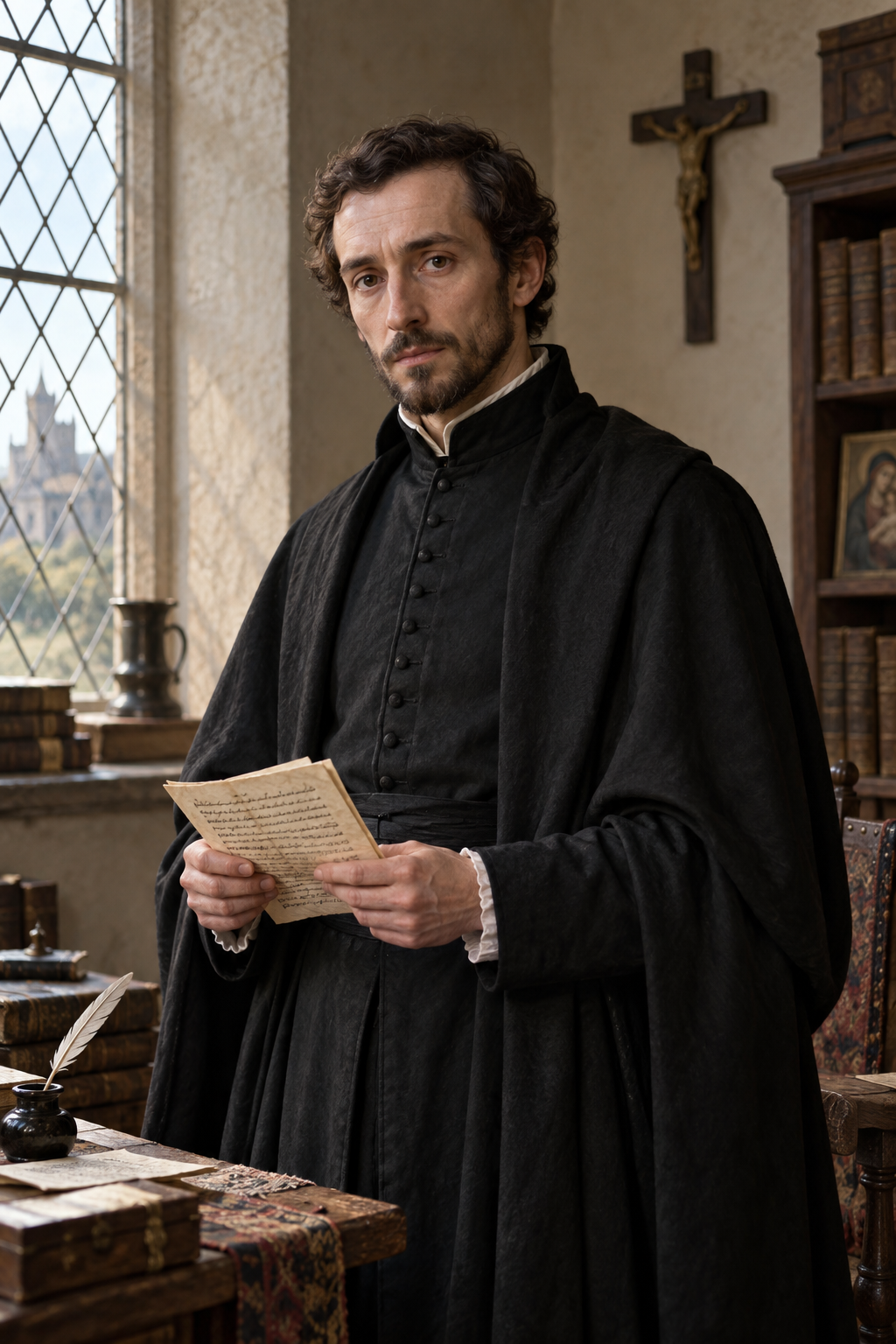
About Robert Southwell
Robert Southwell was born around 1561 at Horsham St Faith in Norfolk. He grew up among Norfolk gentry and studied abroad as a young man. He became a Jesuit in Rome and was ordained in 1584. After work at the English College, he was sent back to England in 1586.
Oxford’s account places Southwell within the English Mission and explains the setting of his clandestine ministry. Catholic priests faced prosecution under the Elizabethan state. His return was therefore a move into danger, not an ordinary parish appointment. The same scholarly summary records his association with the household of the Countess of Arundel and his eventual arrest, imprisonment, and execution.
Southwell moved quietly among Catholic families. In 1589 he became chaplain to Lady Ann Dacre while her husband, Philip Howard, was held in prison. The Jesuit account places this domestic ministry within six years of work in England. Private households became his ministry setting.
He wrote poetry and prose as well as ministering as a priest. Cambridge University Library presents his literary corpus as a substantial part of the religious culture of his period. His work was widely printed after his execution. A 1620 collected edition and a later 1630 edition show that readers continued to seek his words well beyond his lifetime.
The Folger catalogue identifies surviving autograph papers and a Latin notebook from his Jesuit formation. It also describes contemporary or near-contemporary manuscript collections of his English poems. These objects matter because they show how his work circulated through handwritten copies as well as printed books. They offer firmer evidence for readership than broad claims that one famous writer must have influenced another.
Southwell was arrested after six years of ministry and endured imprisonment and torture. He was executed at Tyburn on 21 February 1595. The Catholic Church canonized him in 1970. The same record gives 21 February as his feast. His death cannot be separated from the restrictions under which he had served Catholic households.
Cambridge observes that Southwell’s literary reputation grew after his death. Some editions presented him through Catholic devotion; others reached a wider market for English writing. His surviving work remains evidence of a voice shaped by the religious divisions of his age. The manuscript and print record supports that significance without needing a certain claim about his influence on Shakespeare or Donne.
Wondering how to weigh the stories and sources? Learn how to read a saint biography.