Biography
Solomon Leclercq
About Solomon Leclercq
Solomon Leclercq was born Guillaume-Nicolas-Louis Leclercq at Boulogne-sur-Mer, France, in 1745. The current catalog and the Dicastery profile support November 14, while a Lasallian source gives November 13.
This deferred packet preserves the database date and flags the conflict for the final packet. A one-day difference should still be handled explicitly because slow-vetted records need transparent structured evidence.
He was educated by the Brothers of the Christian Schools. His family originally expected him to enter commerce, but his vocation moved toward the Lasallian life of teaching, prayer, and community service.
That movement from commerce toward religious teaching should be written without mocking the family's practical hopes. The sources show a young man formed by the Brothers whose own vocation gradually took the same educational path.
On March 25, 1767, he entered the Saint-Yon novitiate at Rouen. He professed vows in 1769 and made perpetual profession in 1772. These dates show that his martyrdom was preceded by decades of ordinary fidelity.
The novitiate and profession chronology also keeps the page from beginning with the Revolution. Solomon's first public witness was not imprisonment, but the choice to become a Brother and spend his life in education.
Brother Solomon taught and held administrative roles, including director and econome. He later served Brother Agathon, superior general, as secretary. The profile should not reduce him to the final prison scene; he was a teacher and Brother before he was a martyr.
Administrative service should be described as part of religious obedience, not as dull background. Schools and religious communities need records, money, letters, schedules, and careful trust. Solomon's hidden competence belongs to his holiness.
The French Revolution suppressed the Brothers' houses and placed pressure on religious who refused the Civil Constitution oath. Solomon remained at the Rue Neuve house. The page should state this context soberly, without political caricature or graphic revolutionary imagery.
That restraint is essential. The page may name the oath and suppression, but it should not turn the Revolution into a cartoon or let politics swallow Solomon's Lasallian identity. His fidelity is the subject.
He was arrested on August 15, 1792, and imprisoned in the Carmelite convent in Paris. The existing catalog death place already records the Carmelite convent, so the importer should preserve it exactly.
The Carmelite convent prison setting should be enough to situate the final days. The art review deliberately avoids crowds, blades, weapons, and gore so the visual emphasis remains courage and prayer.
Solomon was killed on September 2, 1792, as one of the September martyrs. The martyrdom should be written plainly, with no gore, crowds, guillotine imagery, or theatrical villain language.
He was beatified with the September martyrs in 1926. That group context matters, but the page should still preserve Solomon's own Lasallian path: student of the Brothers, novice, professed Brother, teacher, administrator, secretary, prisoner, and martyr.
The public page should emphasize Lasallian fidelity: education, vows, community service, administrative trust, and courage under pressure. This makes the prison setting the final witness, not the whole identity.
Because the catalog class says "Monk / Nun," the prose should clarify that he was a Brother of the Christian Schools. A final normalization step can decide whether class data needs refinement.
Solomon was beatified with the September martyrs in 1926 and canonized in 2016. The final page can mention the modern canonization briefly, then return to the substance of the life: a Brother faithful to his vocation when public conditions turned dangerous.
The birth-date conflict should remain visible. Preserving the November 14 database value while noting the Lasallian November 13 source lets reviewers make a transparent final decision rather than hiding uncertainty.
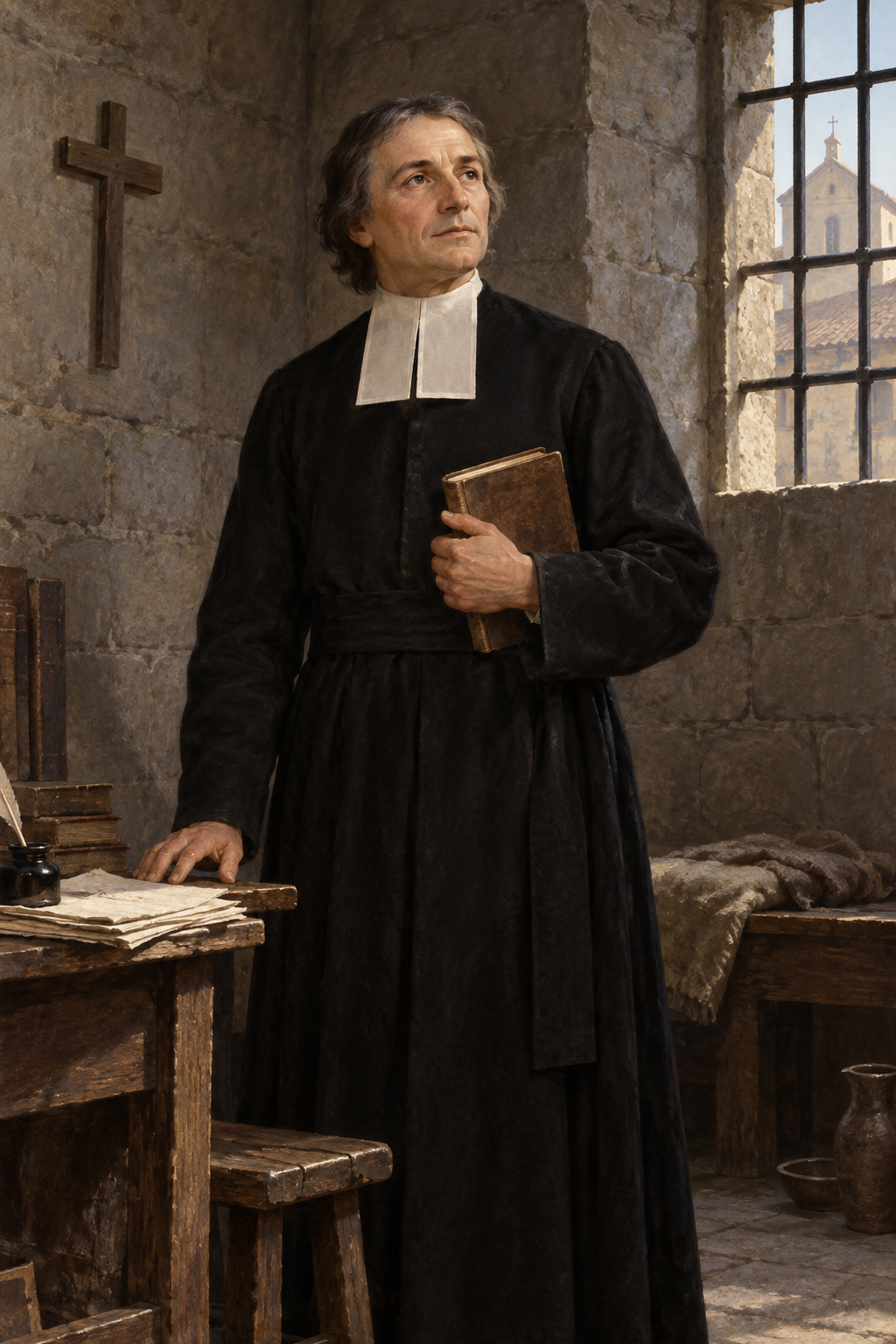
The final profile should keep the tone firm but quiet. Solomon's courage was not loud defiance staged for an audience; it was the continuation of vows, teaching, and community loyalty when those commitments became dangerous. That is why the school papers and book belong beside the prison wall in the artwork.
The martyrdom paragraph should also avoid implying that every person connected with the Revolution was a villain. The sourced claim is narrower and stronger: Solomon refused the oath, remained faithful as a Brother, was arrested, and was killed with other September martyrs.
For readers, the devotional invitation is to value ordinary duties before a crisis comes. His final courage becomes intelligible because it follows years of classroom, office, and community fidelity.
That emphasis lets the page honor martyrdom without making death the only meaning of the life. The Brother who died in 1792 had already been formed by decades of hidden, faithful educational service daily, steadily.
Artwork should show a De La Salle Brother in black robe and white rabat/collar, holding a book or school papers in a restrained school/prison interior. Avoid graphic martyrdom, guillotine imagery, crowds, weapons, political caricature, rendered text, logos, halos, and exact-likeness claims.
Wondering how to weigh the stories and sources? Learn how to read a saint biography.