Biography
Tatian the Syrian
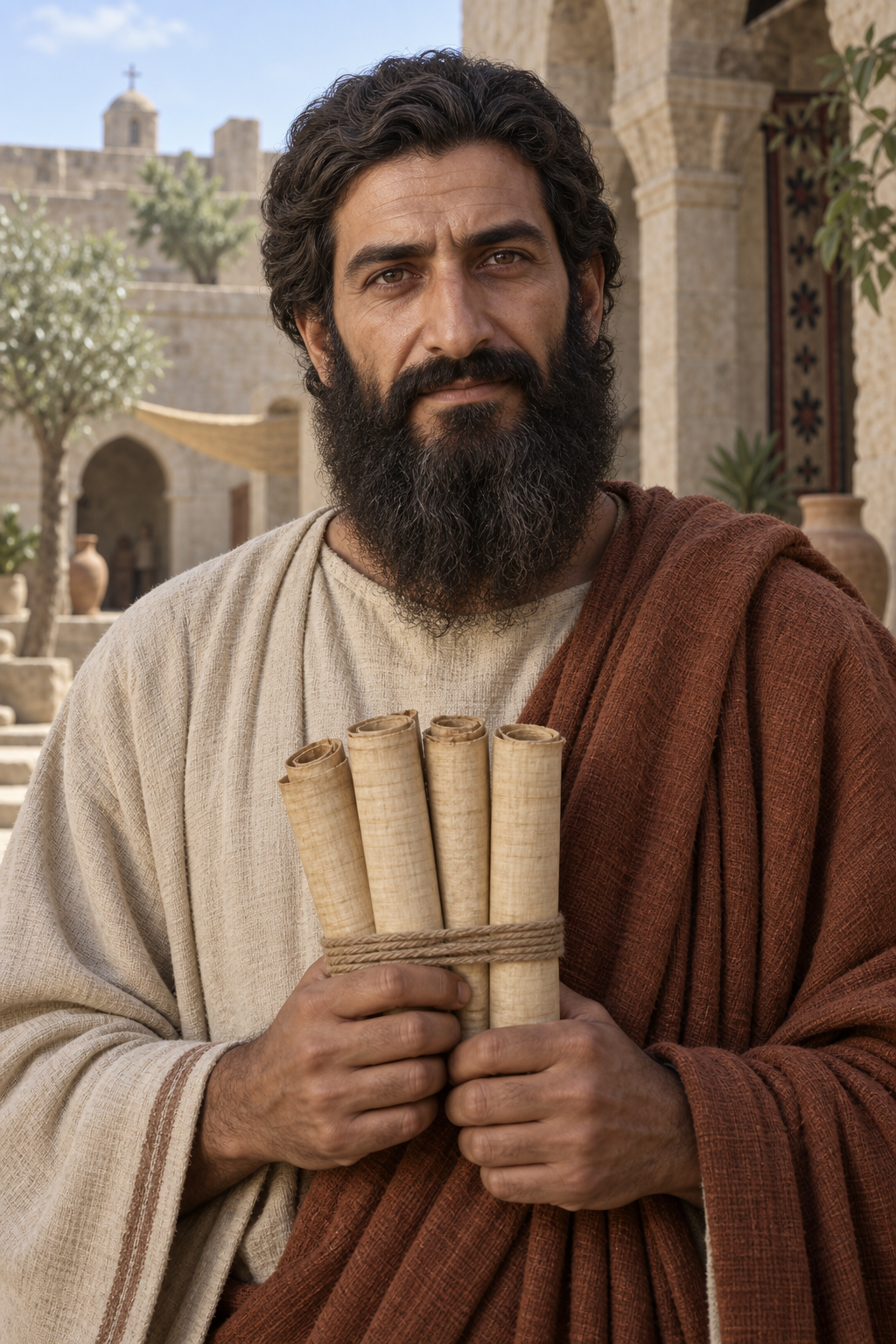
About Tatian the Syrian
Tatian was a second-century Christian writer whose surviving work and ancient reception make him historically important, though his place among saints is disputed. He calls himself a person born in the land of the Assyrians and says that he traveled widely, studied Greek learning, and encountered Christian writings that redirected his search for truth. Modern reference works accordingly identify him as Tatian of Adiabene, Tatian the Syrian, or Tatian the Assyrian. The sources do not preserve a reliable birth year, family history, or childhood narrative. The catalog's former dates of about 120 and 185 are therefore removed rather than presented as biographical facts.
Tatian eventually came to Rome and became associated with Justin Martyr. Irenaeus, writing against teachings he considered heretical, identifies Tatian as one of Justin's hearers. Eusebius repeats that relationship and preserves Tatian's admiration for Justin after Justin's death. The evidence supports a teacher-student connection, but not a detailed account of their classroom, the date of Tatian's arrival, or every influence on his thought. Tatian's Roman period is usually placed between roughly 150 and 165 because it overlaps Justin's activity there. Those years describe a scholarly reconstruction, not exact travel documents.
His one substantially surviving work is commonly called the Address to the Greeks. It is an aggressive defense of Christian belief and an attack on claims of Greek cultural superiority. Tatian contrasts the antiquity of biblical writings with Greek philosophy, criticizes mythology and public entertainments, and describes his own intellectual change. The work also discusses God, the Logos, creation, freedom, the human soul, resurrection, and judgment. Its combative tone should not be softened into gentle interreligious dialogue, nor should every accusation be repeated as an editorial judgment. It remains valuable because Tatian speaks in his own voice and shows how one educated convert argued within the second-century Mediterranean world.
After Justin's death, Tatian separated from the Roman Christian community and worked in the East. Precise dates and locations are uncertain. Irenaeus says that Tatian became exalted by the idea of being a teacher and connected him with an ascetic movement that rejected marriage, meat, and wine. Eusebius follows Irenaeus closely, calling this movement Encratite, meaning self-controlled or abstinent. These are ancient but adversarial reports. They securely document controversy around Tatian's later teaching, yet they do not justify treating every polemical charge as a neutral description or assuming that all ascetic practice associated with his followers originated with him.
Tatian's most influential achievement was the Diatessaron, a continuous Gospel account woven from material associated with Matthew, Mark, Luke, and John. Eusebius names the work and explains its title as a combination through four. The original text has not survived intact, and scholars debate its first language and exact form. Even so, later witnesses and Syriac scholarship show that it became deeply important in Syriac-speaking Christianity. It offered congregations a single narrative sequence instead of four separate books. Its long use and later replacement also make it central to study of the early Gospel text, translation, worship, and the development of Syriac Christian literature.
The Diatessaron's success did not erase controversy. In the fifth century, Syriac church leaders promoted separate Gospel books, and surviving commentary and translations preserve traces of Tatian's harmony. The shift should not be described simply as the destruction of a forbidden book; it reflects changing liturgical and textual practice as well as concern about Tatian's reputation. His work nevertheless influenced readers far beyond the community that first received it. Because the original is lost, claims about individual readings must be based on careful textual reconstruction rather than confident quotation from a single later witness.
Tatian's historical standing and ecclesial standing are not identical questions. Irenaeus and Eusebius remember him chiefly as a teacher who departed from accepted doctrine. Bowker's concise reference says that he was venerated in the Syriac Church as author of the Diatessaron. That statement deserves preservation, but it does not identify a current jurisdiction, feast date, canonization process, or liturgical office. No such observance is added here. A later Orthodox martyr named Tation belongs to a Claudiopolis story and must not be substituted for the writer. The similar names do not make the people identical.
His works show intellectual energy and disciplined attention to texts. Tatian tested the philosophical traditions he had inherited, adopted Christian Scripture as his governing authority, and attempted the difficult editorial task of arranging four narratives as one. Those actions demonstrate inquiry and diligence even when readers reject his polemic or theology. His later advocacy of severe abstinence also shows why restraint must be distinguished from excess: a practice praised as self-control by one community may be condemned as a denial of creation by another. The record therefore names virtues through specific work without presenting all his conclusions as exemplary.
Tatian remains significant because the evidence permits neither easy celebration nor erasure. He was Justin's student, a forceful apologist, a controversial ascetic teacher, and the compiler of a Gospel harmony that shaped Syriac Christianity. His own Address supplies rare personal testimony, while Irenaeus and Eusebius reveal how opponents remembered his later career. Syriac reference traditions preserve the scale of the Diatessaron's influence. A careful profile can acknowledge limited veneration without calling it universal, and can describe condemnation without allowing opponents alone to define the person. Tatian's legacy is best understood through his texts, their reception, and the unresolved boundaries between learning, devotion, controversy, and communal authority.
Wondering how to weigh the stories and sources? Learn how to read a saint biography.