Biography
Tertullian
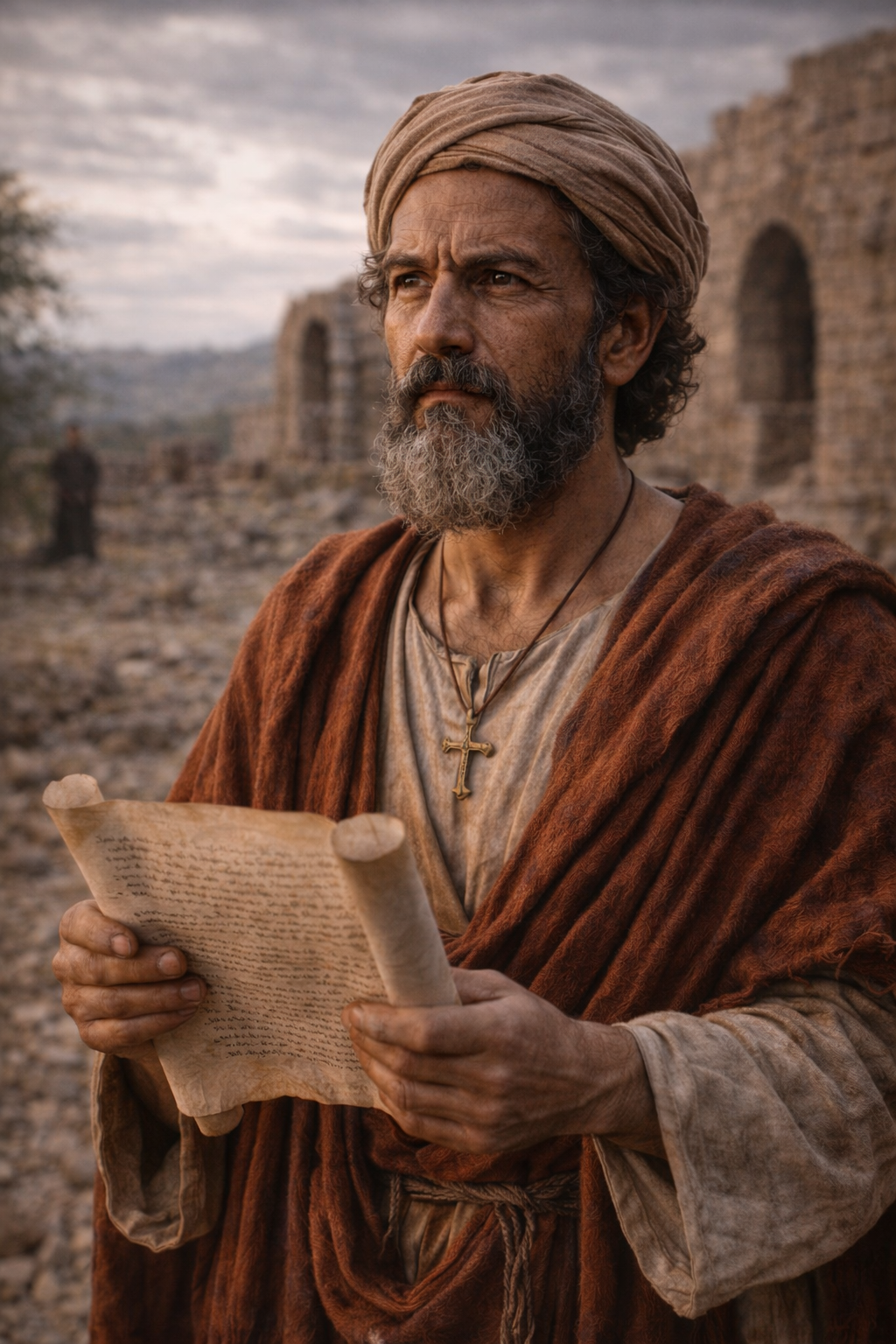
About Tertullian
Tertullian was a Christian author active at Carthage in Roman North Africa near the end of the second century and the beginning of the third. His many surviving Latin works make his arguments unusually visible, but they reveal less about his private life than later biographies often suggest. An exact birth year, pagan parentage, legal profession, ordination, and full Roman-style name are not securely established by contemporary evidence. Jerome, writing nearly two centuries later, supplies influential traditions about a centurion father, priesthood, and advanced age. Modern chronology therefore begins cautiously: Tertullian was probably born around the middle of the second century and was writing at Carthage by 197.
His Apology addresses Roman provincial authorities and objects to punishing Christians merely for their name. Tertullian asks for investigation, argues that secret rumors should yield to evidence, and contrasts criminal accusations with the conduct Christians profess. The work is forceful advocacy, not a neutral report of every Christian or Roman practice. It nevertheless documents a writer using legal and rhetorical forms to make Christianity publicly intelligible. He describes Christians praying for emperors, sharing resources voluntarily, caring for poor members, and gathering for worship and instruction. These descriptions helped later readers understand both the self-presentation and communal ideals of Christians in Roman Africa.
Tertullian wrote across a remarkable range. On Baptism treats initiation, water, preparation, and post-baptismal conduct. On Prayer interprets the Lord's Prayer and discusses communal practice. Against Marcion argues at length for continuity between the creator and the God proclaimed by Jesus. Against Praxeas defends distinctions among Father, Son, and Spirit while insisting on divine unity. His Latin terminology, including forms of trinitas, persona, and substantia, became important in later Western theology. It is safer to say that he gave influential Latin expression to developing arguments than that he single-handedly invented settled doctrines. His vocabulary arose within debate and did not always carry later technical meanings.
His writing style is compressed, argumentative, and often severe. He could expose contradictions in official policy and demand fair procedure, yet he also caricatured opponents and used language that modern readers may find harsh. The well-known question about what Athens has to do with Jerusalem appears in Prescription Against Heretics as an attack on speculative systems that, in his view, distorted Christian teaching. It does not prove that he rejected every use of reason or philosophy; his own works display extensive rhetorical training and sustained argument. Likewise, the saying commonly rendered 'I believe because it is absurd' is not a sentence he wrote and should not be attributed to him as a quotation.
During his later career Tertullian openly embraced the New Prophecy, a movement associated with Montanus, Prisca, and Maximilla and commonly called Montanism. His later works appeal to prophetic revelations and press stricter rules concerning fasting, remarriage, penitential discipline, and flight during persecution. On Monogamy distinguishes adherents of the new prophecy from Christians he calls 'psychic' and argues against a second marriage. The date and form of his separation from the wider Carthaginian church remain debated. His texts establish affiliation and intensifying rigor, but they do not provide a tidy resignation document or a complete institutional history. Neutral description should neither conceal the alignment nor reduce all his work to it.
Later reports complicate the picture further. Augustine lists Tertullianists among groups he regarded as heretical and says that their remaining community in Carthage returned to the Catholic church and transferred its basilica. Jerome claims that Tertullian broke with the church through conflict with Roman clergy and lived to an advanced age. Both authors wrote long after Tertullian, and their explanations cannot simply be read back as contemporary testimony. They do show that later Latin Christians remembered both his intellectual importance and an ecclesial division attached to his name. No reliable early evidence makes him a martyr, and the circumstances and date of his death remain unknown.
Tertullian's saint status is correspondingly ambiguous. He is regularly studied as an early Christian author and is often called a Latin Church Father in broad historical usage. He is not, however, universally recognized as a saint, and no Roman Catholic or broadly received Eastern Orthodox feast was established for this packet. Catalog inclusion must not imply formal canonization. The normalized record therefore identifies him as a layperson, teacher, and scholar, while leaving Saint, martyr, bishop, priest, feast, and prayer records empty. This choice does not pass judgment on his spiritual standing; it accurately separates historical influence from liturgical recognition and disputed later affiliation.
Tertullian remains significant because his works preserve an early African Christian voice addressing government, worship, ethics, Scripture, and theological language in Latin. His demand that accusations face evidence can be admired as a concrete act of justice. His disciplined attention to words helped later thinkers formulate questions with greater precision. At the same time, his increasingly strict positions and New Prophecy allegiance show that intellectual influence does not erase controversy. Reading him responsibly means distinguishing his own texts from later anecdotes, accurate quotations from popular paraphrases, and historical authorship from saintly recognition. That complex record is more instructive than either celebrating every judgment or dismissing the body of work.
Wondering how to weigh the stories and sources? Learn how to read a saint biography.