Biography
Tikhon of Moscow
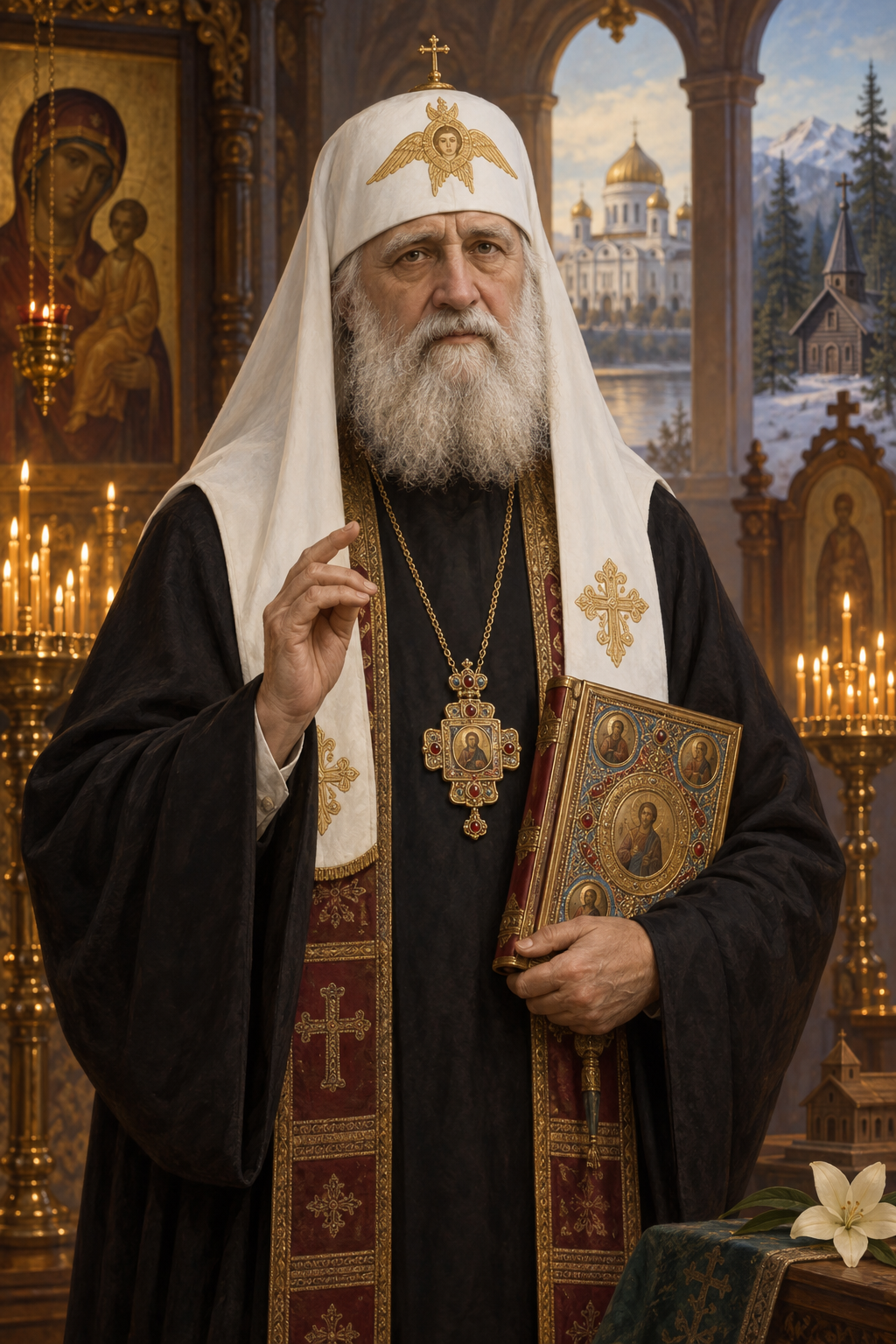
About Tikhon of Moscow
Tikhon of Moscow was born Basil Ivanovich Bellavin on January 19, 1865, in Toropitz in the Pskov region, according to the and OCA life. The OCA life places him in a priestly family and says he studied at the Pskov Seminary and Saint Petersburg Theological Academy. He was tonsured a monk in 1891 and given the name Tikhon, then advanced through teaching and administrative roles before his episcopal service.
Tikhon's North American ministry began when he was appointed Bishop of the Aleutians and Alaska in 1898. OCA sources describe this work as expansive: he traveled widely, oversaw parishes and clergy, encouraged translations, supported monastic and educational projects, and worked among Orthodox Christians of many languages. The final profile should make the missionary title concrete through these pastoral and administrative acts rather than leaving it as an honorific.
The OCA life also places Tikhon in a moment when Orthodox life in North America was becoming more organized and more visibly local. He was not simply visiting a foreign outpost. He was adapting diocesan life to immigrant, convert, and mission communities spread across great distances. This makes the North American period essential to his identity, not a footnote before Moscow.
During his North American years, Tikhon worked with other saints and clergy who appear in this batch, including Raphael of Brooklyn. OCA sources connect him with the consecration of Raphael and with a developing diocesan structure suited to North American conditions. This context matters because Tikhon's title "Enlightener of North America" is not only about personal preaching. It also marks institution-building, pastoral travel, and attention to communities spread across a large continent.
Tikhon returned to Russia in 1907 and later served in Yaroslavl and Vilna. The OCA life presents these years as continued episcopal service before the upheaval of 1917. That transition should be clear in the public biography. He was not only a North American missionary and not only a Soviet-era sufferer; the chronology moved through ordinary episcopal labor, return to Russia, council participation, and then patriarchal responsibility.
In 1917 the Russian Church restored the patriarchate, and Tikhon was chosen as Patriarch of Moscow. OCA sources treat this election as a major event in Orthodox history. The profile can state the event directly while avoiding a long political essay. The pastoral significance is enough for the catalog: Tikhon became patriarch just as revolution, civil conflict, and anti-church pressure placed enormous strain on church life.
That timing shaped the rest of his life. OCA's account presents Tikhon as a patriarch whose authority was exercised under emergency conditions rather than in stable ceremonial isolation. The public biography should therefore connect his patriarchal office to pastoral responsibility, public appeals, and the burden of defending church life during upheaval.
The OCA life describes Tikhon's later years as a time of opposition and suffering under Soviet authorities. It mentions church confiscation pressures, arrest, confinement, interrogation, public demands, illness, and spiritual burden. These claims should be presented with OCA attribution and careful language. The profile should not try to adjudicate every political episode, but it can say that Orthodox sources remember him as a patriarch who suffered while trying to shepherd the Church through persecution.
The same restraint should govern any statement about confession, decrees, or public documents. OCA's account includes strong language about the Bolshevik period and about pressures placed on Tikhon. The base catalog entry should summarize the pastoral arc and leave detailed document analysis or extended quotation to a separate source-budget review. This keeps the page accurate without flattening a complex historical crisis.
It is also important not to make suffering the only lens for Tikhon. The OCA life remembers prayer, pastoral leadership, and administrative service as part of the same vocation. His later years were severe, but they followed decades of teaching, episcopal travel, parish organization, and church governance. A balanced profile should let readers see that continuity.
Tikhon died in Moscow on April 7, 1925. The OCA profile gives April 7 as his main commemoration and October 9 as the date connected with his glorification. The existing feast field stores April 7, which is appropriate for the main commemoration. A complete packet should add normalized observances so the glorification commemoration is not lost.
Tikhon was glorified in 1989. In the OCA source family he is remembered both as Patriarch of Moscow and Enlightener of North America. The final profile should hold those together: his North American service was real and formative, and his Moscow patriarchate became a witness under pressure. Neither part should erase the other.
The completed record should present Tikhon as a monk, bishop, North American missionary organizer, patriarch, and confessor-like shepherd under Soviet-era pressure. It should leave patronage, coordinates, long quotations, and detailed political-document analysis for later review. Its purpose is to give readers a clear sourced life, not a political history of twentieth-century Russia.
The event set should therefore emphasize offices and responsibilities rather than only conflict: North American service, patriarchal election, suffering under pressure, repose, and glorification. This sequence keeps the profile readable and prevents the final page from becoming a single-issue account of persecution.
Wondering how to weigh the stories and sources? Learn how to read a saint biography.