Biography
Titus Brandsma
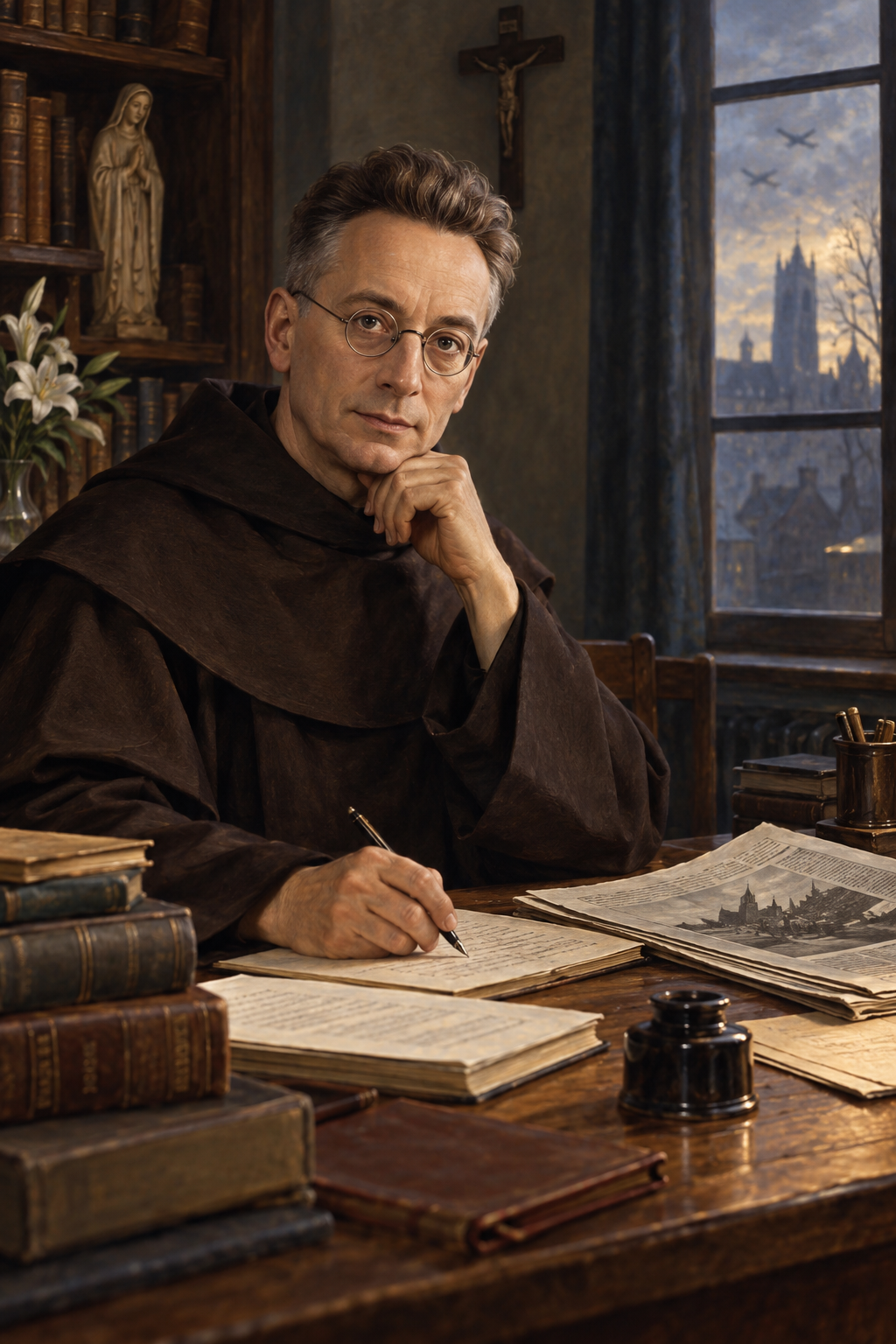
About Titus Brandsma
Titus Brandsma was born Anno Sjoerd Brandsma near Bolsward in the Netherlands on February 23, 1881. The public page should preserve both the religious name and the birth name, because they show the movement from Frisian family life into Carmelite vocation.
He entered the Carmelite Order and became a priest. His Carmelite identity should shape the whole page, not appear only as a costume note. Prayer, contemplation, study, and public service belonged together in his life.
That integrated identity matters because Titus can otherwise be reduced to a journalist or a martyr. He was both, but he was first a Carmelite priest whose intellectual and public work flowed from a contemplative vocation.
Titus became a scholar, teacher, and writer. The page can name his academic and journalistic work without turning it into a complete professional chronology. The important point is that his intellectual life served truth and faith.
His teaching and writing also show that holiness can involve careful thought. The biography should not make courage sound anti-intellectual; Titus's courage was joined to study, discipline, and responsibility for public words.
His journalism should be handled with care. Titus did not become holy because he was a public intellectual; his public work became a place where conscience, pastoral responsibility, and courage were tested.
That test came when speech was being bent toward coercion. The page can say he resisted propaganda pressure on Catholic newspapers, but it should not invent private conversations or operational details beyond the sources.
During the Nazi occupation of the Netherlands, he resisted pressure on Catholic newspapers to publish propaganda. This packet uses official and Carmelite sources for that claim and avoids adding unsourced operational details.
The public biography should not use Nazi symbols or sensational imagery. The facts are grave enough. A desk, books, newspaper, crucifix, and muted wartime shadow can carry the visual story more responsibly than a prison tableau.
This visual restraint is not a softening of martyrdom. It is a way to honor Titus without letting the regime's imagery dominate his saint page. The focus should remain on conscience, truth, prayer, and sacrifice.
Titus was arrested and passed through imprisonment before his death. Any exact sequence of prisons, interrogations, or medical details should be added only if the final packet cites a source with care. This draft keeps the line clear and brief.
The same rule applies to Dachau details. The catalog can name the place of death because the field is already supported, while avoiding graphic material or unsourced details about the circumstances of his final day.
He died at Dachau concentration camp on July 26, 1942. The existing catalog death date and place are supported by the reviewed sources and are preserved in this deferred packet.
The death place should remain exact and sober. It grounds the martyrdom claim without making the page depend on shock. Readers need truthful clarity more than dramatic reconstruction.
The martyrdom category should be written as the church's recognition, not as language for spectacle. Titus's death belongs to a witness of truth, faith, and pastoral responsibility under a regime that tried to command Catholic speech.
That recognition also gives the biography a theological frame. His death is not only the result of political conflict; in the church's judgment it belongs to the witness of faith and charity.
The 2022 canonization can be named, using the Holy See canonization booklet as an official source. The page should not become a list of ceremonies; the canonization confirms the witness already narrated in the life.
Because the canonization is recent, the page should resist adding uncited contemporary commentary. The official liturgical source is enough for the fact of recognition, while the biography stays focused on his own life.
Titus's story offers a strong reflection on media and conscience. The page can invite readers to ask how truth is served in public speech, but it should avoid present-day political commentary.
That boundary keeps the page durable. It lets Titus challenge readers without turning the saint page into an essay about current media, parties, or policy.
The final page should balance scholar and martyr. If it emphasizes only his death, it loses the Carmelite teacher and journalist. If it emphasizes only his intellectual life, it misses the cost of faithful witness.
The conclusion can hold both truths together. Titus Brandsma lived prayer and study in public; when public truth was threatened, his Carmelite fidelity became visible in costly resistance.
His page should leave readers with the sense of a whole vocation. Desk, pulpit, classroom, newspaper office, prison, and Dachau are not separate identities but places where the same priestly conscience was asked to remain faithful.
Artwork should show a Dutch Carmelite priest-scholar with round glasses, books, papers, newspaper, and crucifix in a study. Avoid Nazi symbols, camp scenes, violence, logos, halos, exact-likeness claims, and readable text.
Wondering how to weigh the stories and sources? Learn how to read a saint biography.