Biography
Vicente of the Cross (Vicente Gallén Ibáñez)
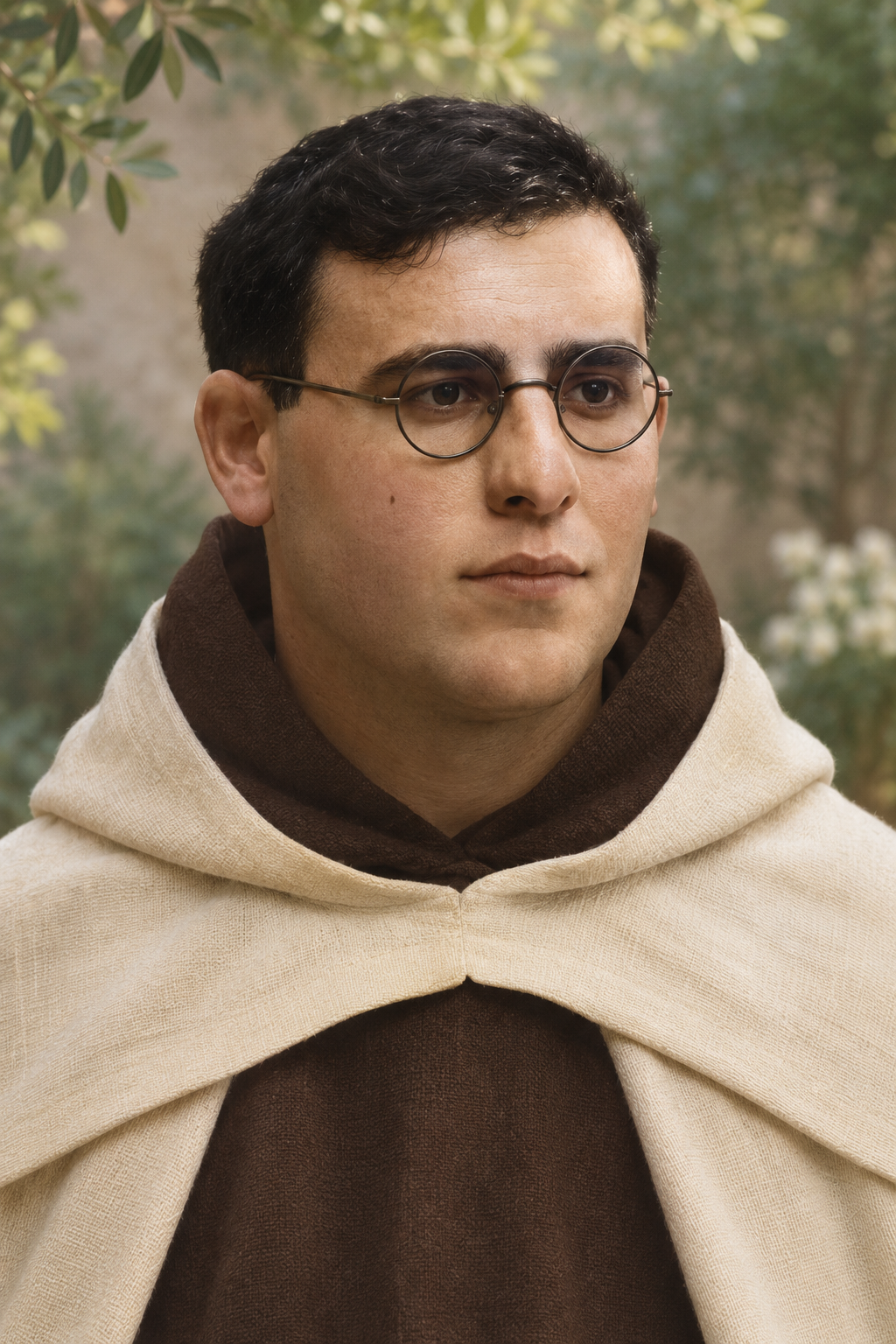
About Vicente of the Cross (Vicente Gallén Ibáñez)
Vicente Gallén Ibáñez grew up in Badalona, near Barcelona. His parents, Vicente Gallén and María Ibáñez, had moved there from Vallat in Castellón, where he was born on September 29, 1908. His brother Amadeo joined the Congregation of the Sacred Hearts. The Iberian Carmelites remember that Vicente wanted to follow him, only to be told he was too young. In 1919 he entered the Discalced Carmelites’ minor seminary in Palafrugell.
He took the name Vicente of the Cross. His training led him from philosophy in Badalona to theology in Barcelona. The Carmelite accounts differ about the year in which he made his first vows. They agree on the turning point that brought him to the United States. In 1930 his superiors sent him to Washington, D.C., to continue his studies. He lived at the Carmelite house near the Catholic University of America. The California-Arizona province says that he obtained a degree in canon law in 1933 and that illness then interrupted his studies.
Vicente was ordained a priest in Washington in 1934. The American province places the ordination at the National Shrine of the Immaculate Conception. His next assignment took him across the country to Arizona, to assist the pastor of Holy Family in Tucson. It was a short appointment, lasting about a year. His work there took him beyond the parish church and into people’s homes.
Among the people he served were Yaqui families. He taught the catechism to children, went to see people who were sick, and sought food and clothing for people who needed them. These activities are the part of his Arizona ministry that both provinces chose to remember. Their accounts give the friar’s perspective. They preserve no names or recollections from the families themselves. The Diocese of Tucson also remembers this work as part of a longer relationship between the Carmelite communities and the Pascua Yaqui people.
The people who received him had their own long history of religious leadership. The Pascua Yaqui Tribe traces its church and altar society, Teopo Yoemia, to the early seventeenth century. It describes the work of the Maehtom, Yaqui lay priests, alongside singers, altar keepers and flag bearers. By the time Vicente arrived, Yaqui families had spent generations bringing Christian observance and ancestral practices together. The brief visit of a Carmelite priest belongs within that much longer history.
Vicente asked to return to Spain and was assigned to Tarragona. The Catalan Carmelite notice identifies him as a teacher there. He also worked with the confraternity of the Infant Jesus of Prague, a devotional association, and wrote articles on Carmelite subjects. In July 1936 the attack on the monastery brought his work there to an end. A lay member of the Carmelite order, known in the Iberian account as Señor Elordieta, gave him shelter. Brother Ángel of Saint Joseph, who had also served in Tucson, later joined him there.
The Carmelites remember an arrest at the house and an armed escort toward a prison ship at Tarragona. Their accounts place the shooting near the harbor, but the dates differ sharply. The Iberian province connects the deaths of Vicente and Ángel with July 25. The American province gives July 31. The Vatican’s letter of beatification names Vicente separately and records his death at Tarragona on November 10, 1936. No explanation for the discrepancy appears in those accounts.
Vicente was beatified in Tarragona in 2013 with other Catholics killed during the Spanish Civil War. Tucson parishioners have continued to remember him alongside four other Carmelites whose work took them to Arizona. In Vicente’s case it was a brief stretch of a short life, preserved in the memory of a young priest teaching children, visiting the sick and attending to the daily needs of families around Holy Family Parish.
Wondering how to weigh the stories and sources? Learn how to read a saint biography.