Biography
Willehad
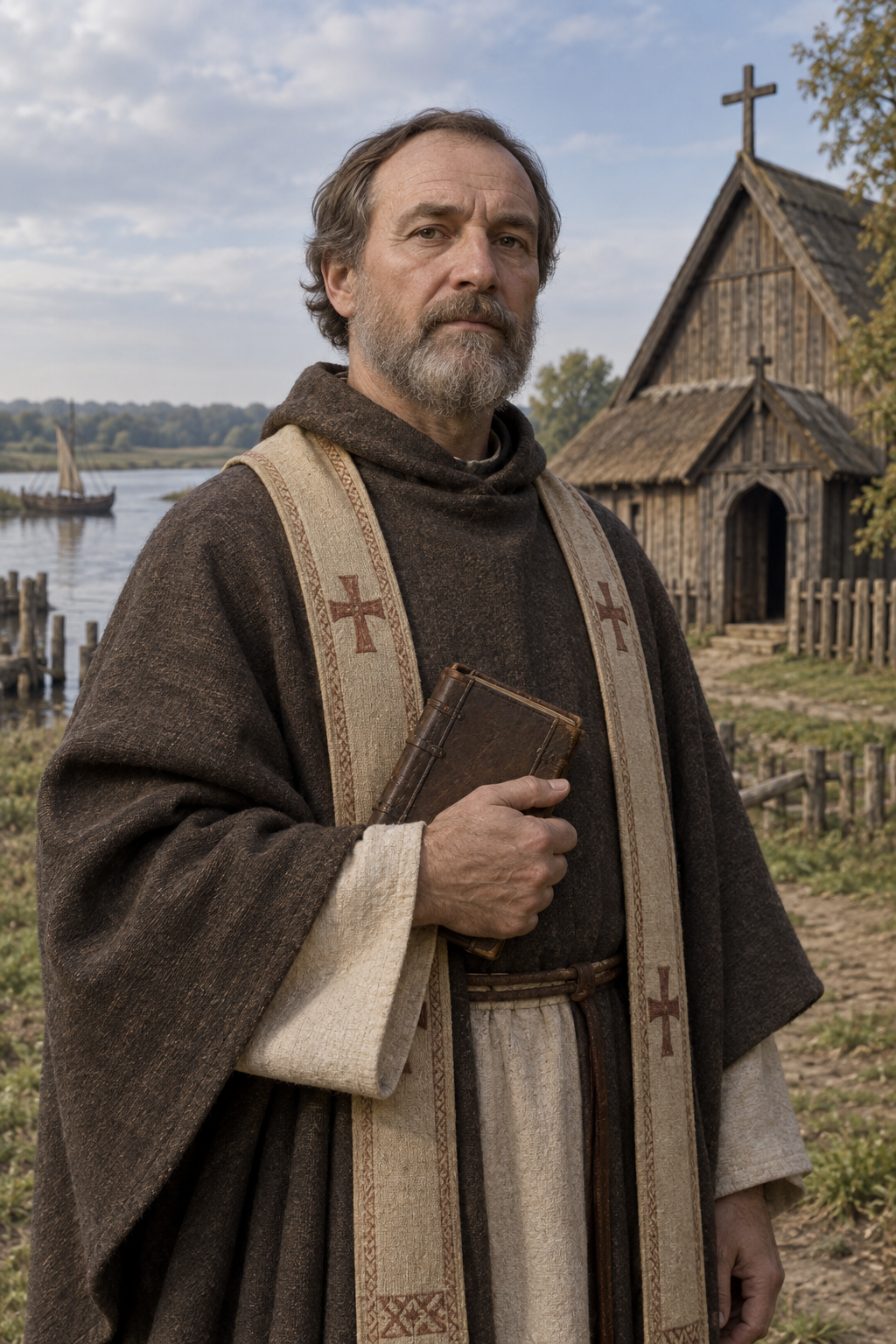
About Willehad
Willehad's earliest surviving biography is the Latin Vita s. Willehadi. The German Historical Institute dates it to 838–860, roughly half a century after his death, and identifies its author as an anonymous cleric associated with Bremen or possibly Echternach. Its reporting period runs from about 740 to 789. The repertory notes that the Vita's precise historical details seem to rest on older annalistic notes. This makes it a valuable source for the memory and institutional history of the Bremen church, while still requiring care when its devotional narrative is used as a factual record.The biographical digest based on the Life says Charlemagne sent Willehad to the region of Wigmodia in 780 to preach and organize churches. The mission was disrupted by the Saxon revolt of 782; the account says Willehad escaped and went to Rome, then withdrew to Echternach. These events are presented here as the Life's reported sequence, not as proof that every episode or motive can be independently checked. The surviving source register nevertheless situates Willehad within the late eighth-century missionary activity and political upheaval of the Saxon lands.After the Saxon revolt was suppressed, the same account says Willehad returned to his former mission. It reports that he was consecrated bishop at Worms in 787, made Bremen his residence, and dedicated a church there in 789. The German Historical Institute identifies him as the first bishop of Bremen and lists surviving witnesses to the Vita, including manuscripts from the twelfth and fourteenth centuries. These details support identifying his public role with Bremen.The historical digest reports that Willehad died after becoming ill during a missionary tour in 789. It also says his successor transferred his body to a church in Bremen and that his cult became associated with a November observance. The exact devotional details belong to the transmission and reception of the Vita and are not expanded here into miracle claims.
Wondering how to weigh the stories and sources? Learn how to read a saint biography.